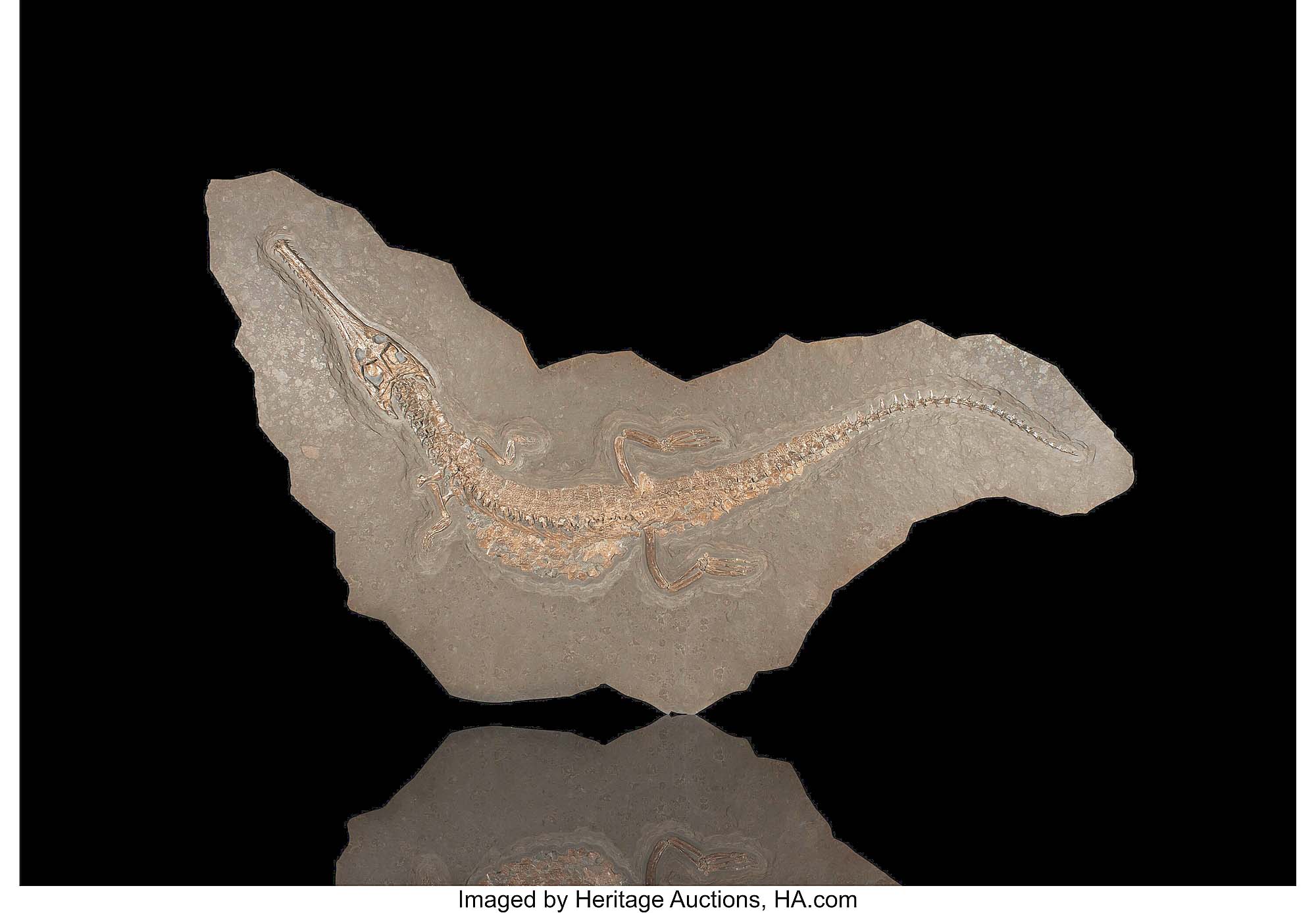
A phone bidder paid $93,750, the highest price of the sale, for this Steneosaurus bollensis fossil from the Lower Jurassic period, 119 by 69 inches, which was discovered in the Posidonienschiefer Formation.
Review by Kiersten Busch
DALLAS — On December 2, Heritage Auctions offered 334 lots of museum-caliber specimens and decorative offerings from the collection of a distinguished Southern California collector. “The sale was great overall with excellent results from both a pure standpoint and relative to our expectations for the sale,” explained Craig Kissick, vice president of nature and science at Heritage. He continued, “We are always aggressive in selling any unsold items as part of our Post-Auction Buy (PAB) program. We have already had several PAB sales, so our auction now stands at $1,241,902, and I expect we should easily realize $1,250,000 — or more. We reached a sell-through rate of about 95 percent by both lots and by value, which will likely go even a bit higher as we close PABs.”
Kissick also explained, “I find that single-owner collections in both natural history and fine minerals (which are essentially two different venues under nature & science) tend to perform very well in totality and often — at least on a comparative basis — should be expected to be more lucrative than a more ‘standard’ auction with property of multiple owners that is more put together rather than inherently having been ‘curated’ by one person. This sale proved that theory quite well.”
Leading the charge after much pre-auction attention in the press was a crocodile (Steneosaurus bollensis) fossil dated to the Lower Jurassic period. Measuring 10 feet long and discovered in the Posidonienschiefer Formation in Holzmaden, Baden-Württemberg, Germany, the “rare and spectacular discovery” was mounted on a custom steel armature designed for wall display. A phone bidder secured the former apex predator of the Early Jurassic seas for $93,750. “Many of the larger fossil pieces represented examples not often seen for sale on the market anymore. This hit at a good time, and clients are obviously keen for nice objects,” Kissick added.
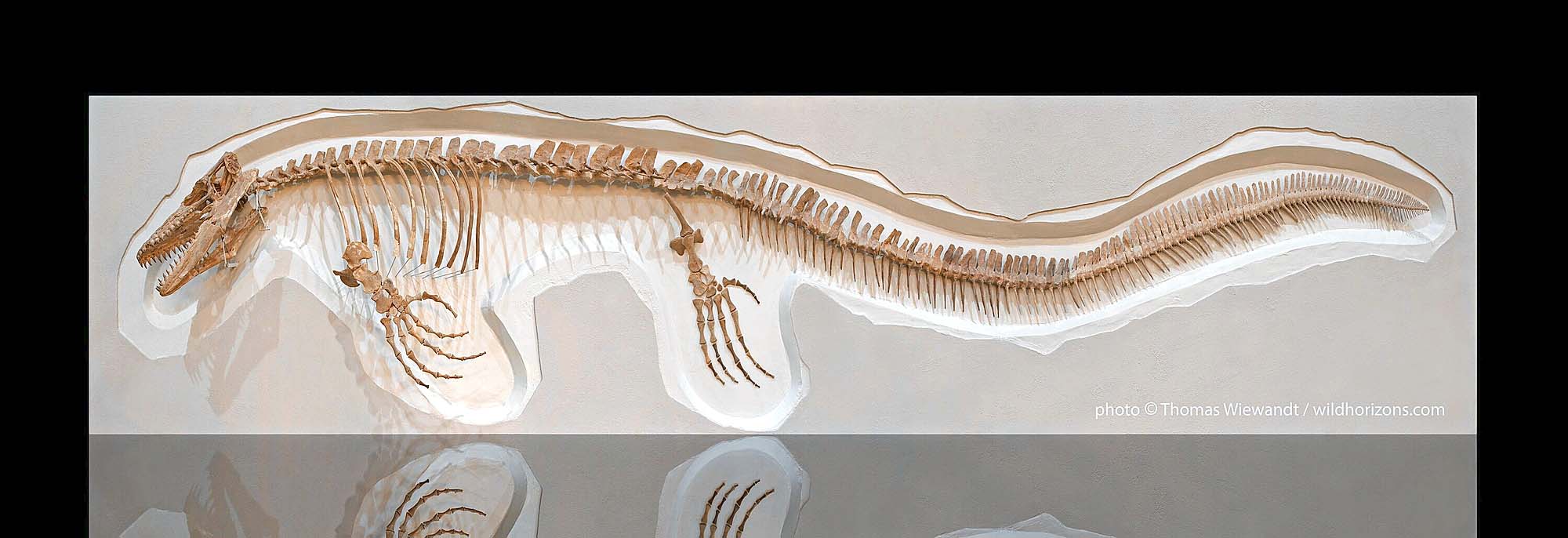
Collected in its totality from the Niobrara Chalk Formation, this Cretaceous period Mosasaurus platycarpus fossil skeleton, 268 by 51 inches, swam to $75,000 thanks to an internet bidder.
Kissick’s words proved to be true, as a majority of the top-selling lots of the sale were fossils of different kinds. Other prehistoric animals slithered and crawled their way to excellent prices, including a 22-foot-4-inch-long Mosasaur (Mosasaurus platycarpus) fossil skeleton discovered in the Niobrara Chalk Formation in modern-day Kansas. This example of the late Cretaceous period marine predator had an “extraordinary degree of preparation” and comprised of two sections designed to join together. It swam to $75,000, the third-highest price of the sale.
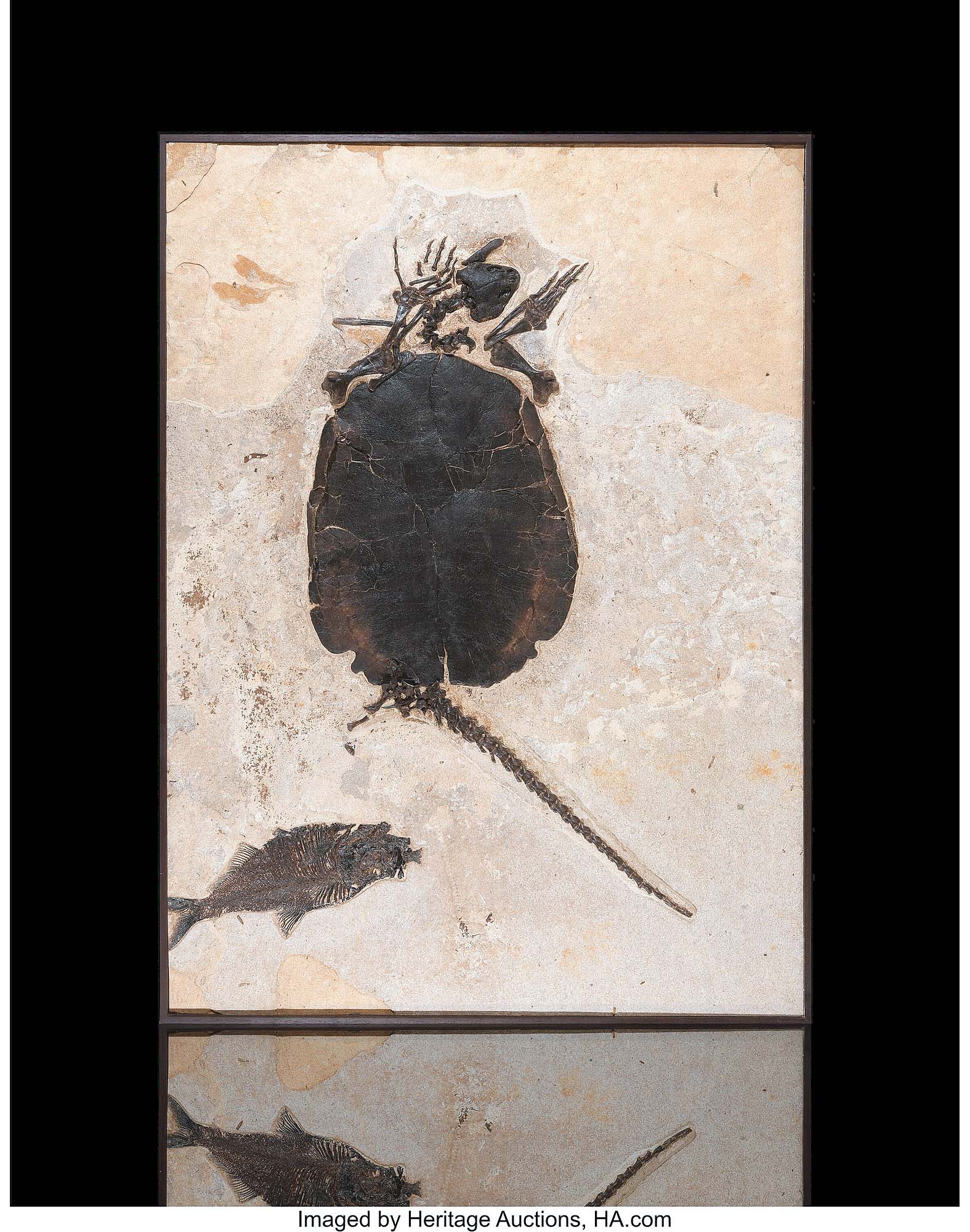
Additional reptilian fossils were of a more familiar form: the turtle. A framed fossil of a snapping turtle (Chisternon undatum) with a fish fossil (Diplomystus dentatus) aspiration made $46,250, while an Axestemys byssinus turtle fossil sold for $23,125. Both examples dated to the Eocene period and were discovered in the Green River Formation in Wyoming.
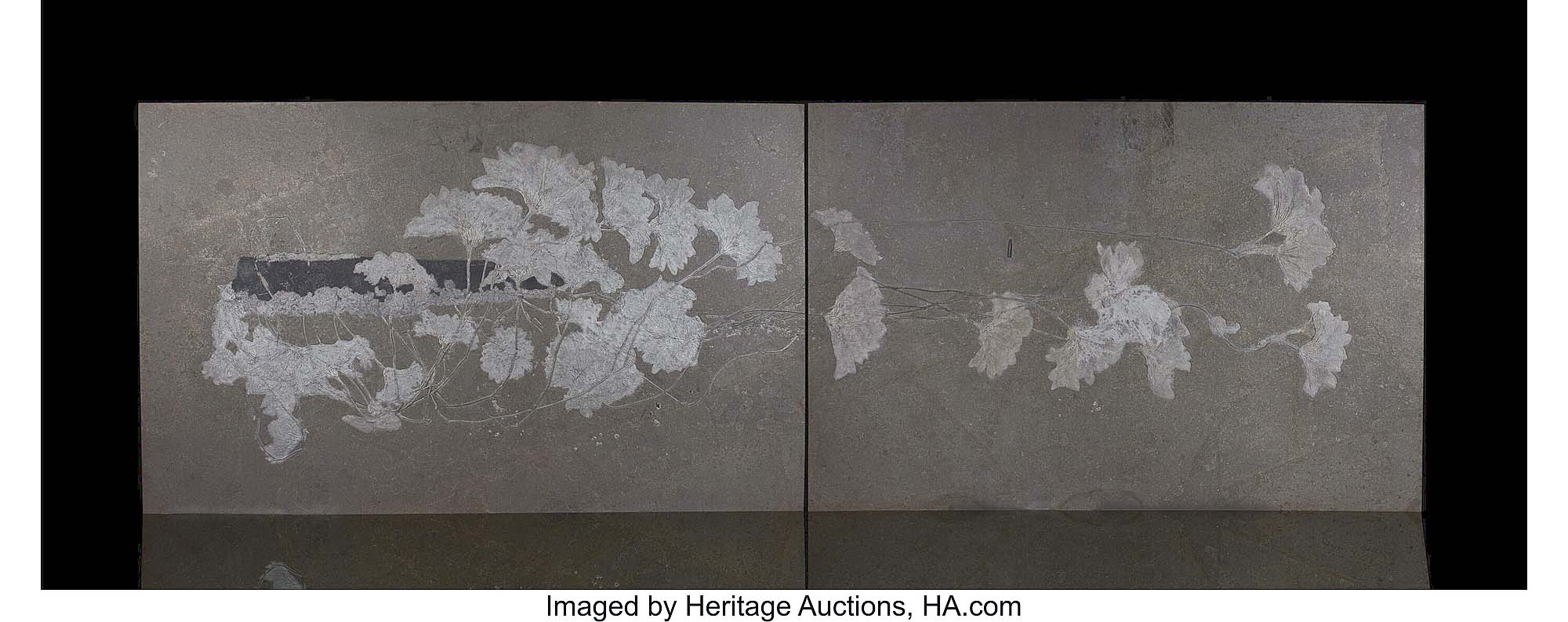
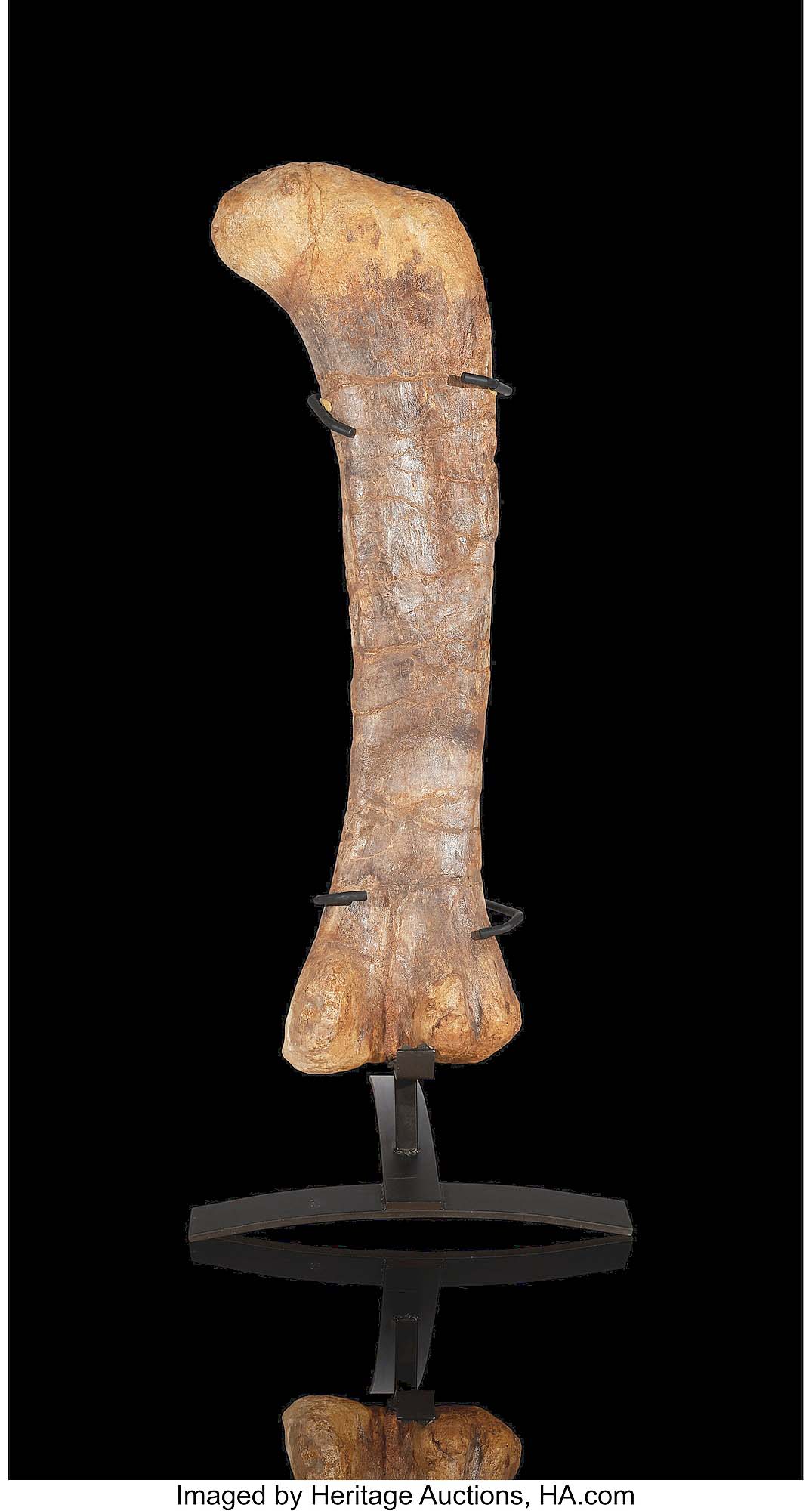
Fossils of large fauna were also populous and popular with bidders, led at $81,250 by a crinoid (Seirocrinus subangularis) colony fossil cataloged as “among the largest naturally occurring crinoid colonies ever to appear outside a museum collection.” These Jurassic Period crinoids, otherwise known as sea lilies, were discovered in the same German formation as the top lot, and were sold as two 100-inch-long panels that could be conjoined. Another crinoid fossil from the Posidonienschiefer Formation, this one a single pyritized example, was prepared in a black shale matrix and sold for $22,500.
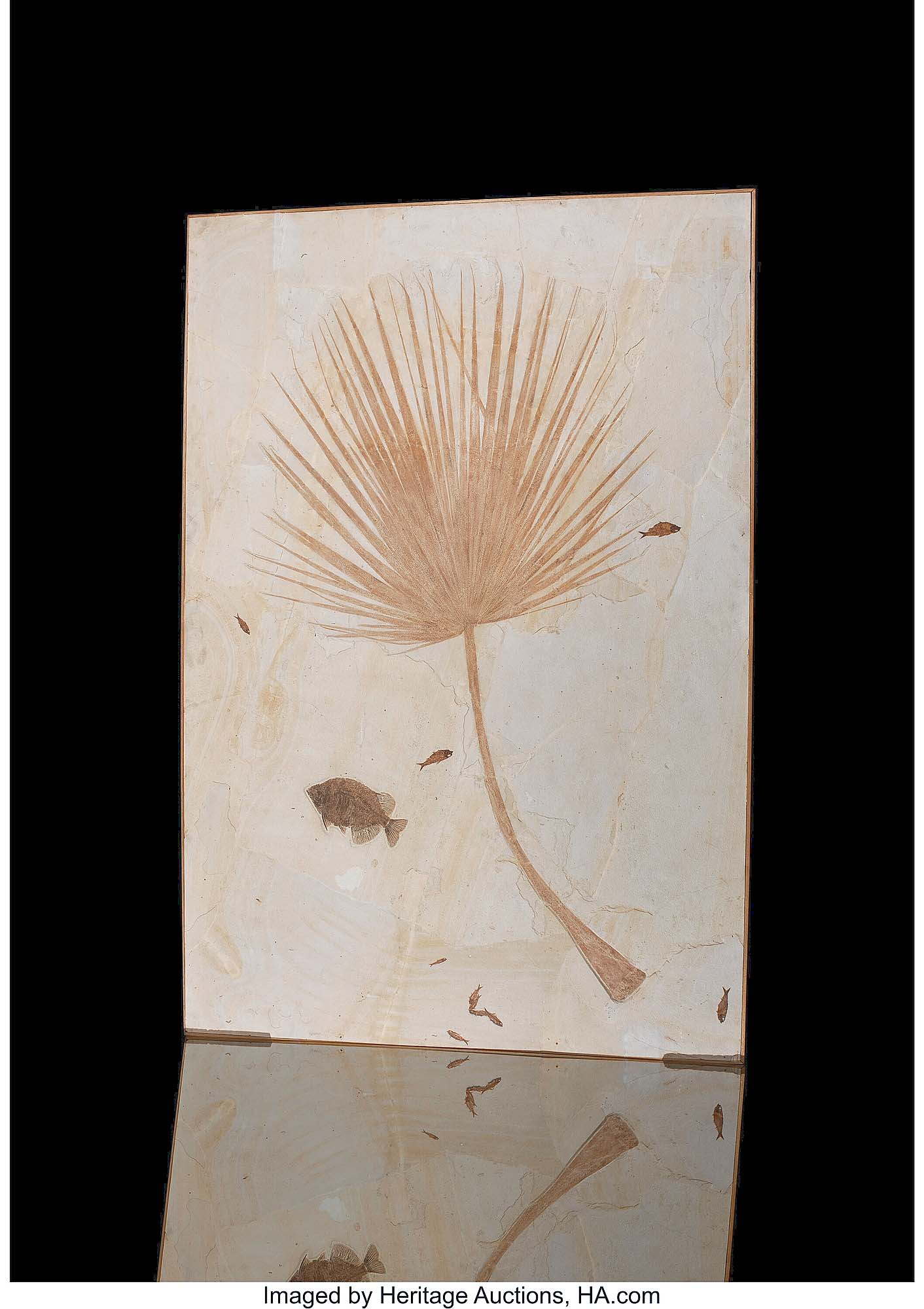
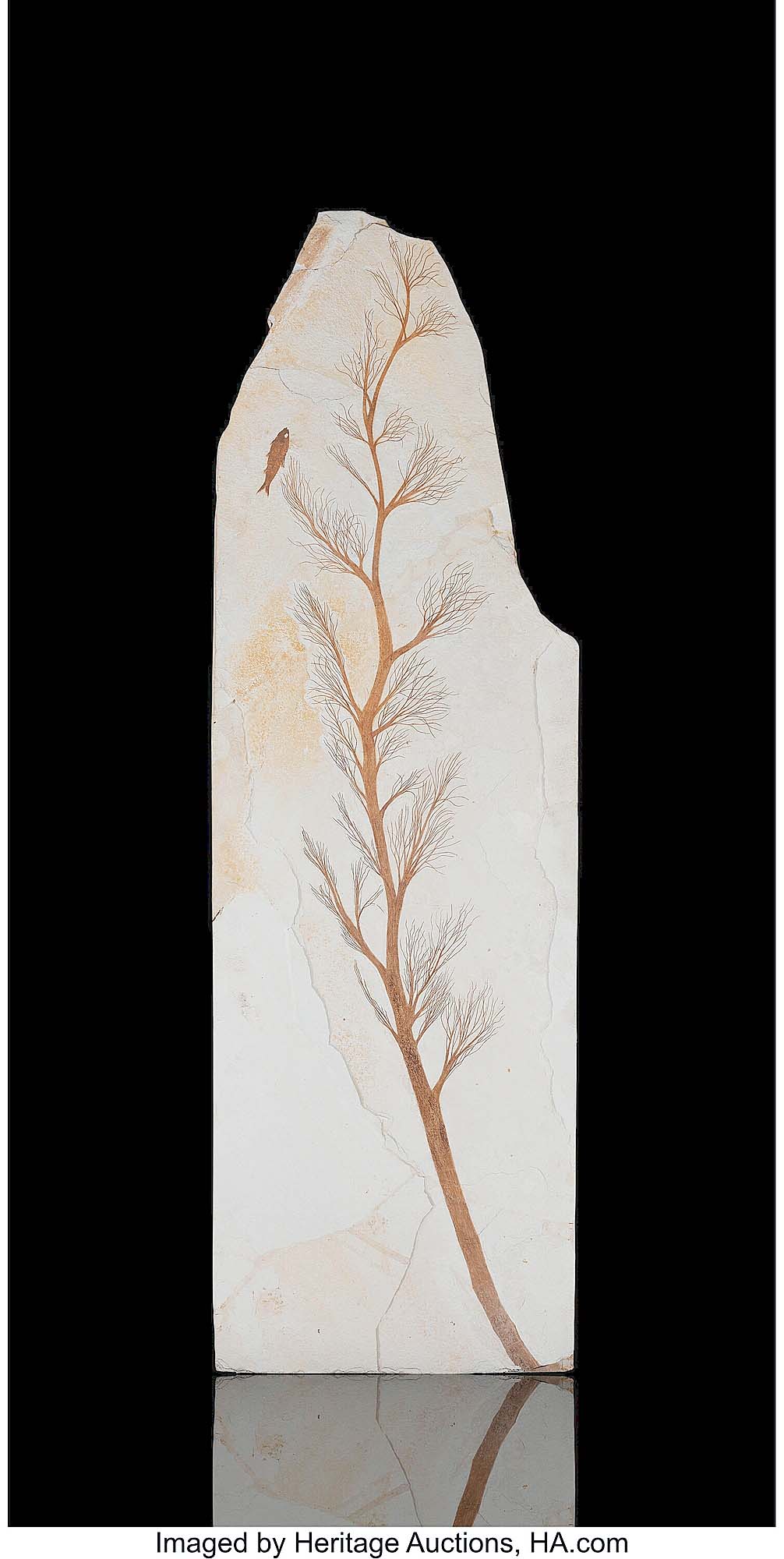
This Sabalites sp. fossil mural, 109 by 73 inches, also contained a few Phareodus encaustus and Knightia eocaena fossils; it was discovered in the F2 Horizon of the Green River Formation and was bid to $40,000.
A palm (Sabalities sp.) fossil with several fossilized fish (Phareodus encaustus and Knightia eocaena) from the F2 Horizon of the Green River Formation earned the highest price of several palm and palm flower fossils at $40,000. The 109-by-73-inch fossil was considered “not only a scientifically important specimen but also one of the larger fossil palm compositions ever offered at auction.” Its rarity came not only in the form of its fishy friends, but because of its completeness and undistorted condition, which was “exceedingly rare.”
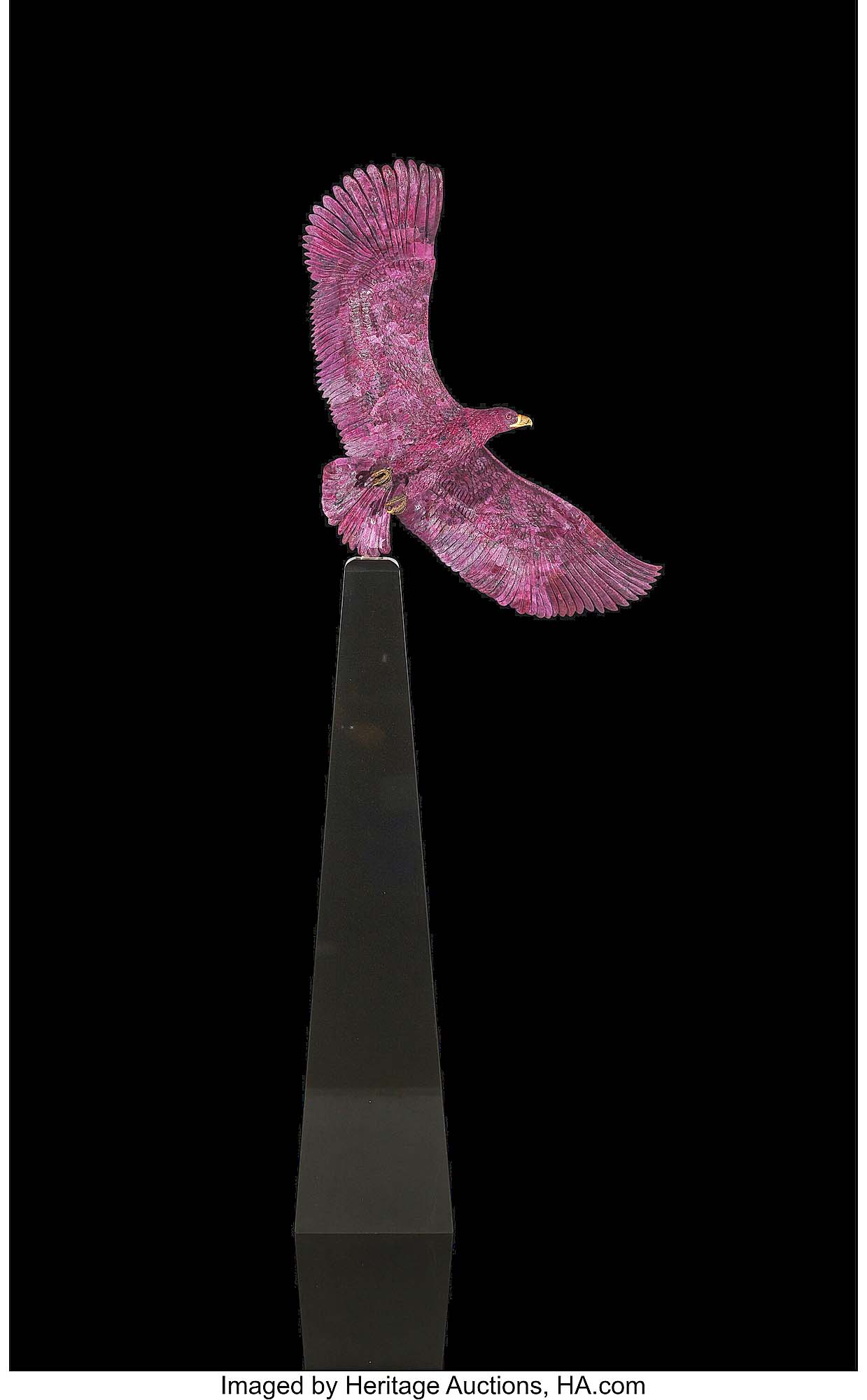
Various lapidary carvings from the single-owner collection were also sold, of which Kissick observed, “Many of the carvings were made by world-renowned artisans, including members of multi-generational, iconic Idar-Oberstein families, adding to the overall allure and appeal of that component of the auction.” Flying ahead of the flock for $50,000 was a ruby and gold eagle sculpture by Luis Alberto Quispe Aparicio of Lima, Peru. Depicted in full flight, the eagle was carved entirely from ruby and had an “exceedingly rare” internal glow due to the stone’s transparency; its beak and talons were cast in 18K yellow gold.
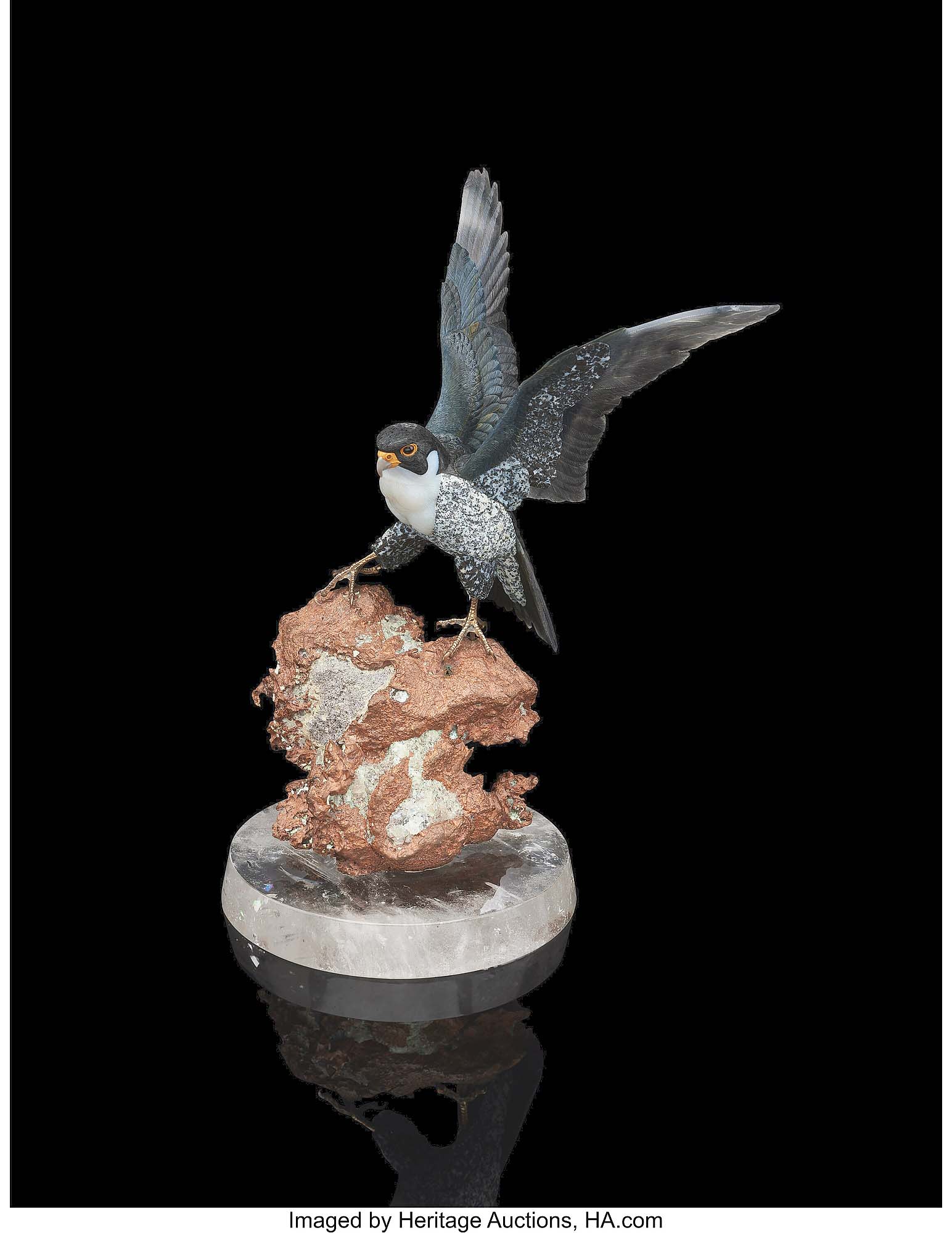
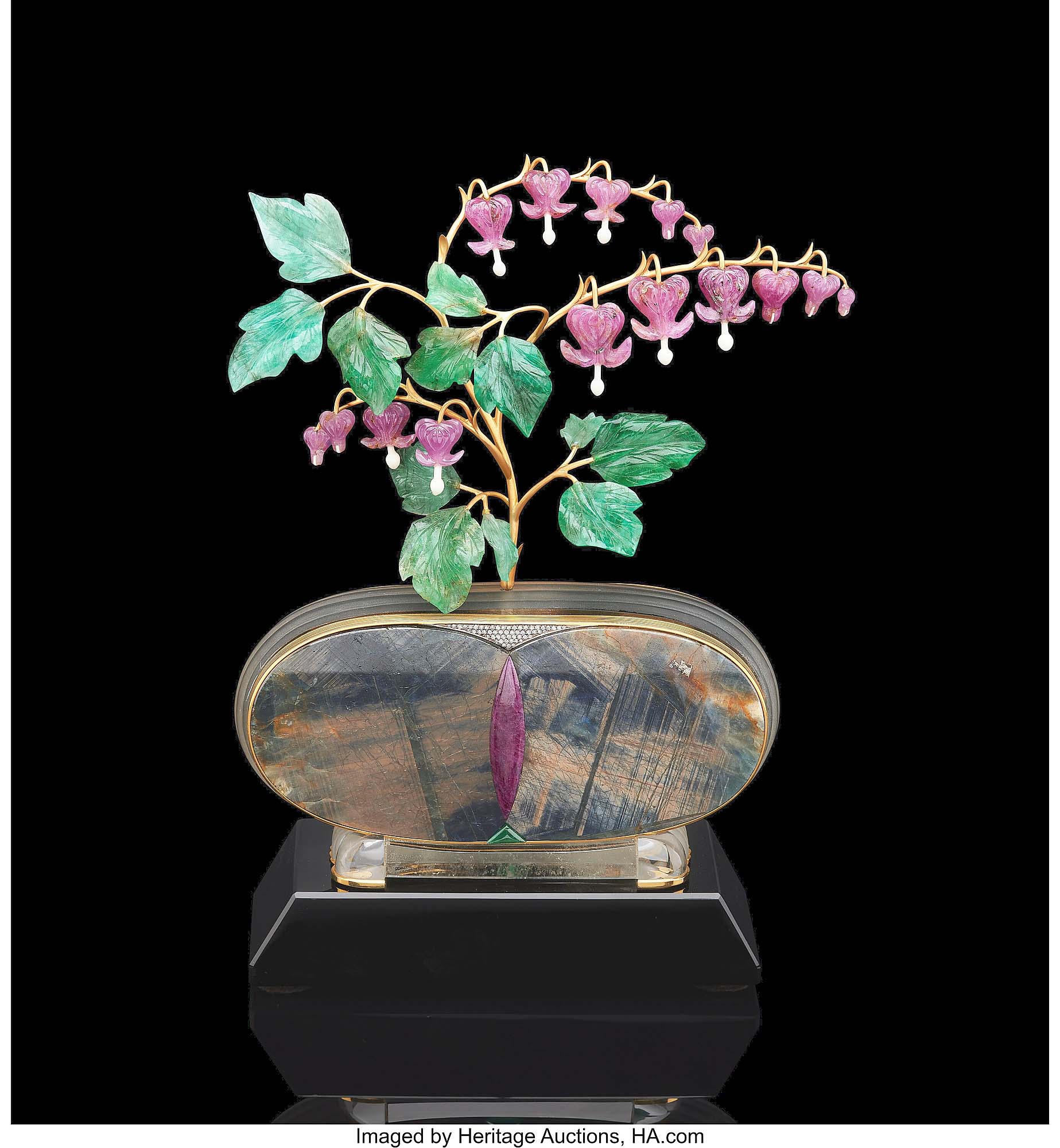
Other notable carvings included Gerd Dreher’s agate and quartz falcon carving on a copper base ($37,500) and “Bleeding Hearts” sculpture by Manfred Wild — a study in ruby, emerald sapphire and gold of the northern European woodland blossom ($16,250).
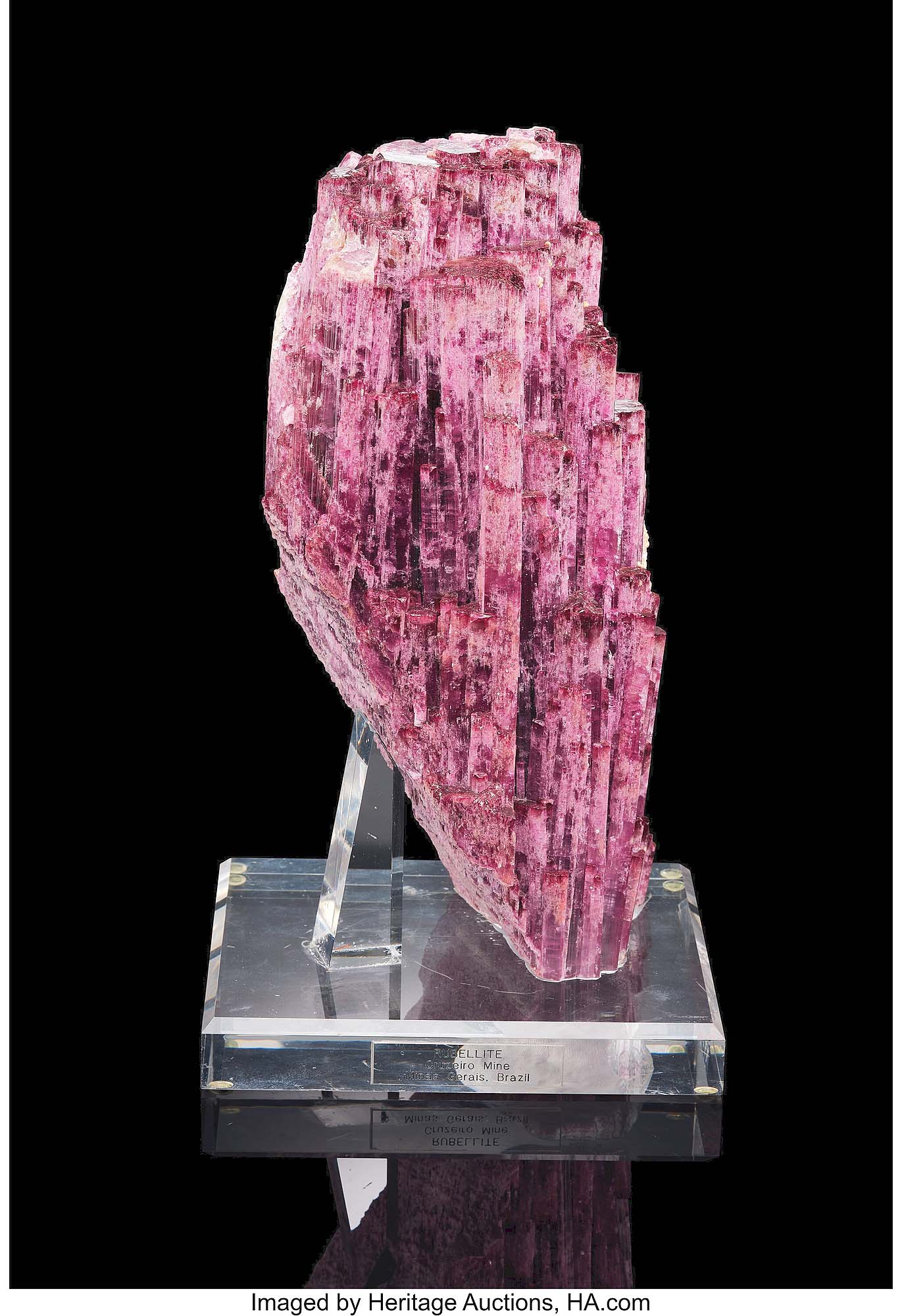
Leading minerals was this 12-by-6-by-4¾-inch rubellite tourmaline from the Cruzeiro Mine, which sparkled for $12,500.
Minerals were led by a 10.53-pound rubellite tourmaline crystal discovered in the Cruzeiro Mine, São José da Safira, Minas Gerais, Brazil, in September 2013. According to catalog notes, the 12-by-6-inch specimen was “Composed of an aggregate of parallel, individually terminated crystals” and boasted “over 65 different terminations.” It sold for $12,500.
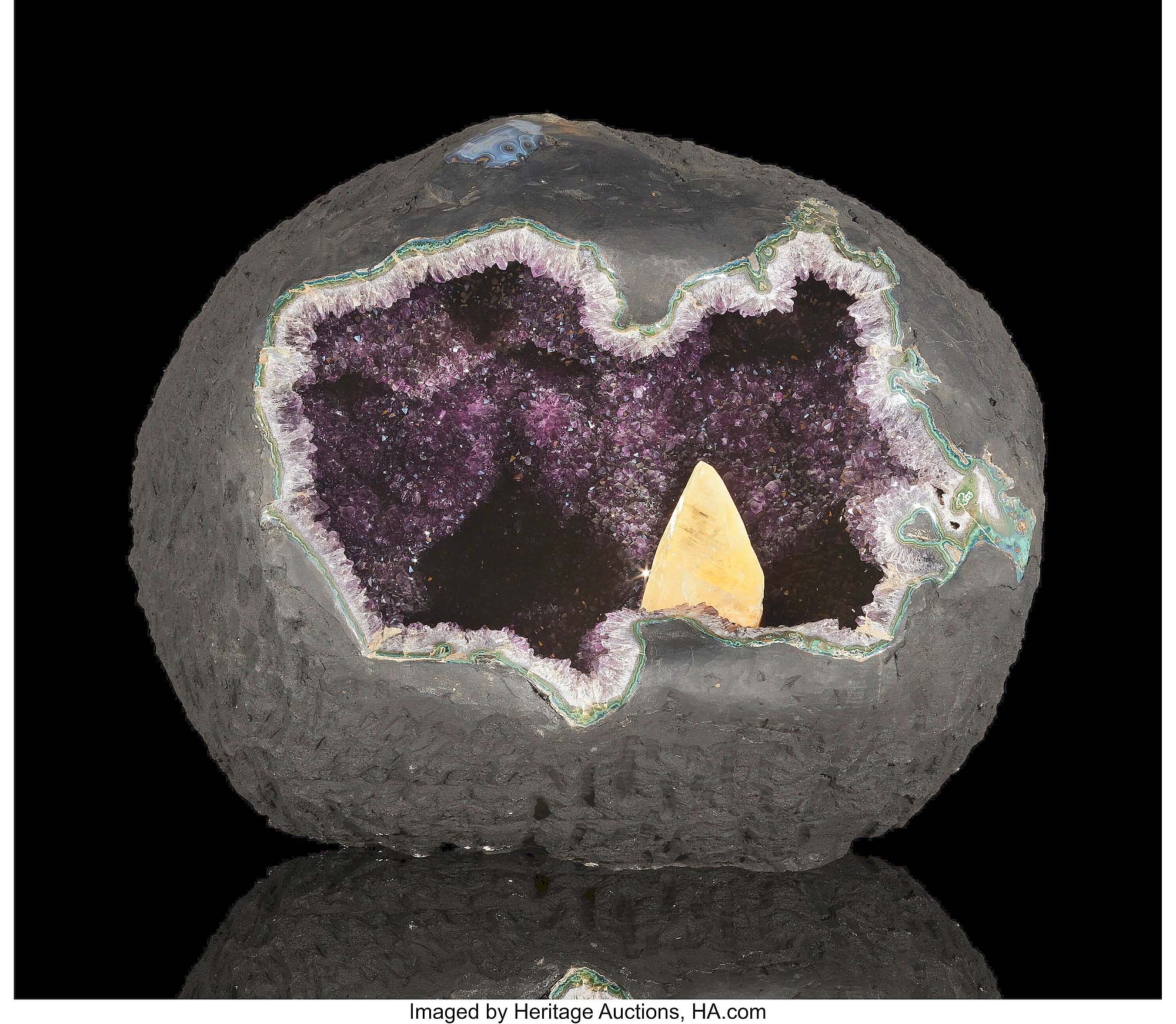
The rubellite tourmaline was quickly followed at the same price by a Uruguayan amethyst geode with a calcite crystal hidden inside, then a Marra Mamba tiger’s-eye slab from the Brockman tiger-eye mine on Mount Brockman in Ashburton Shire, Western Australia ($11,875).
Heritage’s next natural history auction will take place April 29, and “should have quite a number of impressive fossils, meteorites and golds, among other superb offerings of gemstones, lapidary arts and scientific memorabilia,” shared Kissick.
Prices quoted include the buyer’s premium as reported by the auction house. For information, 214-528-3500 or www.ha.com.