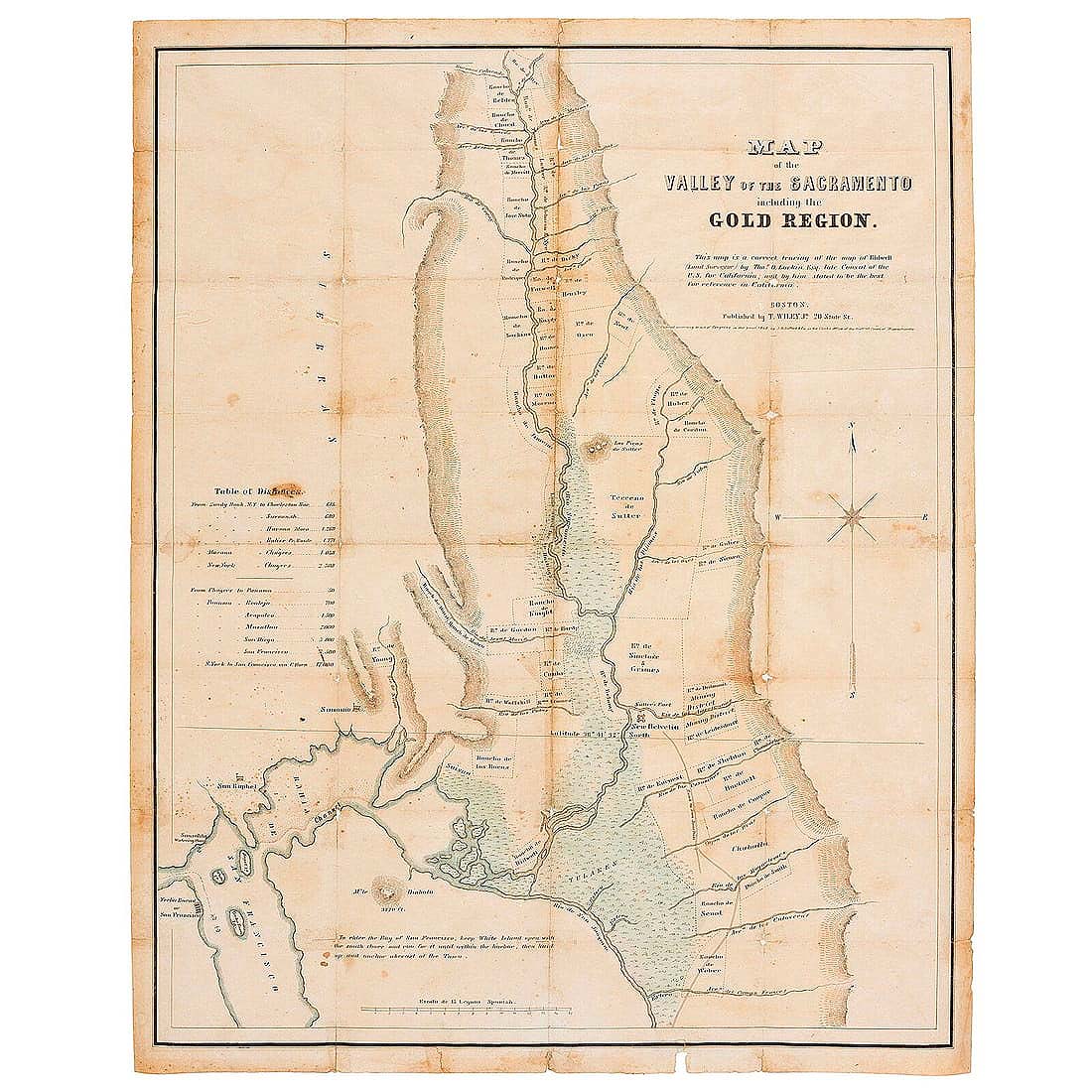
$24,000 was the highest price between both sales and was awarded to Map of the Valley of the Sacramento including the Gold Region, a hand-colored, lithographed map by Thomas O. Larkin (1802-1858) printed in Boston circa 1848 ($20/30,000).
Review by Kiersten Busch
CINCINNATI — Spanning two days, October 23-24, Freeman’s offered just shy of 400 lots of American historical ephemera and photography. Part one of the sale represented the history of the United States, while part two comprised more than 150 photographs from the lifelong Native American photography collection of Larry Ness, Yankton, S.D.
American Historical Ephemera & Photography
The top-selling lot, sold during part one, was a Map of the Valley of the Sacramento including the Gold Region by Thomas O. Larkin. The hand-colored, lithographed map was printed in Boston circa 1848 by J.H. Bufford & Company and T. Wiley, Jr, and may be “one of the earliest (if not the very earliest) published maps actually to name and note the California Mining District,” according to catalog notes. It landed within its $20/30,000 estimate, achieving $24,000.
One other Gold Rush-era map was offered, this example with provenance to the Emily T. and Adolphus Andrews collection of Native American Art. The Official Map of the Washoe Mining Region, done by R.M. Evans and published by Britton & Company (San Francisco, Calif.) in 1860, contained a printed phrase below its title reading “The Claims are located by Parker H. Pierce, Recorder of Carson City. / Designed and drawn by R. M. Evans.” It far surpassed its $500/700 estimate, folding up for $10,200.
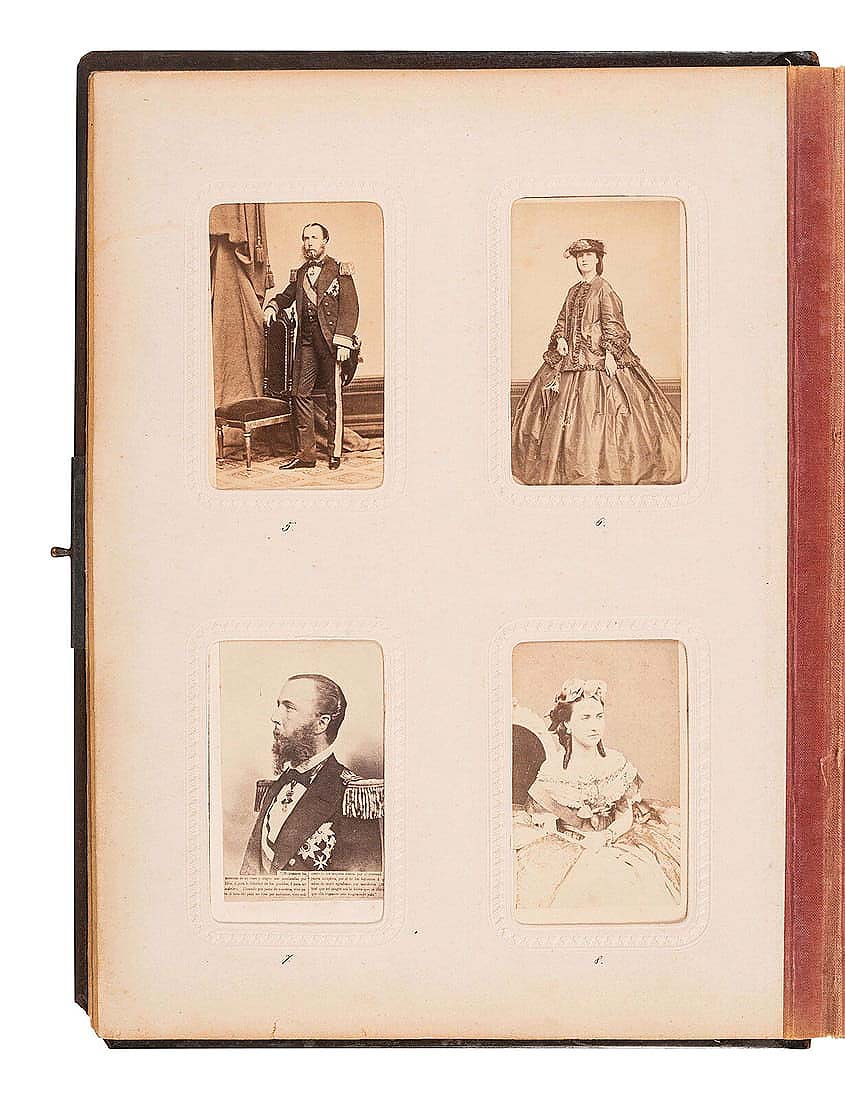
This CDV album documenting the reign of Maximilian I of Mexico contained approximately 25 CDVs of the emperor, his wife and brothers, including Austrian Emperor Franz Joseph I; it snapped up $18,000 ($3/5,000).
A CDV album documenting the reign of Maximilian I of Mexico (circa 1864-1867) snapped up a $18,000 total. Maximilian I of Mexico was the only emperor of the Second Mexican Empire and was the younger brother of the Austrian Emperor Franz Joseph I. This lot contained approximately 25 photographs of the emperor, his wife, Charlotte of Belgium, and his brothers.
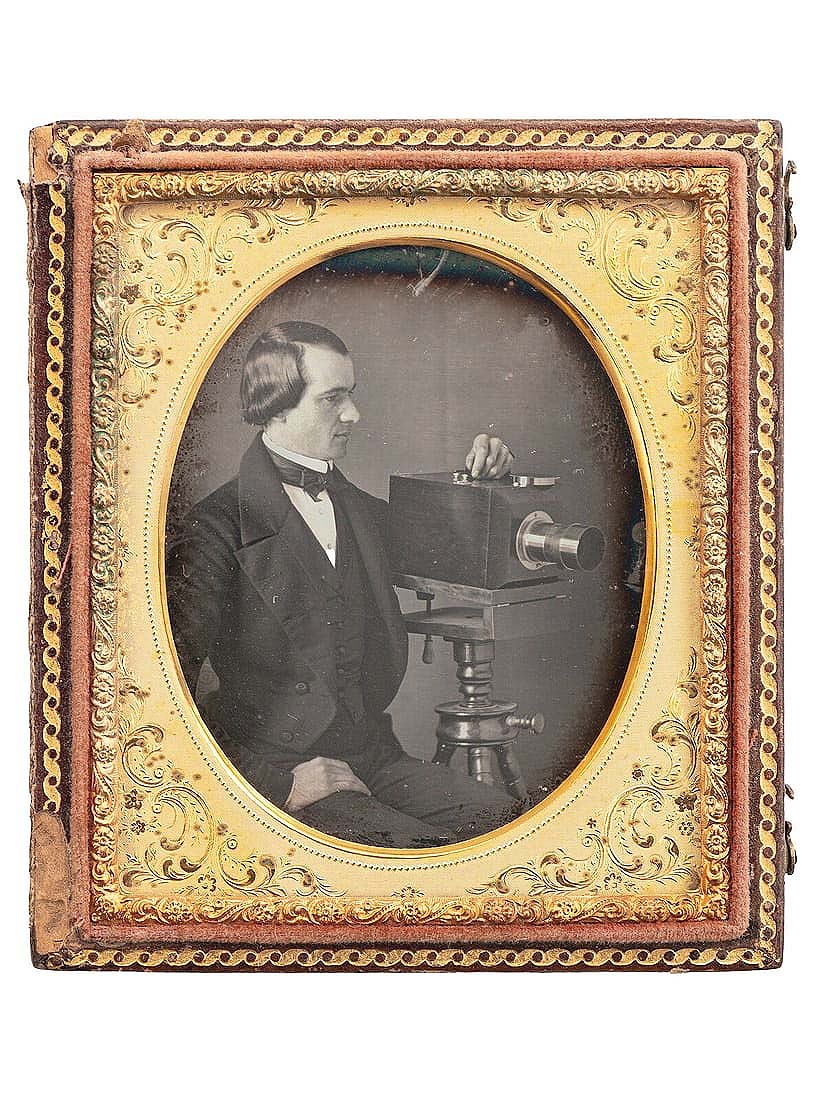
Early photography continued to be popular with bidders, as a sixth-plate daguerreotype of a photographer sold for $16,800. Posed with an American-made chamfered box camera seated atop a wooden tripod, the photo retained its original seals and was housed in a half-pressed paper case. An 1860 ambrotype brooch of Abraham Lincoln made by George Clark, Jr, for Lincoln’s presidential campaign also made noise, earning $10,800.
Seven lots of Revolutionary War material crossed the block, ranging in price from $420 for a group of three pay receipts for the hire of a substitute soldier, to $13,200 for a first issue of the Journal of the Proceedings of Congress, held in Philadelphia on September 5, 1774. Published by William and Thomas Bradford at the London Coffee House (Philadelphia), the journal contained the proceedings of the first Continental Congress, which included influential figures of the Revolution such as Samuel and John Adams, John Jay, George Washington and others. This copy was signed on the half-title by its presumed owner, Daniel Waldo, who may have been the American clergyman who became chaplain of the United States House of Representatives.
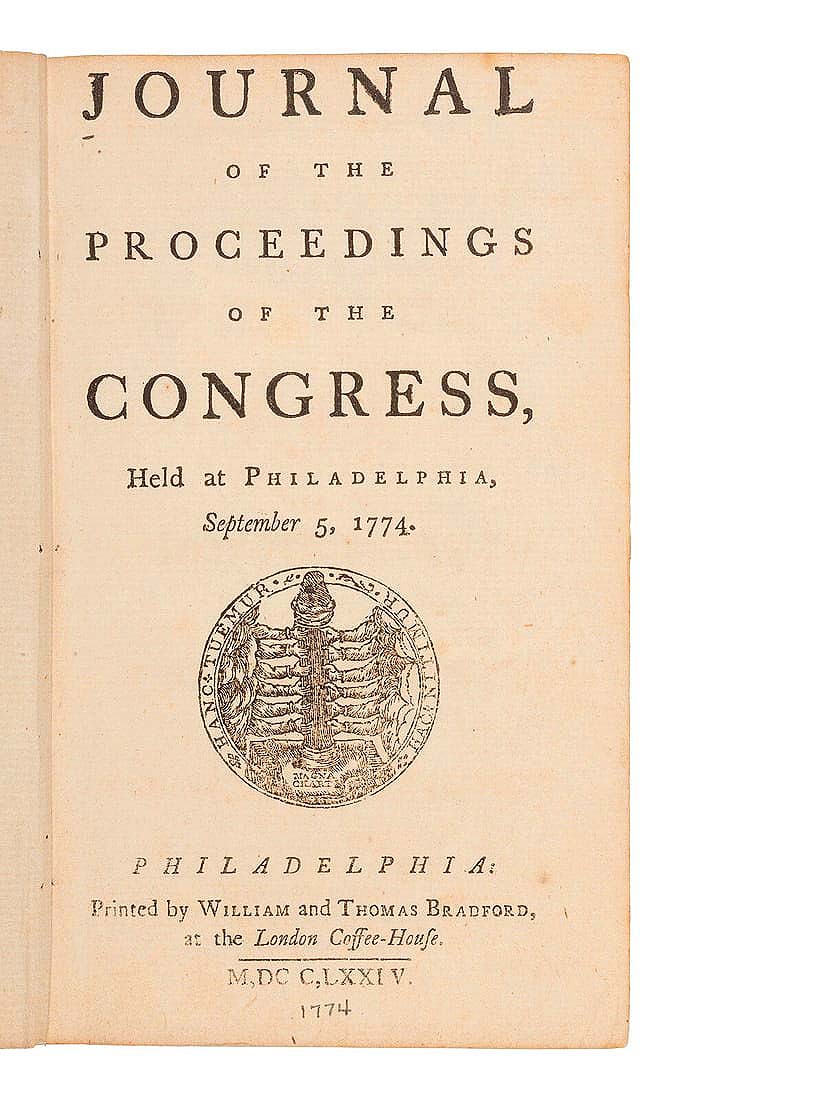
This first issue of the Journal of the Proceedings of Congress documented the proceedings of the first Continental Congress, held in Philadelphia on September 5, 1774. Potentially belonging to former chaplain of the House of Representatives Daniel Waldo, the copy flipped to $13,200 ($10/15,000).
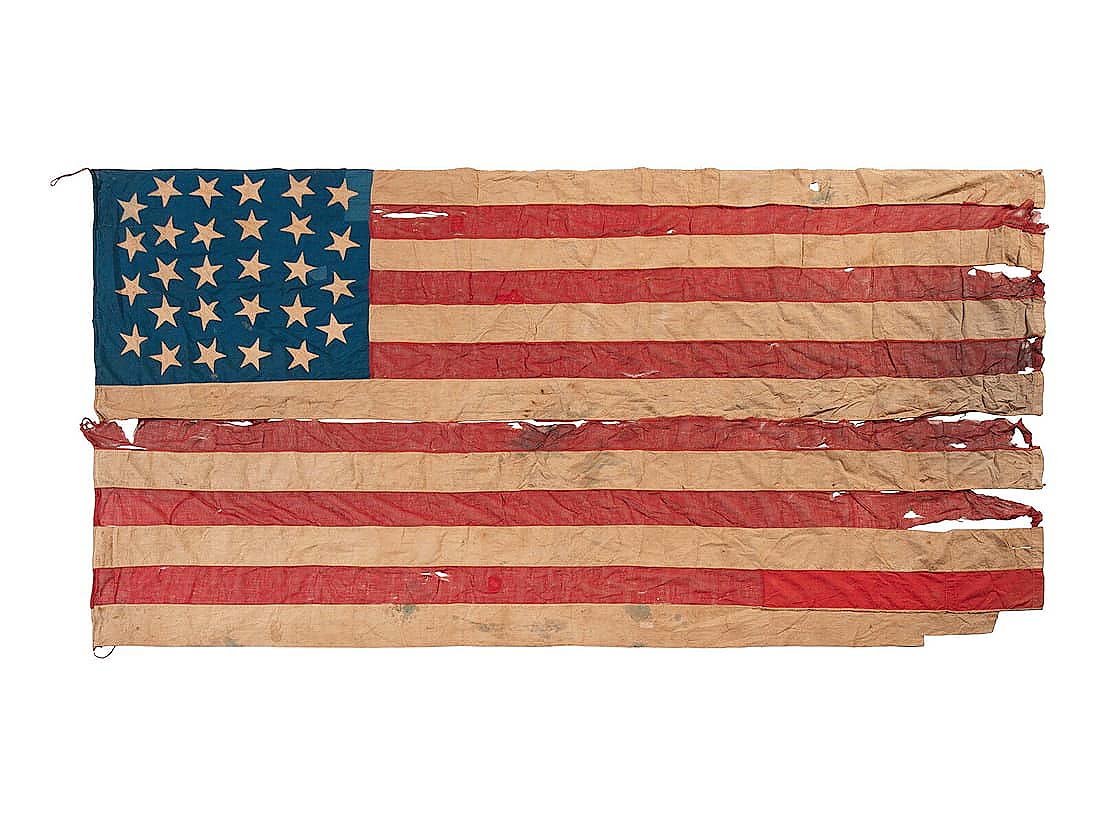
Flag lots were led by a 28-star American flag made circa the mid Nineteenth Century, which realized $11,400. According to catalog notes, this example was “scarcely encountered” because it commemorated “the statehood of Texas, which was admitted to the Union as the 28th state on 29 December 1845.” Other notable lots included a circa 1876-90s 18-star American flag ($5,700) and a circa 1880s-early 1900s 35-star veteran’s parade flag for the 71st New York Volunteers ($4,500).
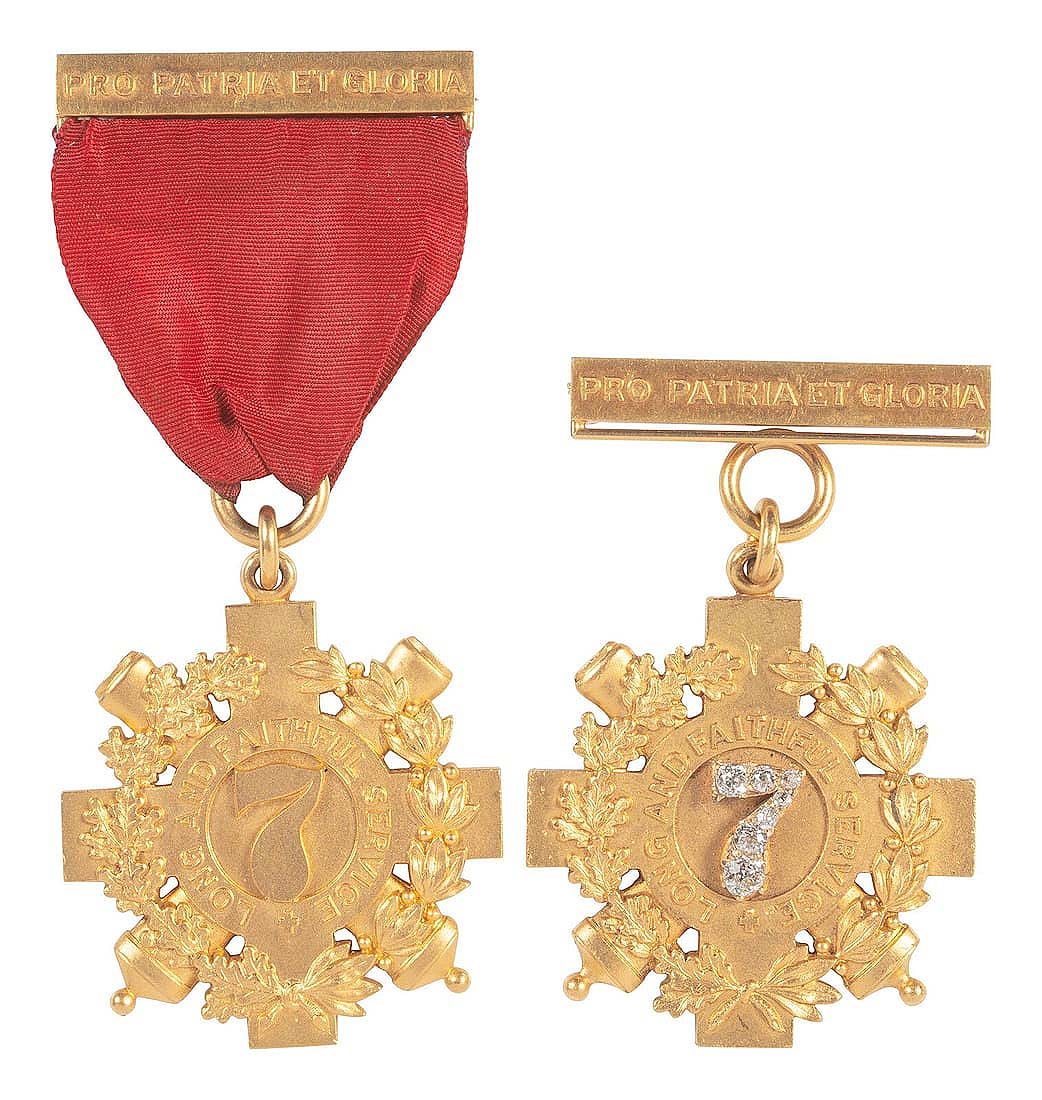
Also concerning the Civil War were a lot of two Tiffany & Company service medals presented to George Moore Smith of the Seventh New York State militia. Both medals were 22K gold, signed “Tiffany & Co.” and patented “Mar. 3 1885.” With provenance to the estate of David O’Reilly of Old Bridge, N.J., the lot was pinned down for $12,000.
Ness Collection: Native American Photography
The Ness collection was led at $21,600 by Drawings Presented to Rev. Pius Boehm by His Little Indian Children. The bound album of drawings was presented to Father Pius, a Benedictine monk and missionary of more than 50 years, by the children of the Immaculate Conception Mission School at Stephan on the Crow Creek Indian Reservation in South Dakota (now the Crow Creek Tribal School). The 100-page book contained pencil and watercolor drawings depicting traditional Native American culture, European-American culture, Christian themes, nature and daily activities.
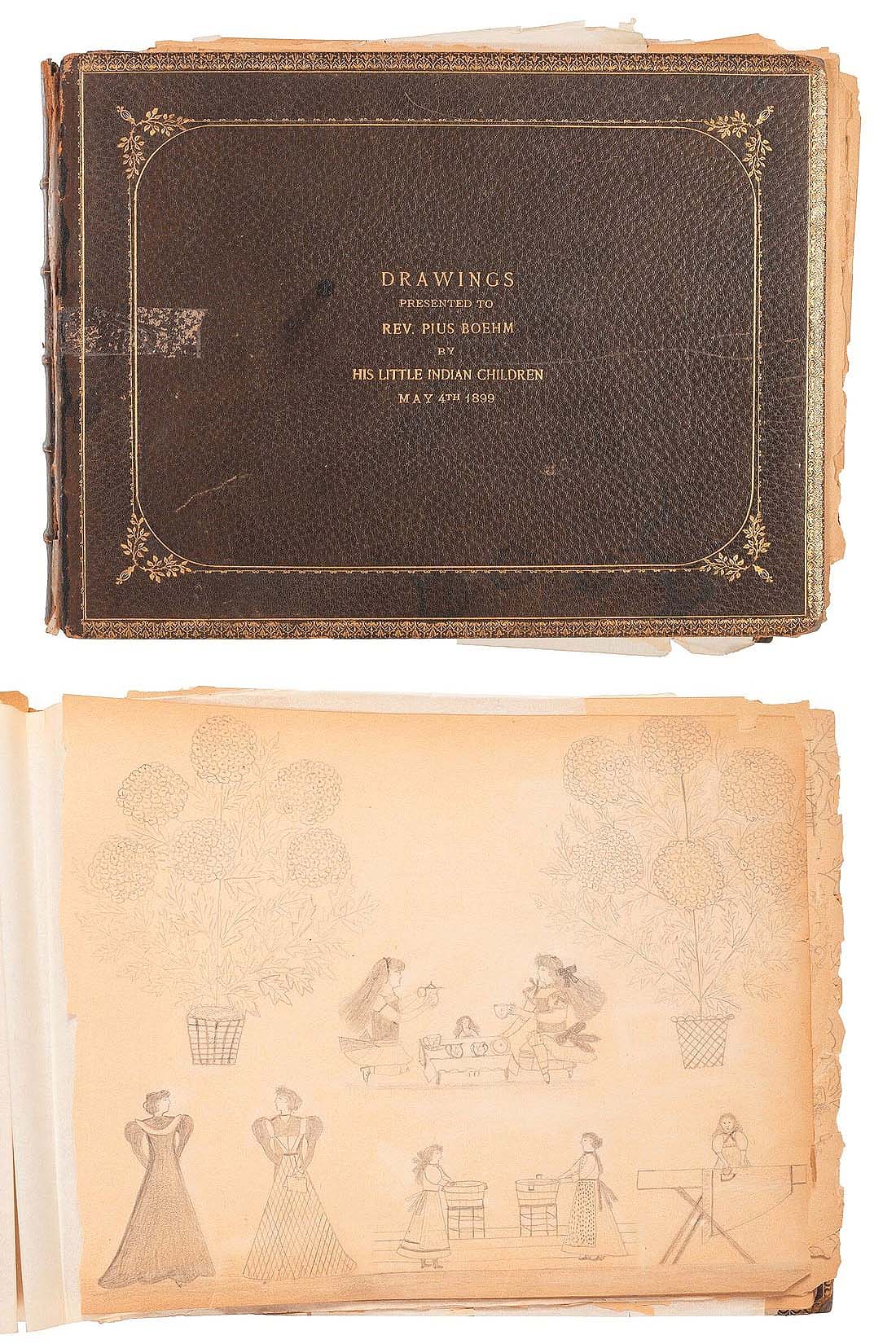
Drawings Presented to Rev. Pius Boehm by His Little Indian Children included around 100 pages of artwork done by the Native American children of the Immaculate Conception Mission School at Stephan, located on the Crow Creek Indian Reservation in South Dakota; the book earned $21,600 ($5/7,000).
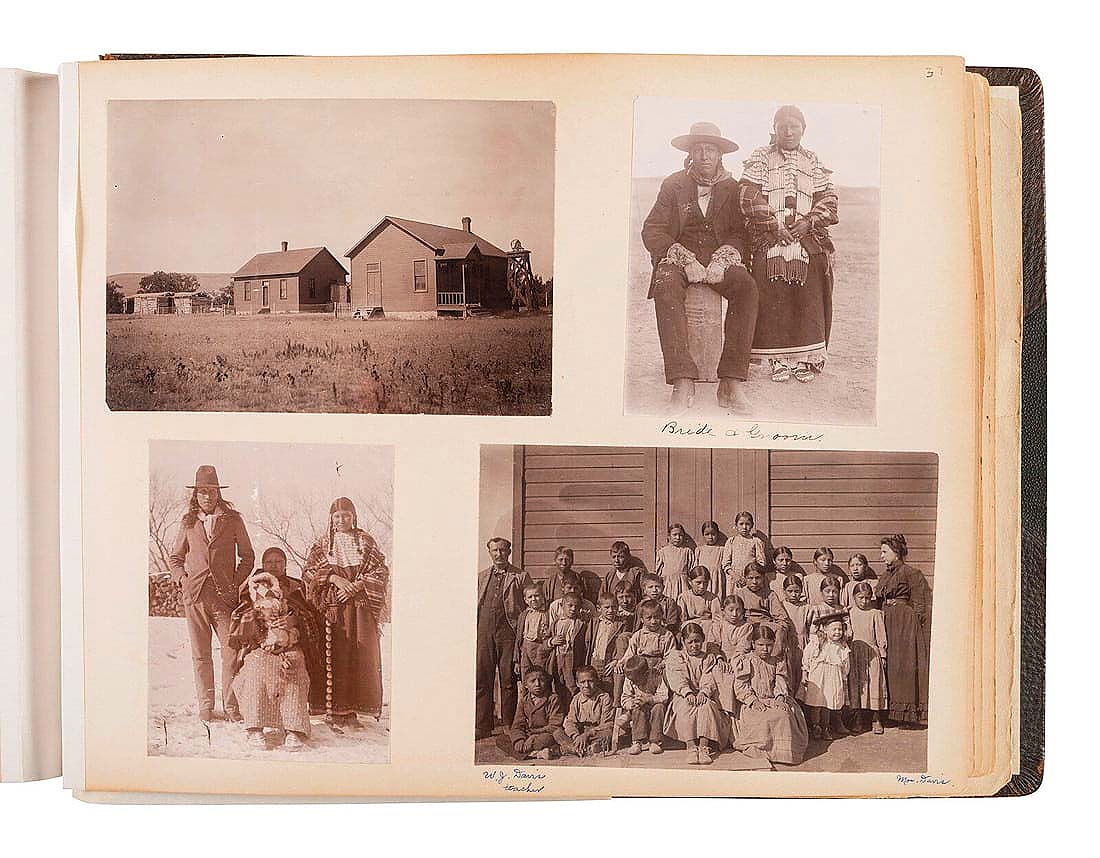
Another album, this example filled with photographs of the Pine Ridge Reservation (South Dakota) and its surroundings, more than doubled its $7,000 high estimate to realize $16,800. Most photographs in the lot were uncredited; however, some were accompanied by a note attributing the images to “Mr Garrett, teaching at No. 4 Day School.”
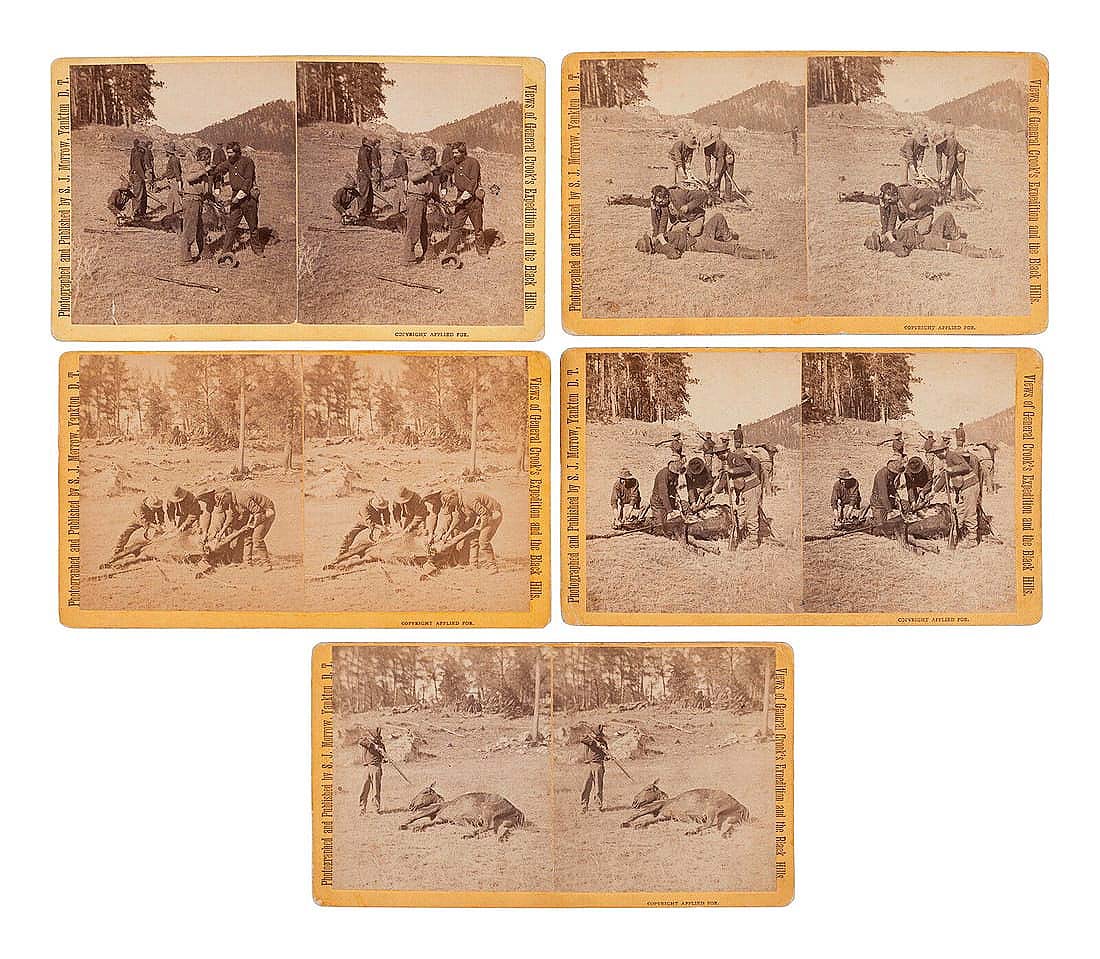
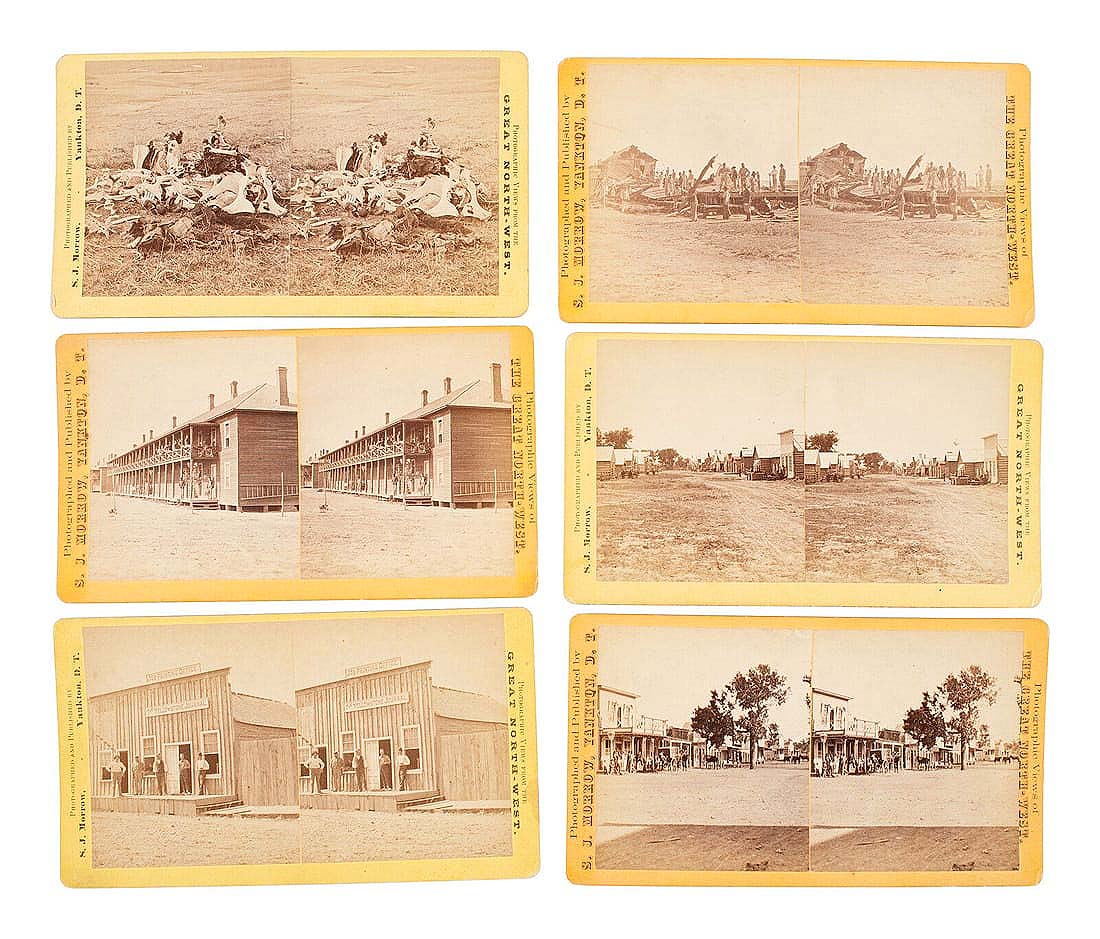
Several lots of photography by Stanley J. Morrow found new homes, ranging in price from $660 for a cabinet card of General Nelson Miles, colonel of the Fifth Infantry in Yankton, Dakota Territory (circa 1876), to $15,600 for a collection of rare stereoviews collected by Seventh cavalryman Philip J. Dieter, a Baltimore-born veteran of the Civil War and the late Indian wars.
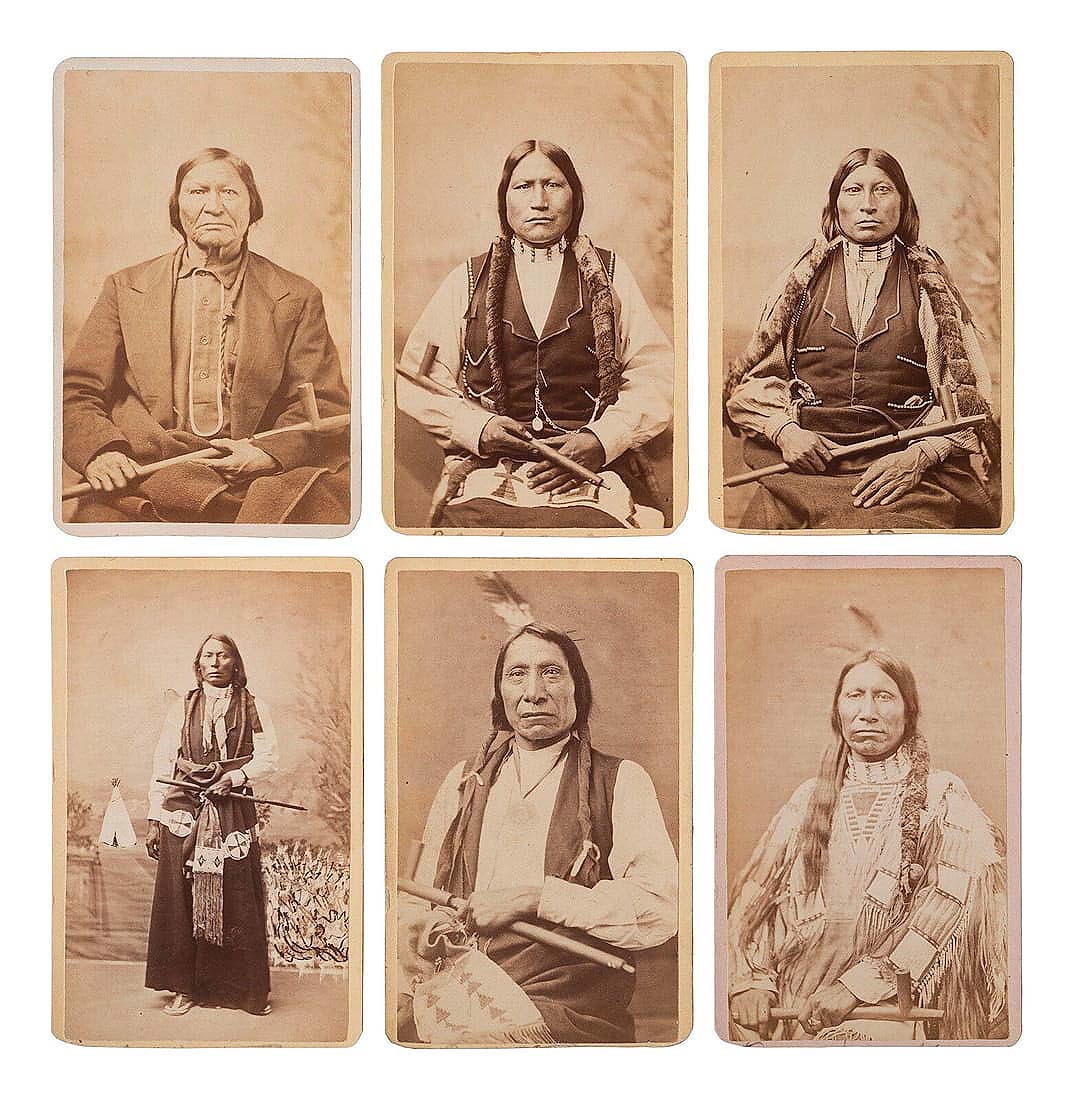
A group of 24 CDVs of Sioux chiefs and warriors taken at the Red Cloud Agency in Cheyenne, Wyo., circa 1877, attracted bidder attention. Photographer Daniel S. Mitchell, who, starting at age nine was involved in the world of photography, “initially established a gallery in Cheyenne but often traveled to photograph the Indians, miners, soldiers, railroads and landscapes of the Great Plains and Black Hills.” Most of the Sioux chiefs and warriors in this lot were present at the signing of the Fort Laramie Treaty and the Battle of Little Bighorn. Initially auctioned in a June 2020 American Historical and Ephemera and Photography sale at Cowan’s Auctions, the group sold at Freeman’s for $6,600.
Prices quoted include the buyer’s premium as reported by the auction house. For information, 312-280-1212 or www.freemansauction.com.
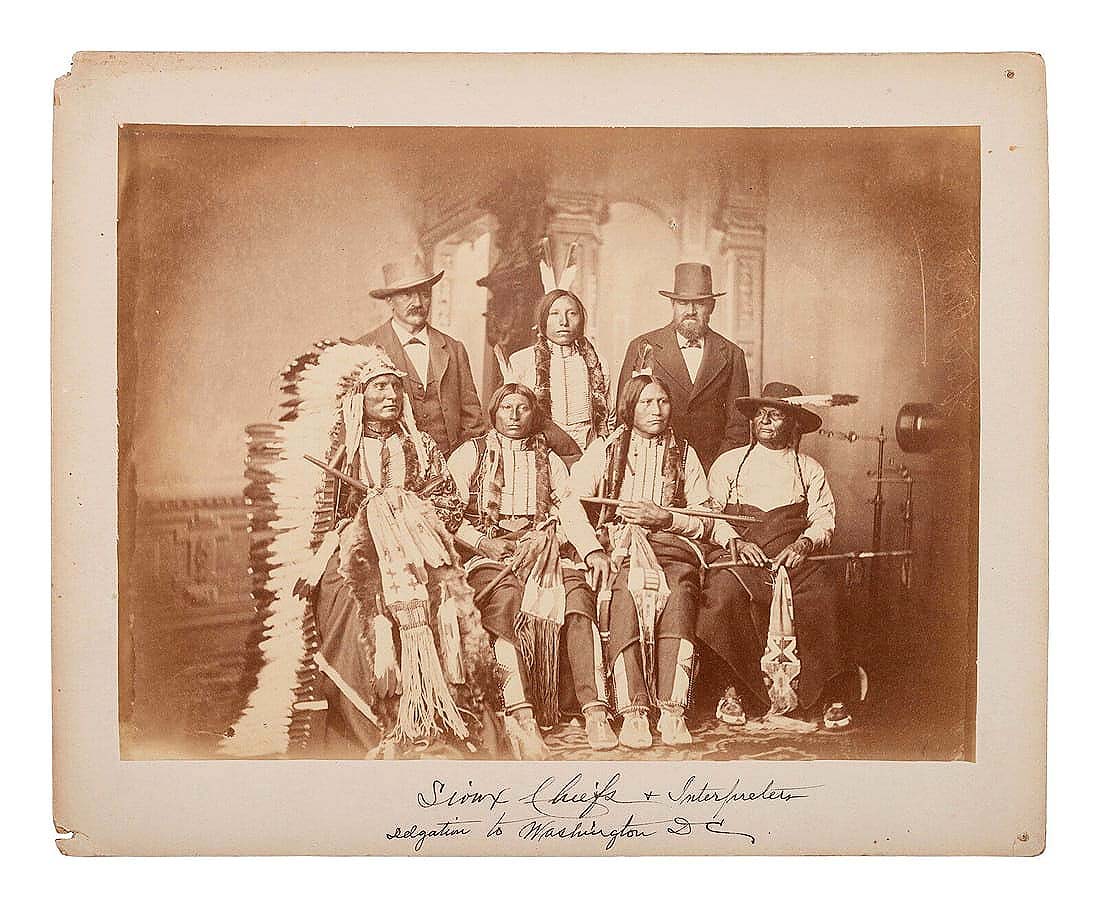 Taken by Mathew Brady (1822-1896), this albumen photograph of the Sioux delegation to Washington, DC, in 1877 snapped up a $6,000 finish surpassing its $3/5,000 estimate.