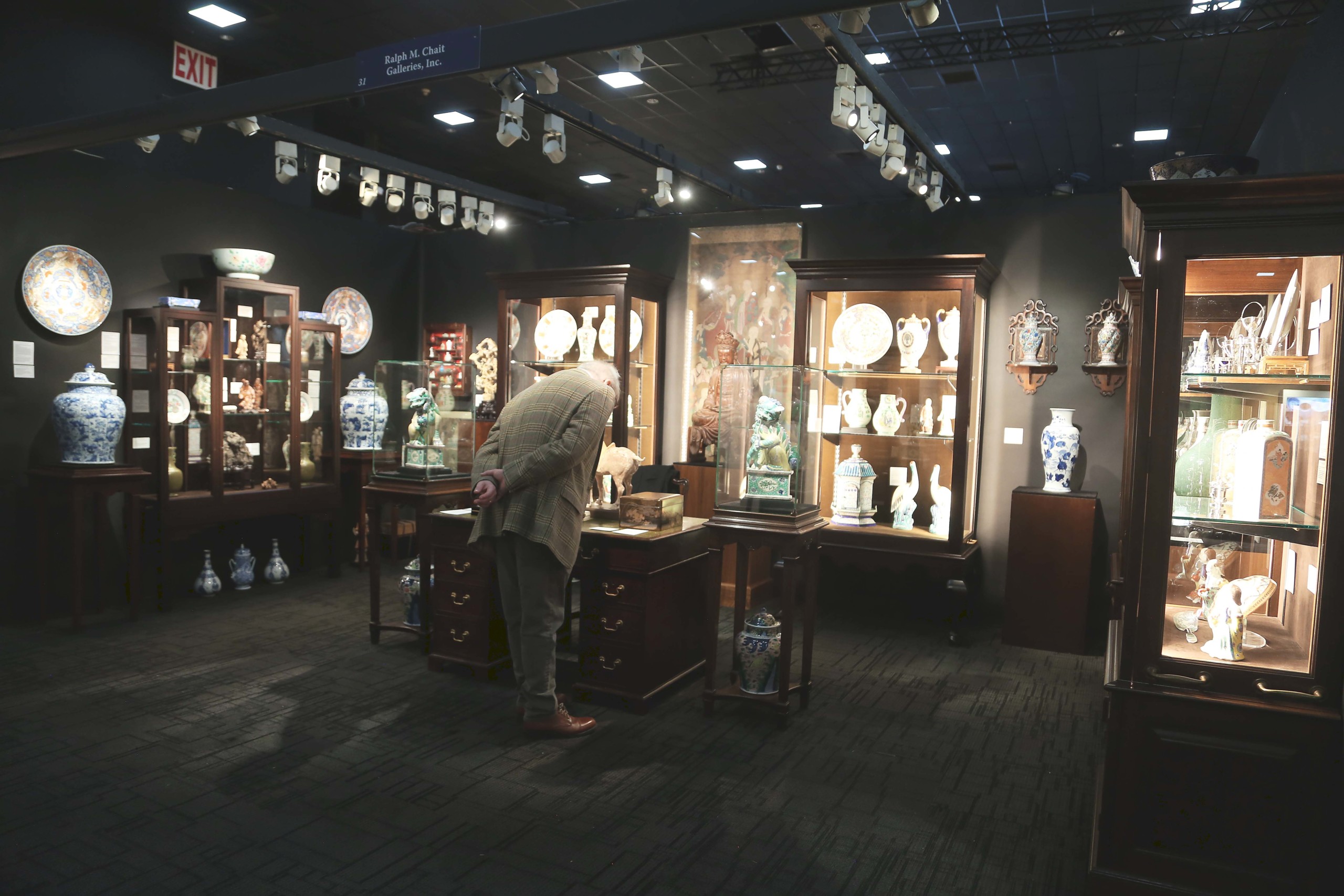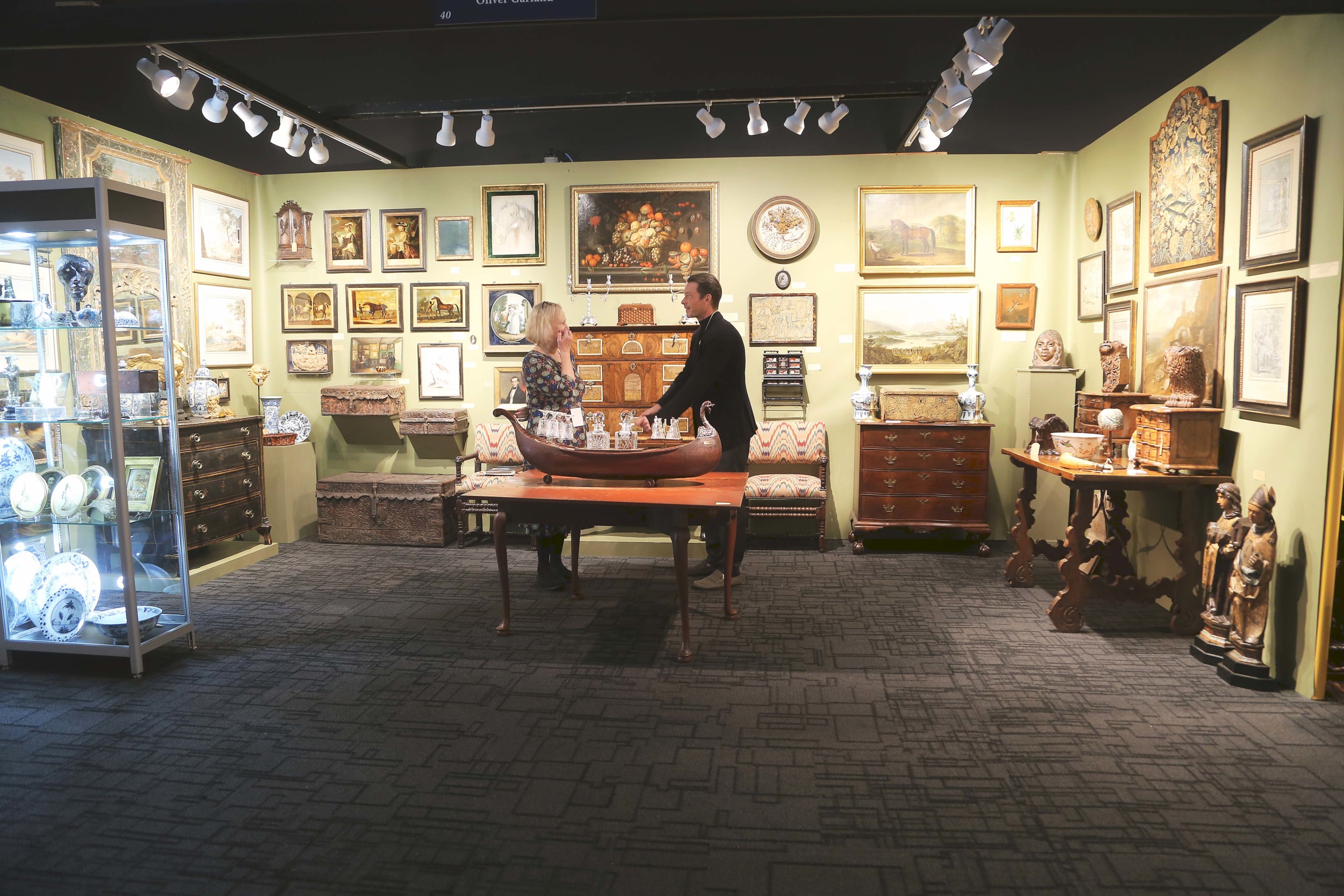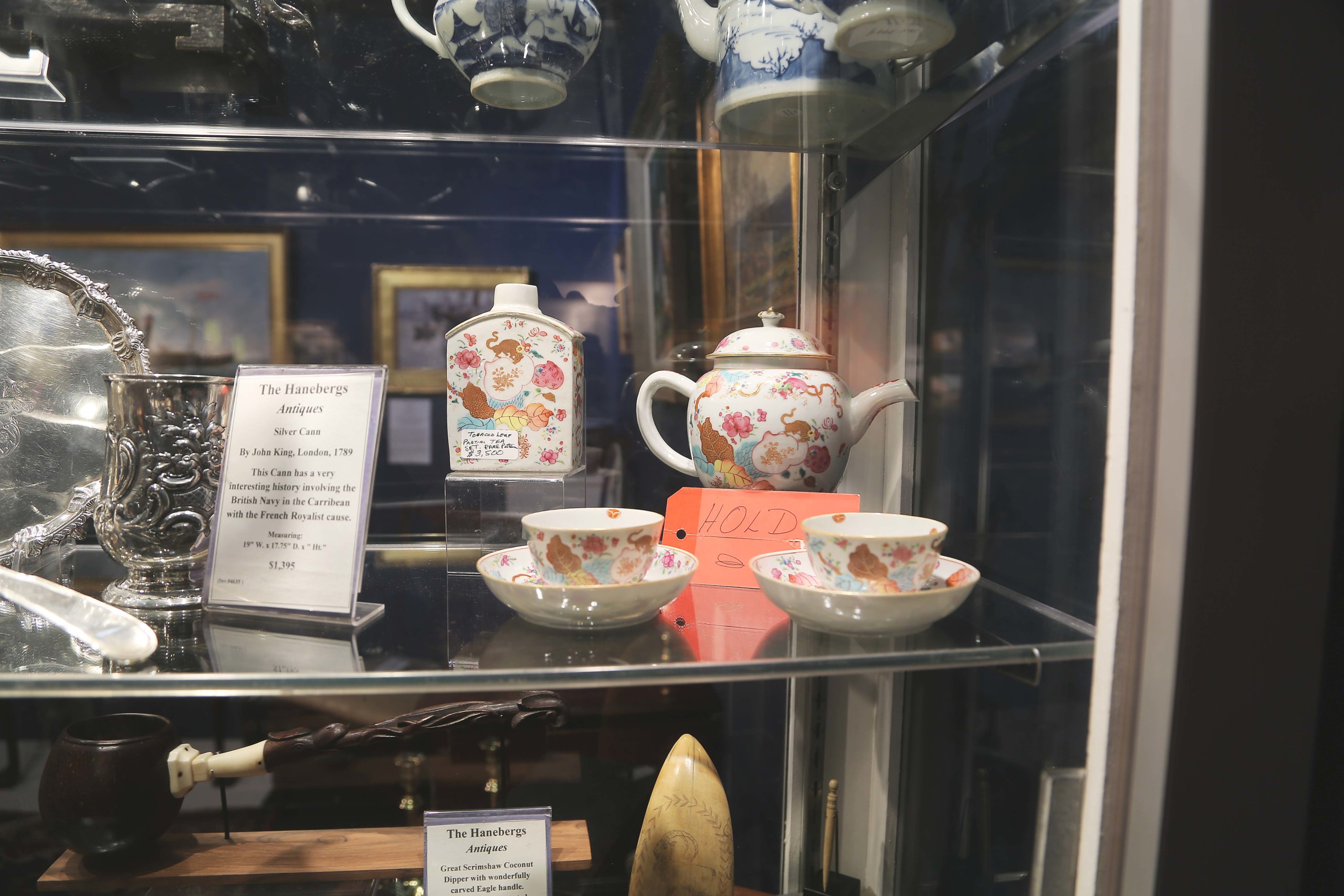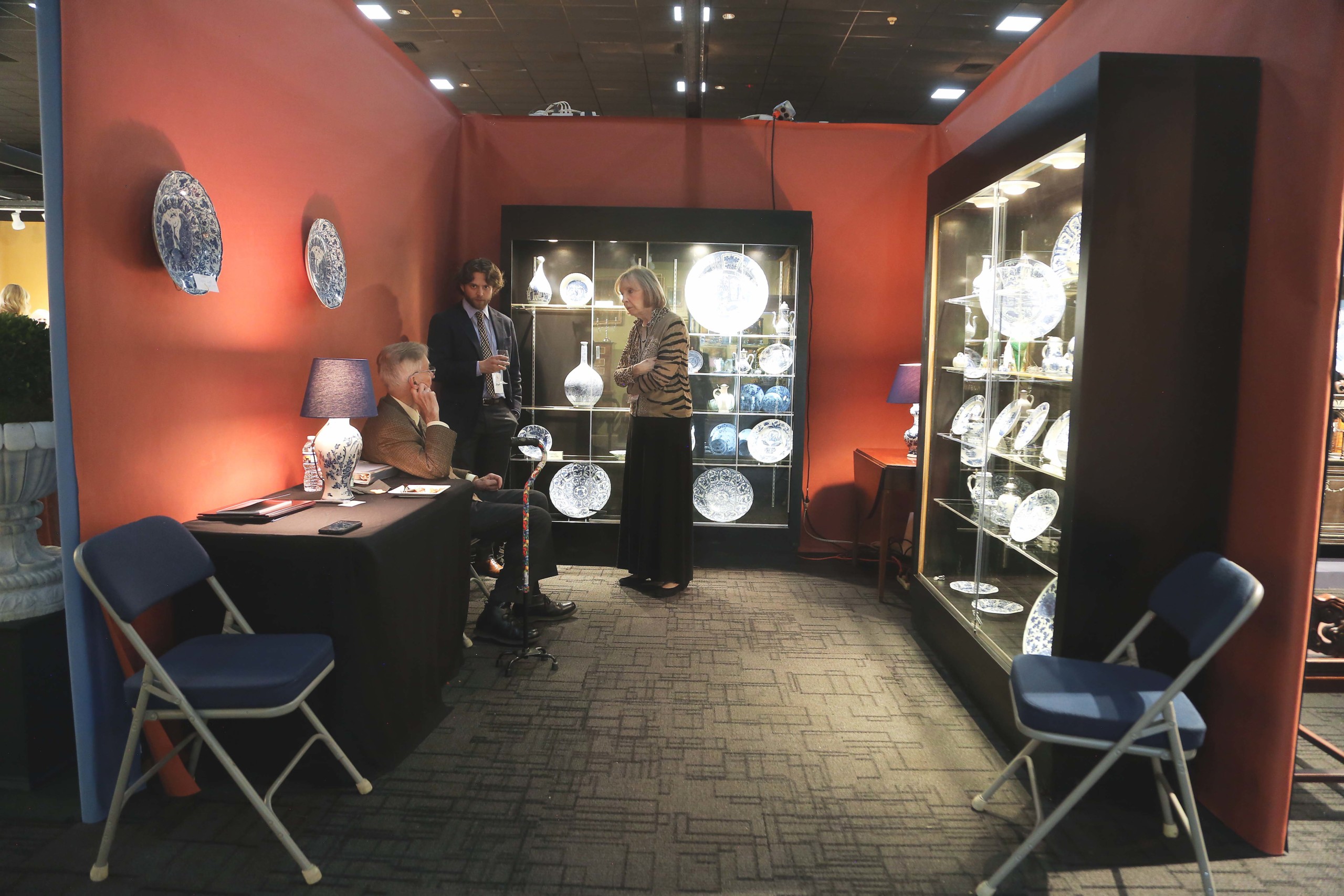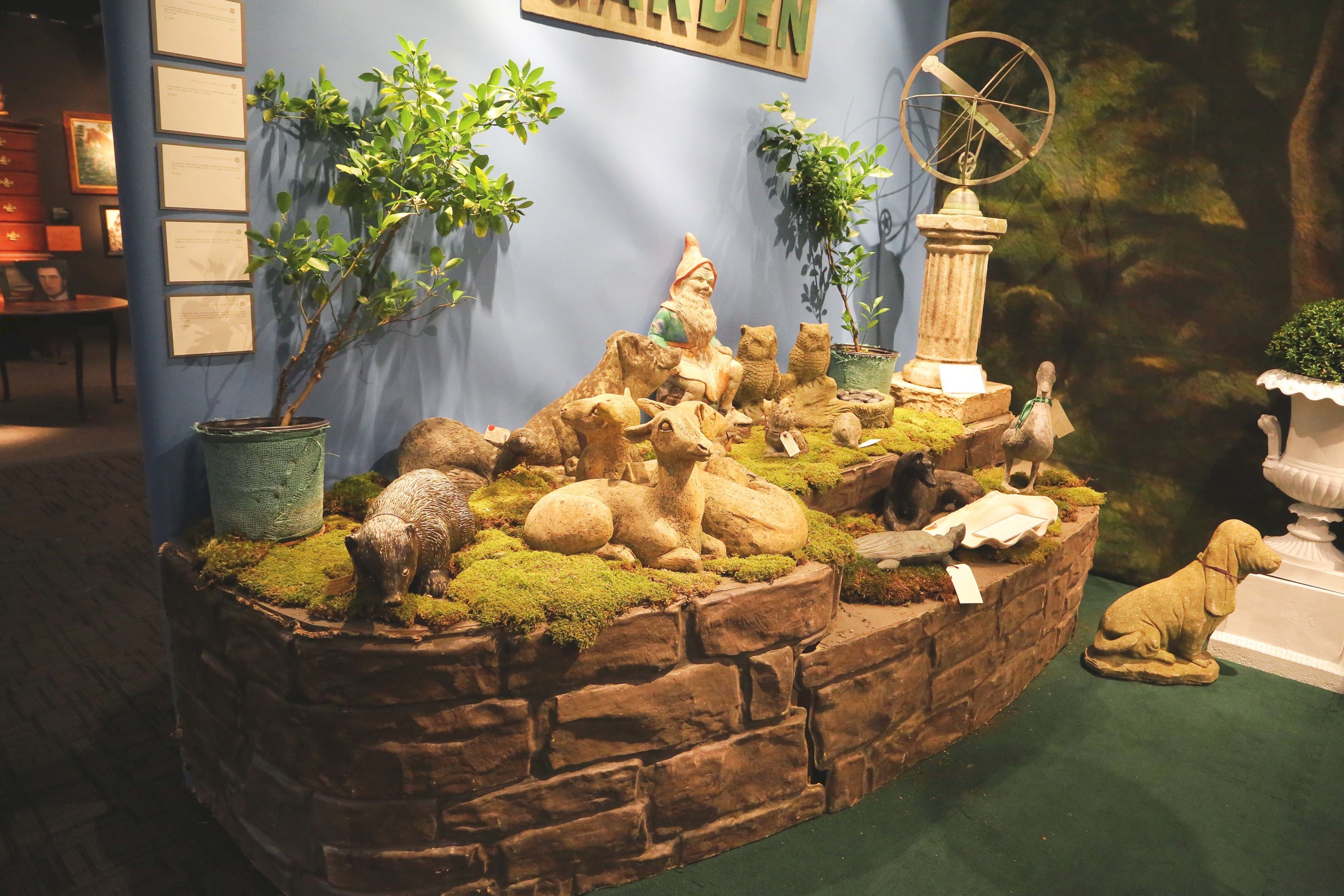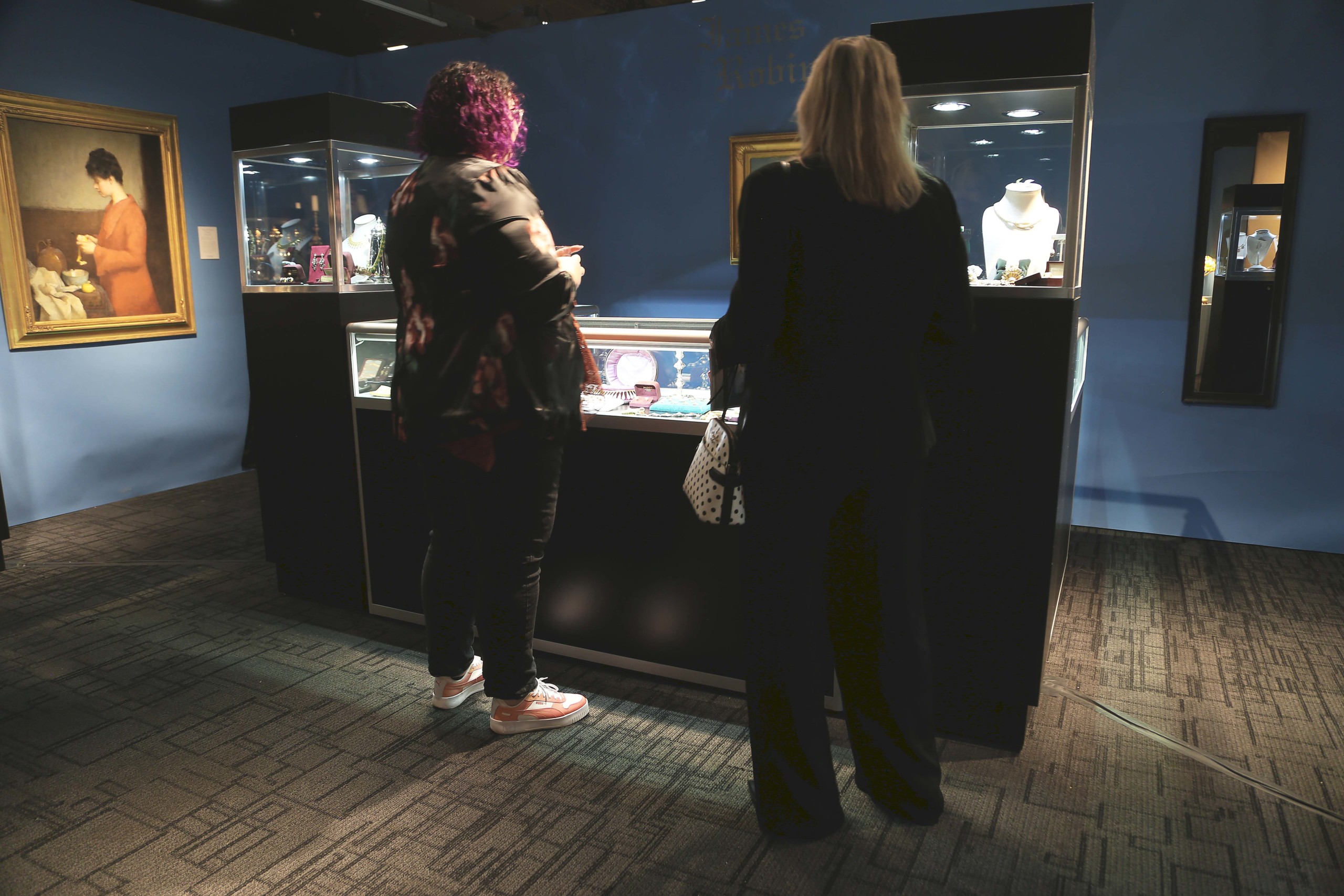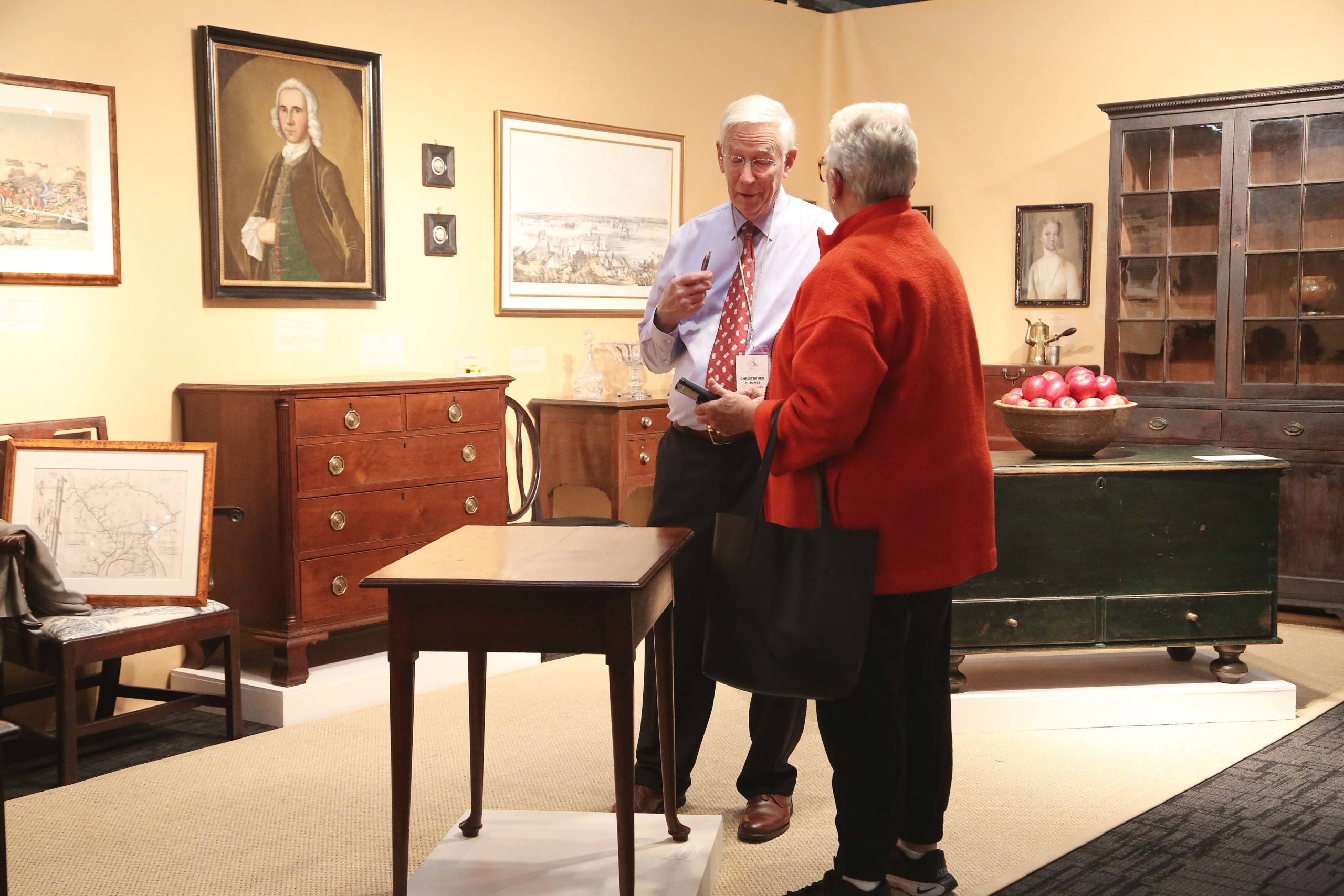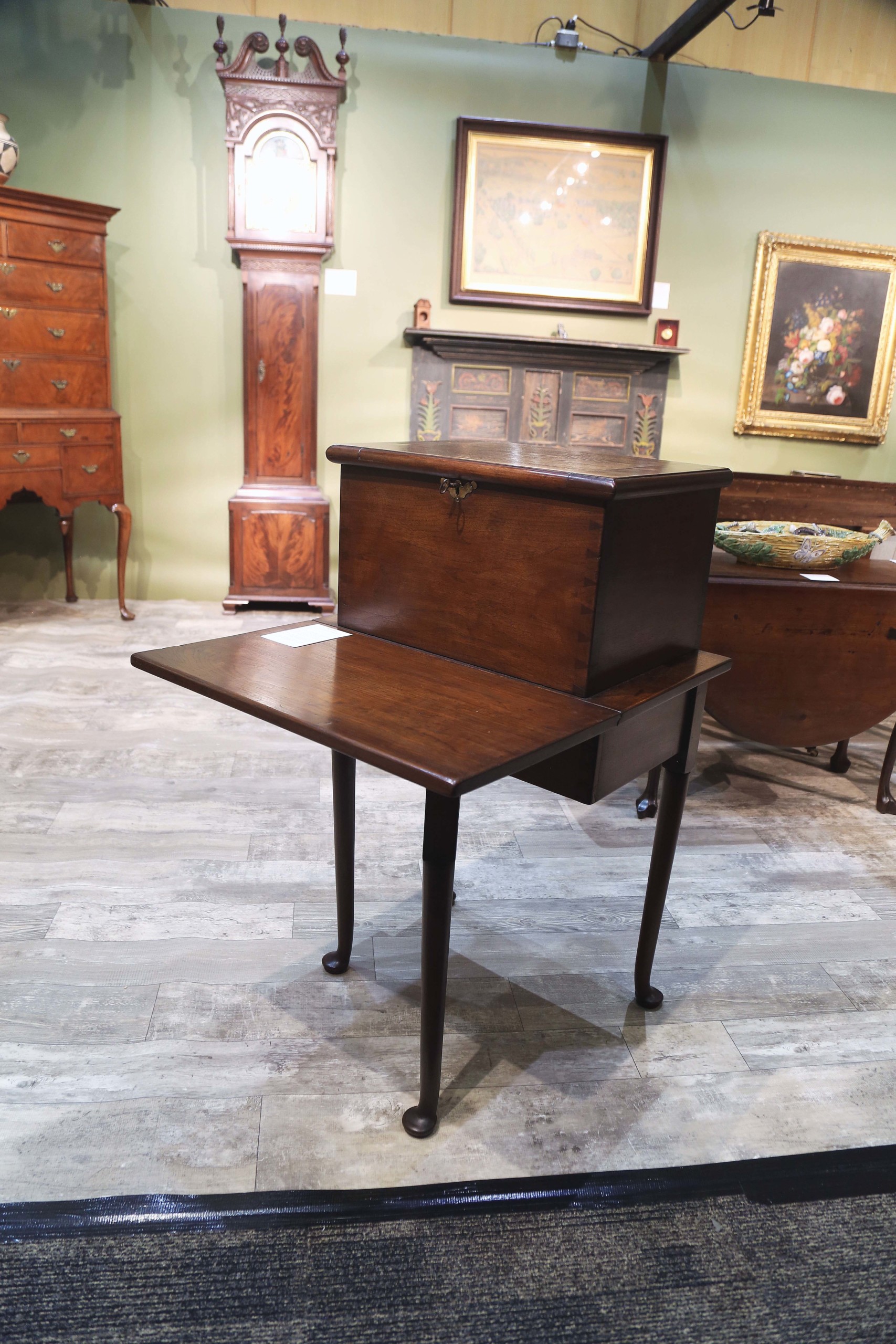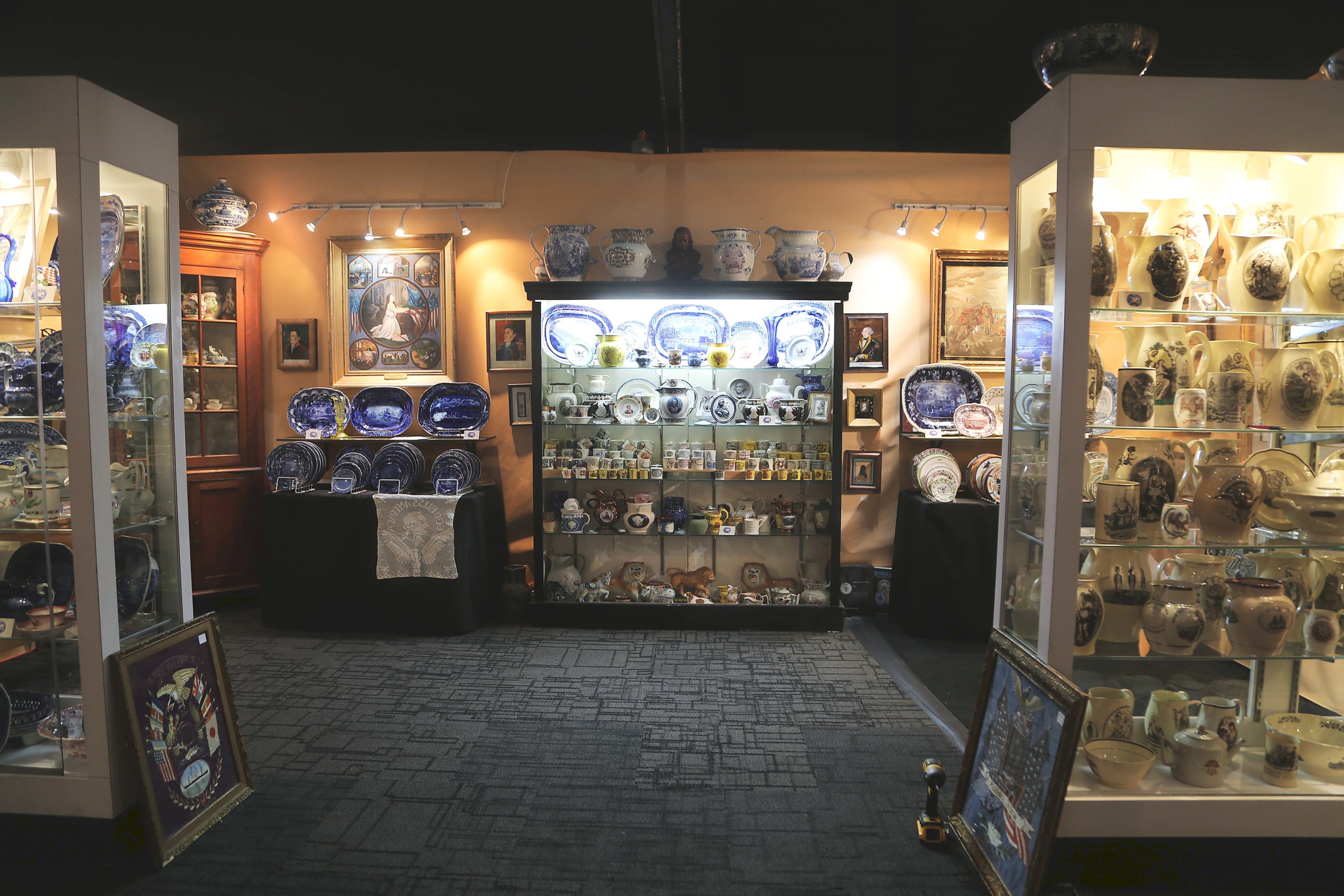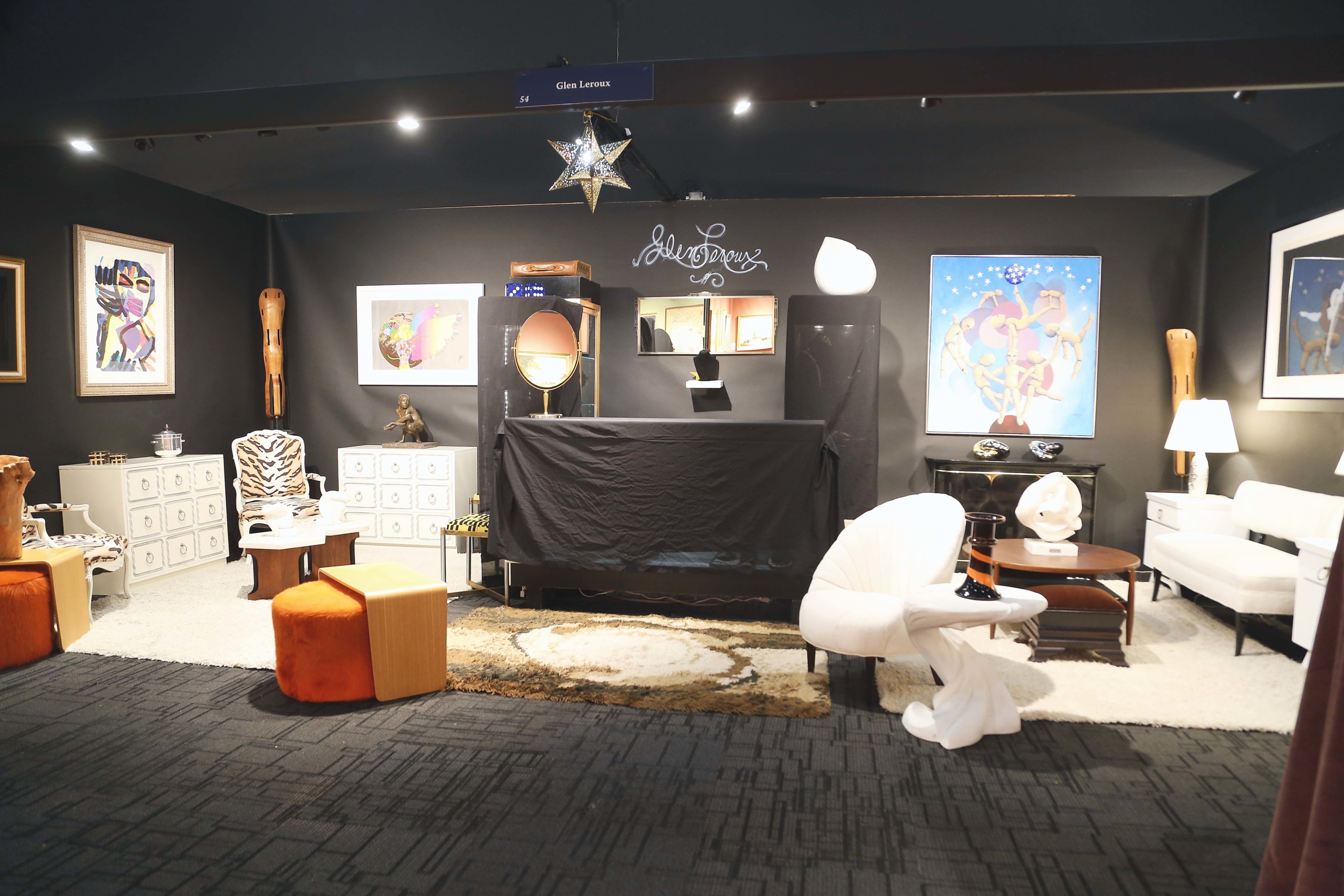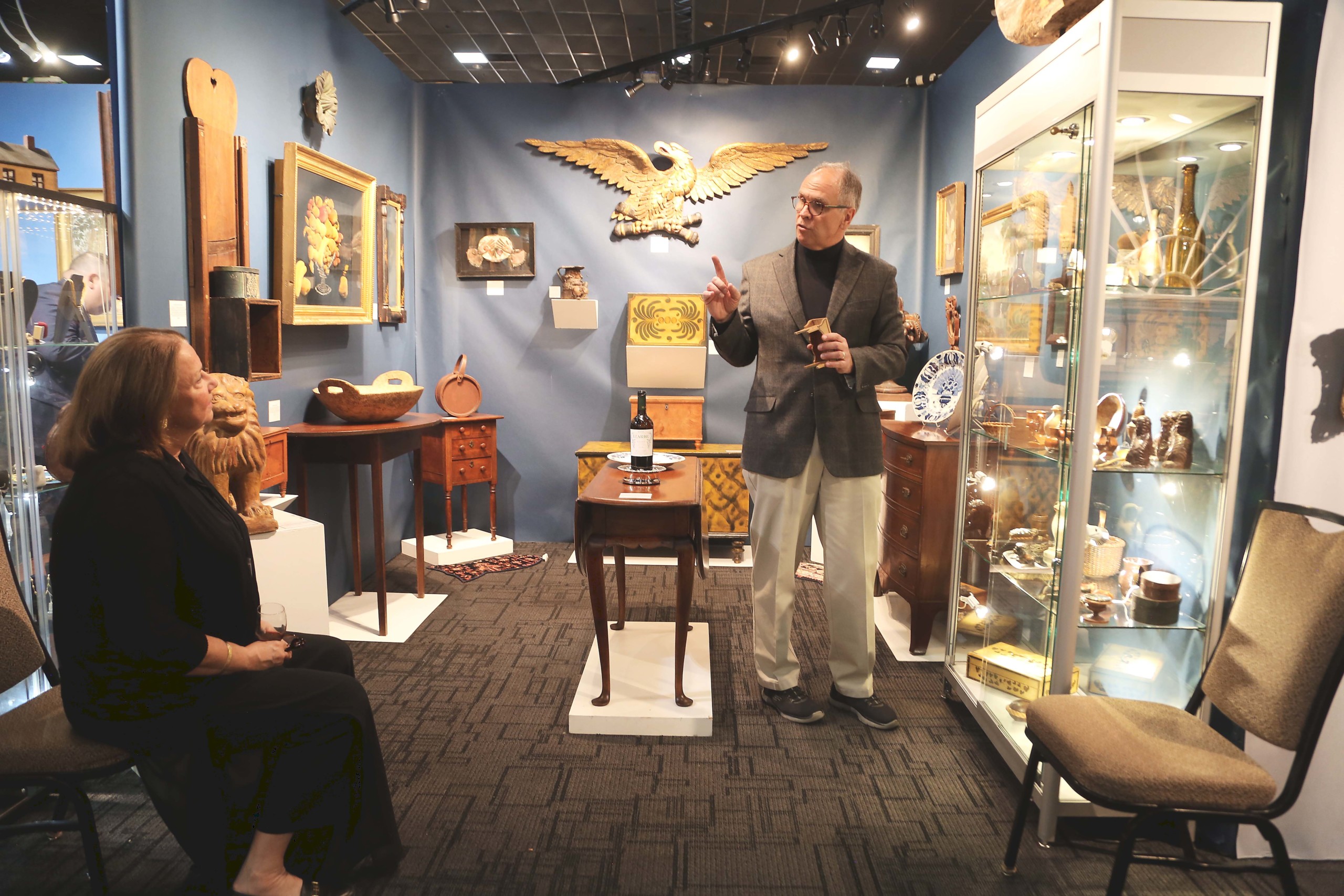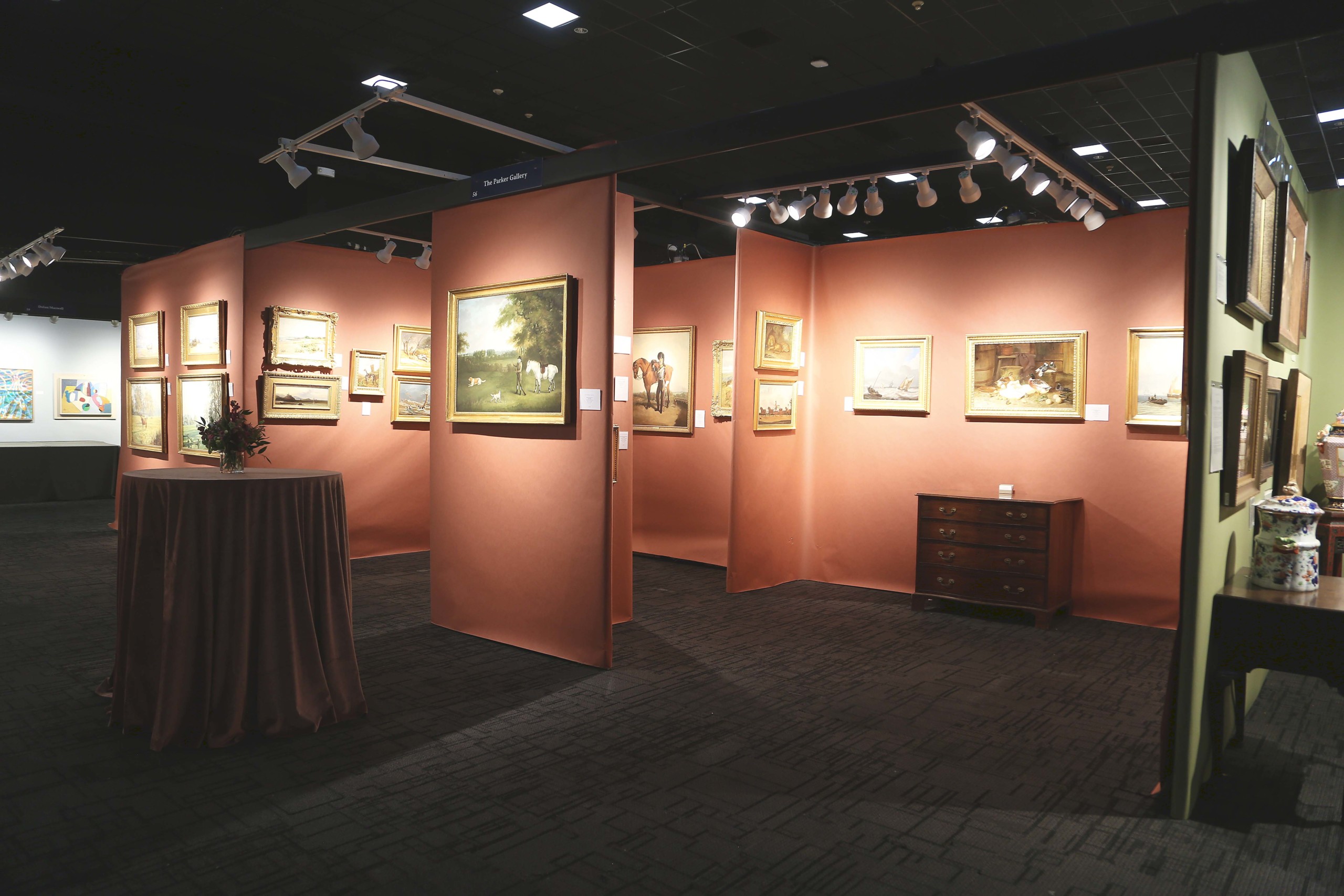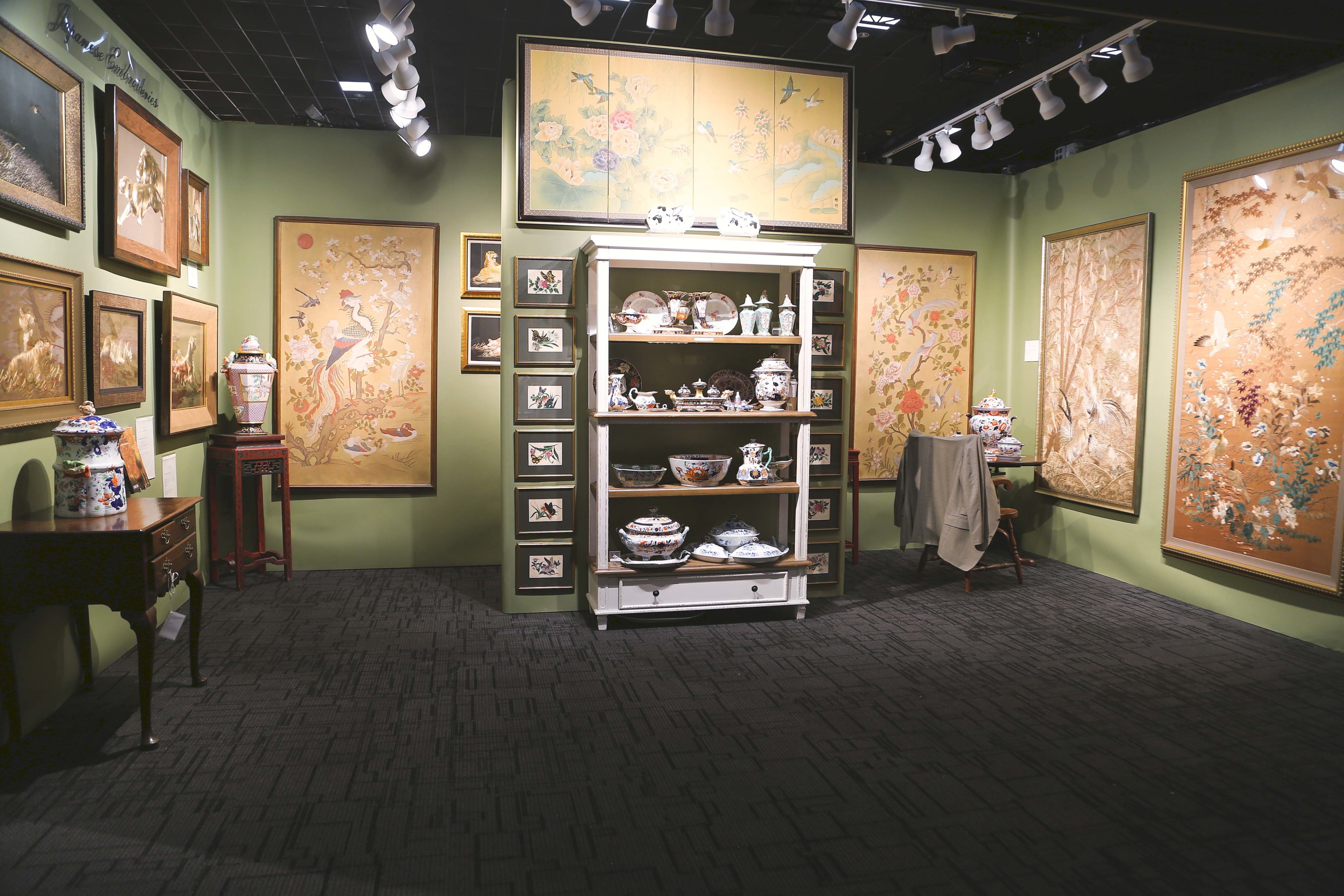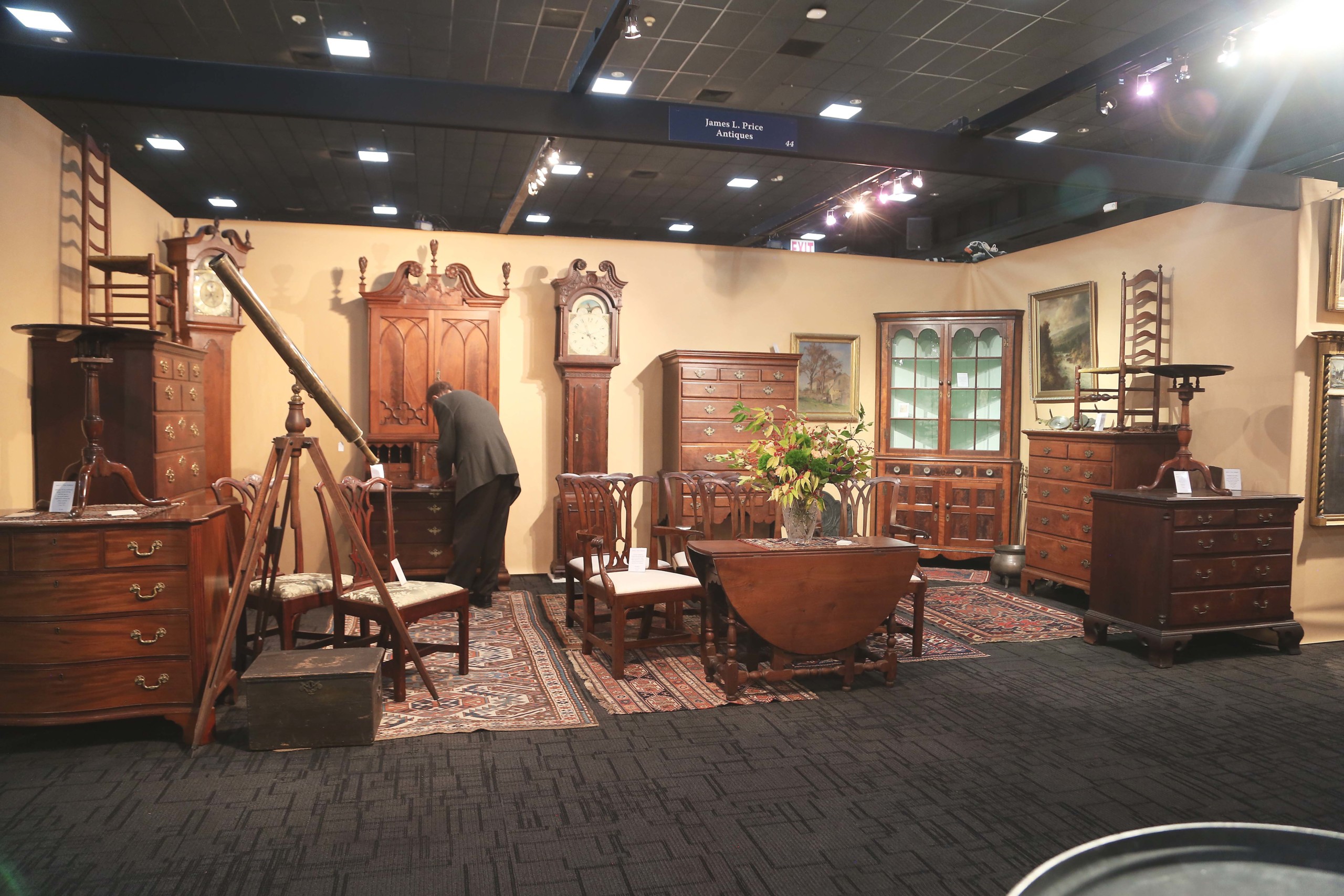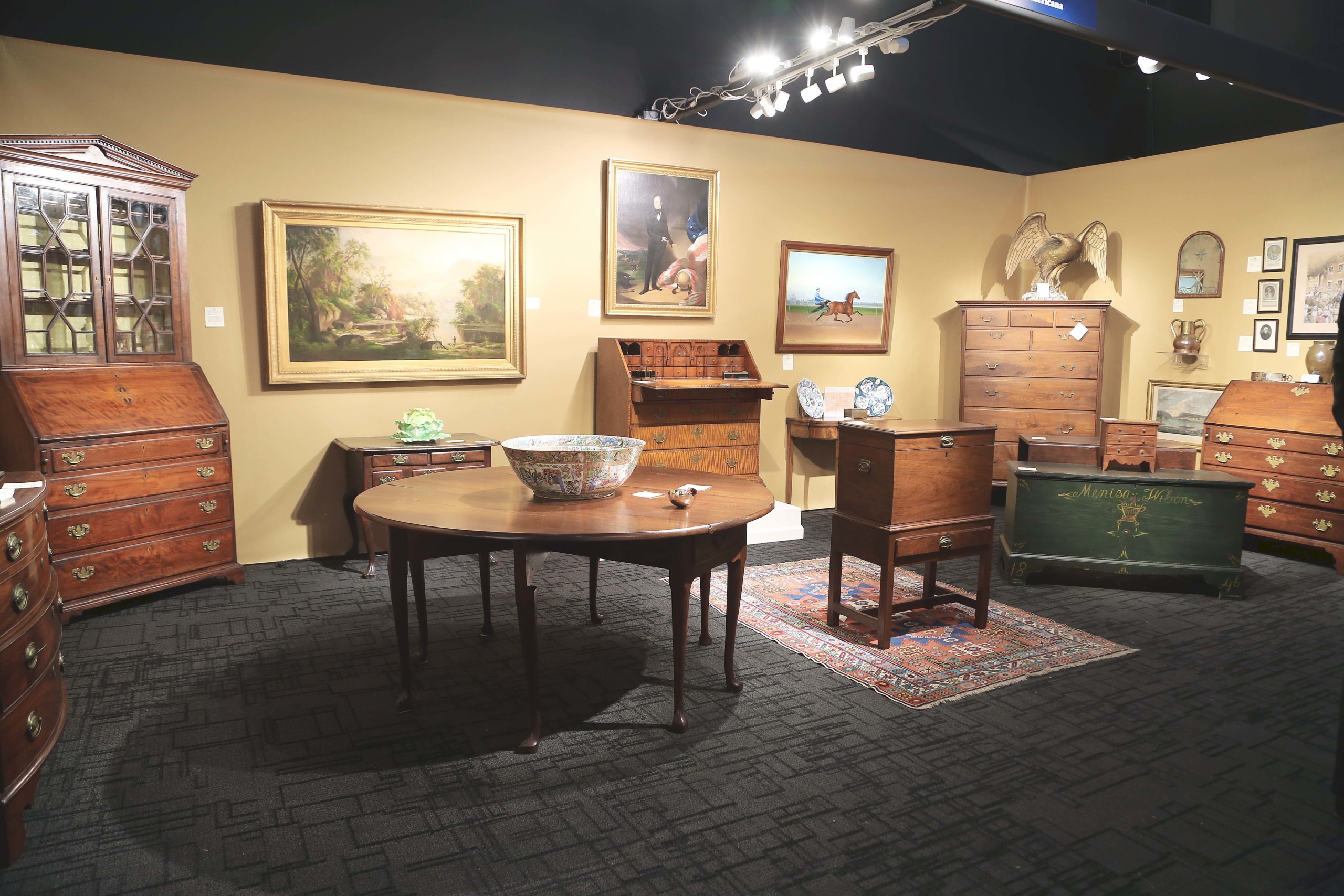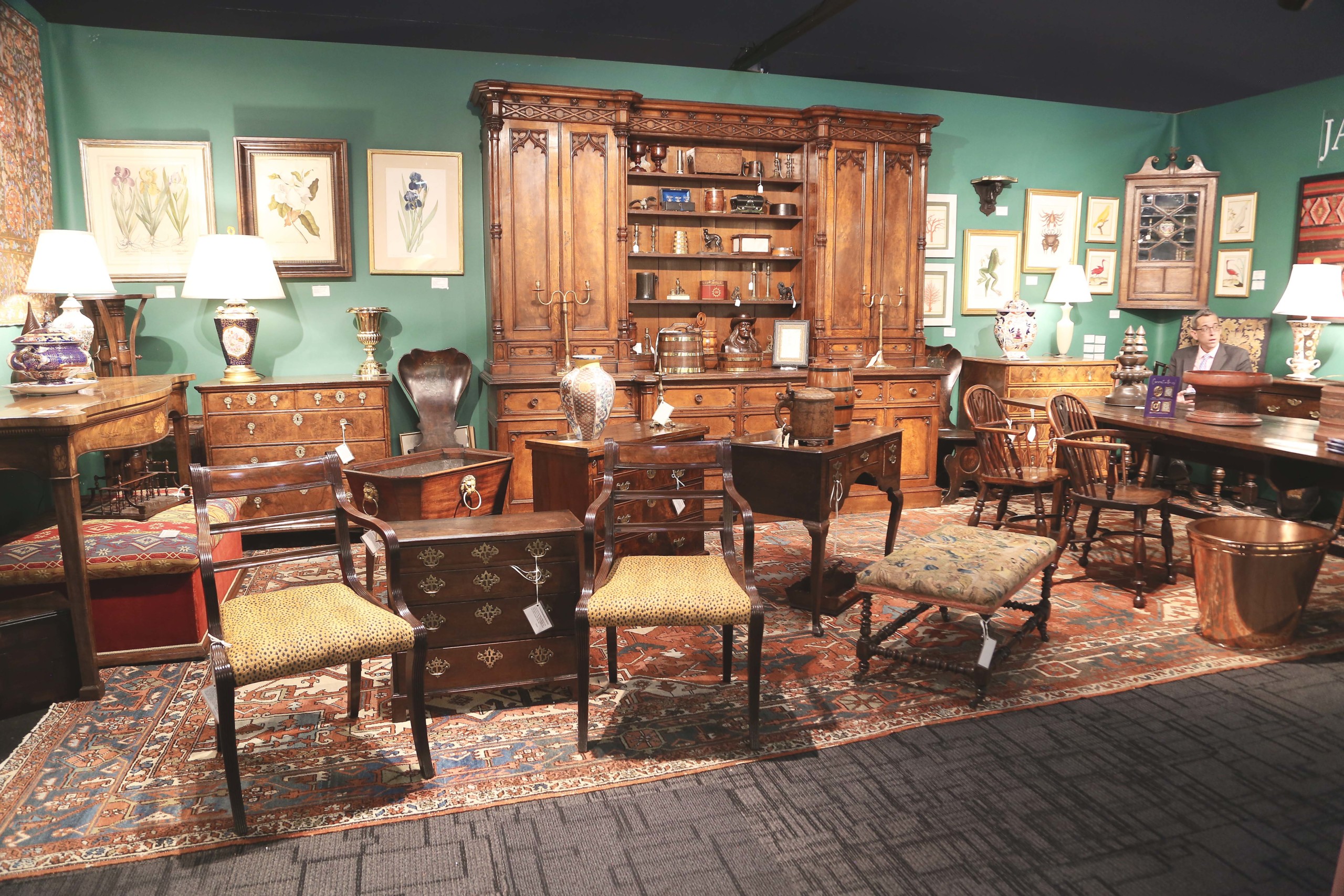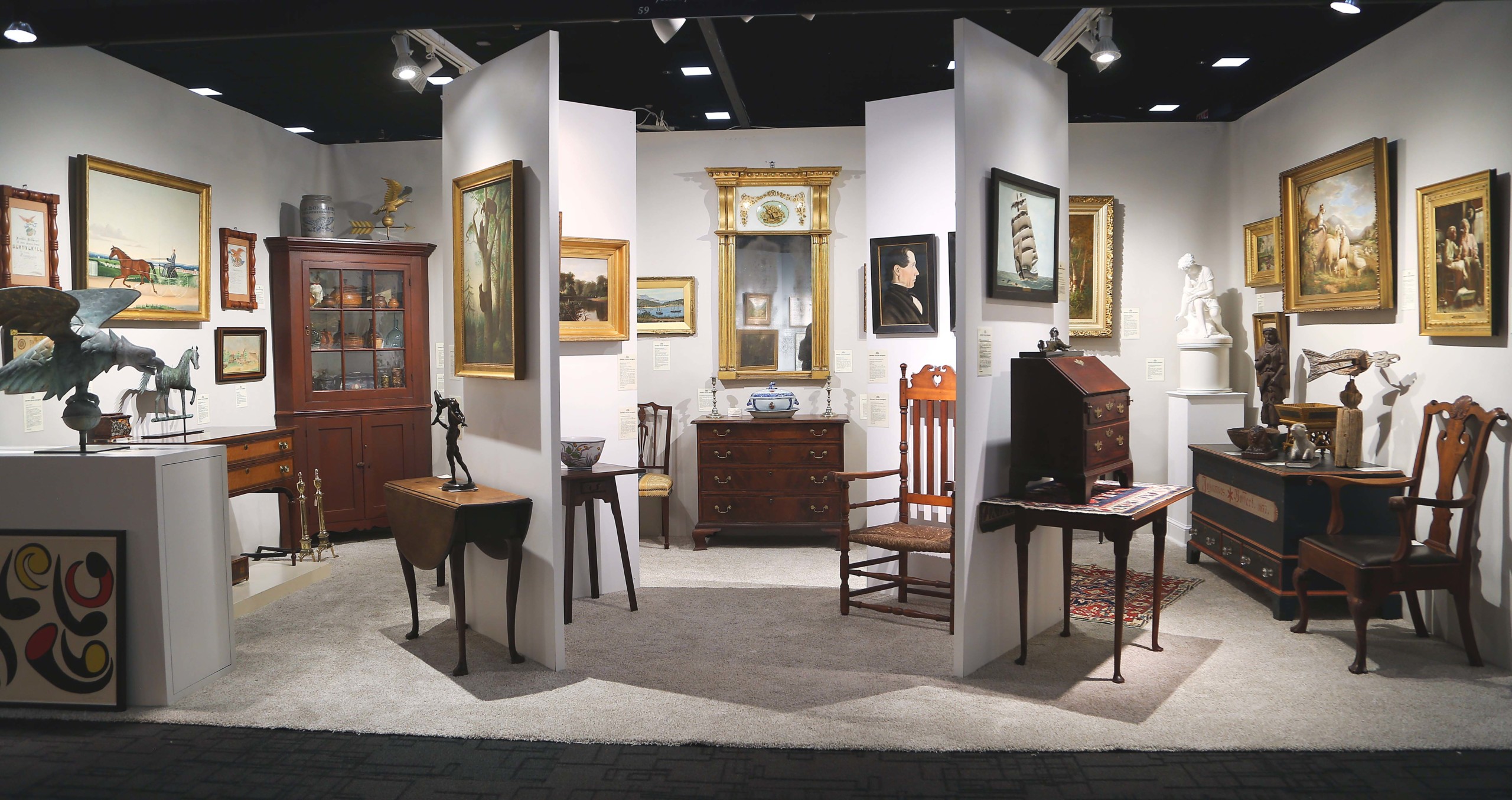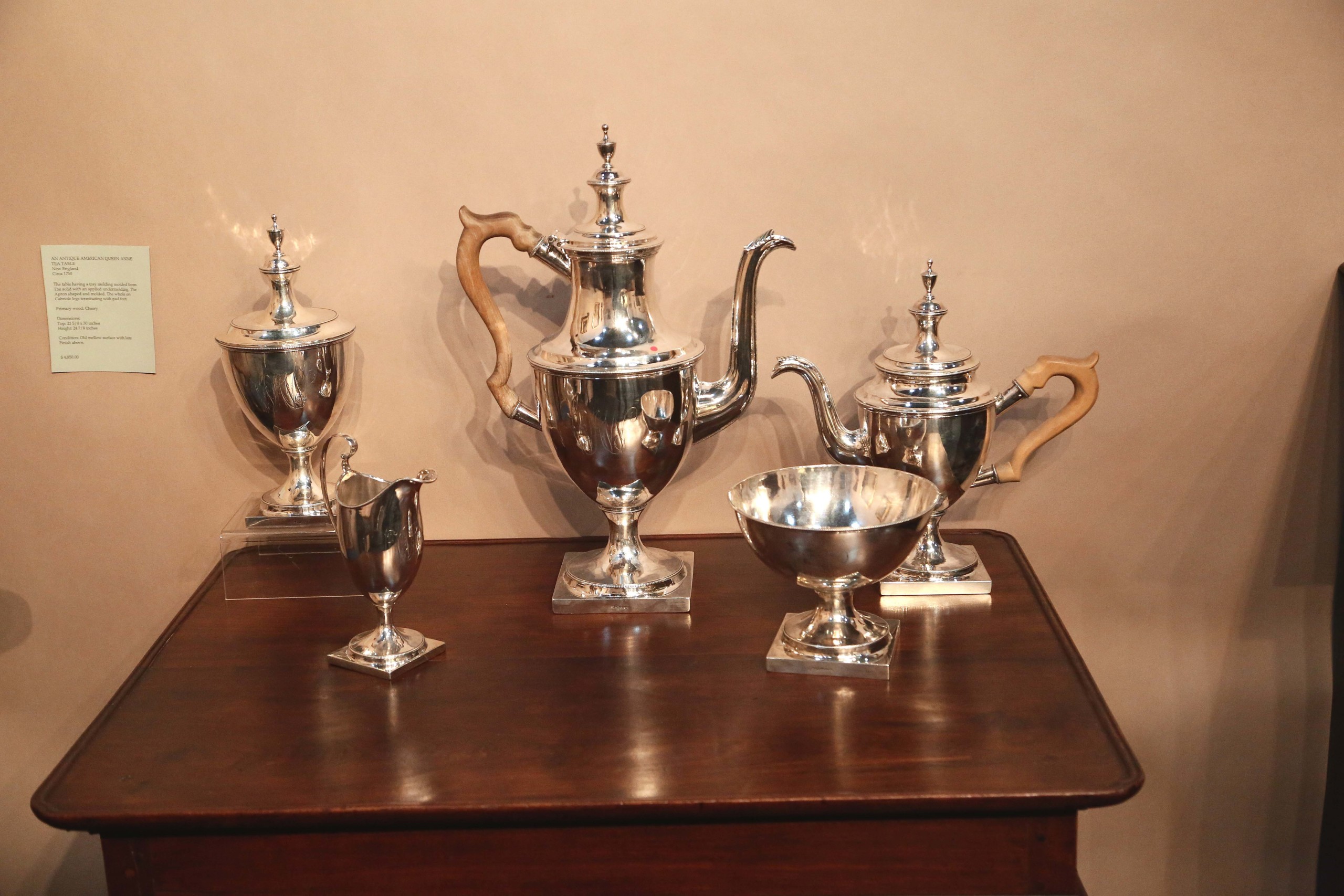
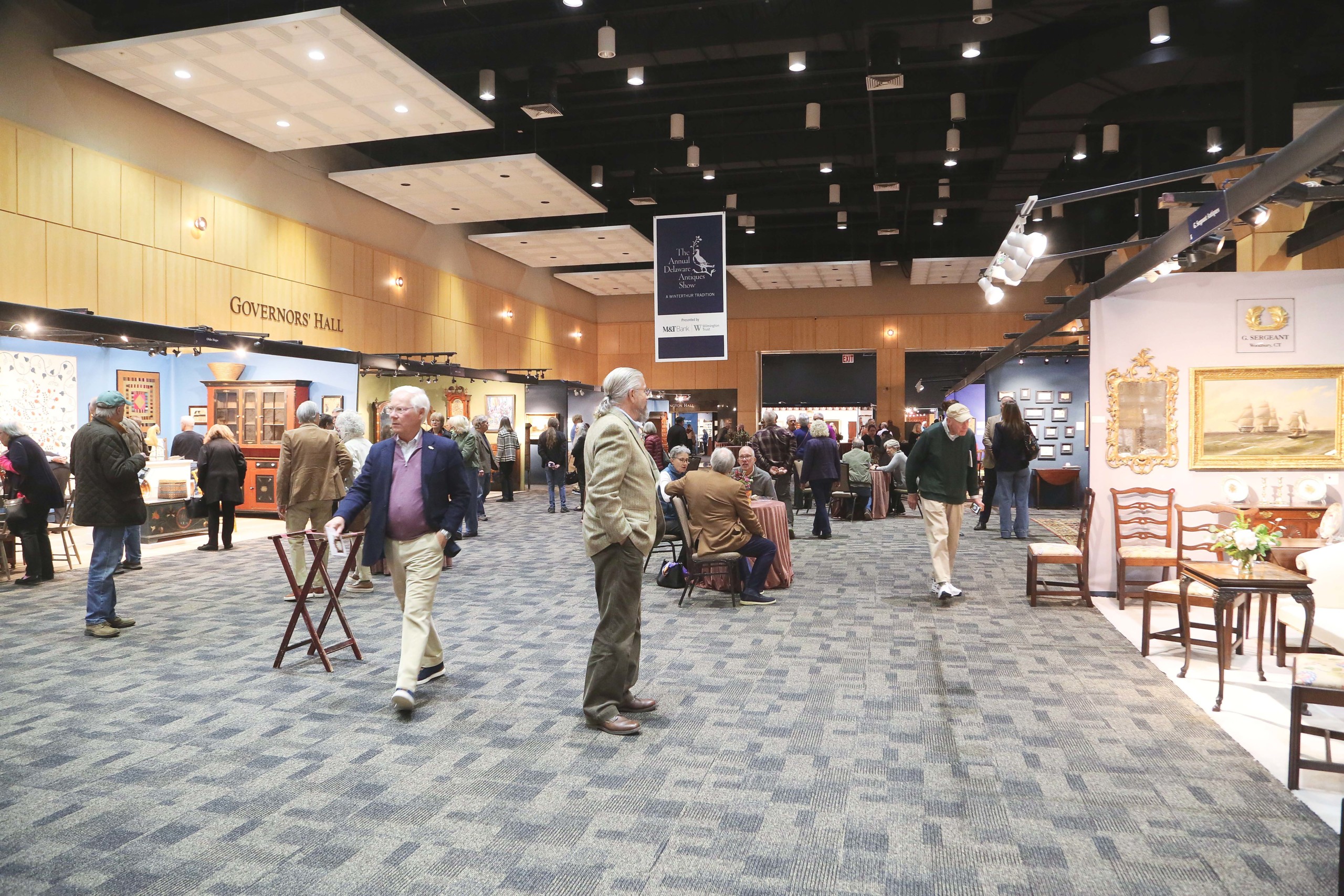
Lectures on Friday morning had just concluded when the show opened, and many attendees were returning to buy after the Thursday evening preview.
Review & Onsite Photos by Madelia Hickman Ring
WILMINGTON, DEL. — “The Delaware Show represents the old guard as to how things ‘used’ to be’; the show continues that tradition and I think it’s the best of the best. Because of its connection with Winterthur, you can’t get better dealers,” said show manager, Diana Bittel. She was, of course, talking about the Delaware Antiques Show, which has supported Winterthur Museum, Garden and Library since 1963 and, now in its 62nd year, returned to its longtime home at the Chase Center on the Riverfront November 7-9.
In 2026, the United States will celebrate the 250th birthday of its founding, and museums and other organizations around the country are jumping on the anniversary bandwagon with events and initiatives to recognize this milestone. Antiques shows are an opportunity for collectors, scholars, curators and even the uninitiated to see for themselves objects and ephemera that were present during the first years of the Republic. The 250th is an unparalleled chance for those who make their livelihood selling Americana to take advantage of this particular moment.
A few of the 62 dealers on hand were showing for the first time: Betty Krulik (New York City), William Cook (Hungerford, UK), Hollis Brodrick (Portsmouth, N.H.) and Brian Cullity (Sagamore, Mass.).
Krulik, occupying a front-and-center spot in the front hall, anchored her booth with Thomas Hart Benton’s four-panel suite titled “Elements of Sea and Sky,” but a piece she was particularly pleased with, that had not been shown in 30 years, was a Vermont landscape scene in a period Sanford White frame that was not original to the landscape.
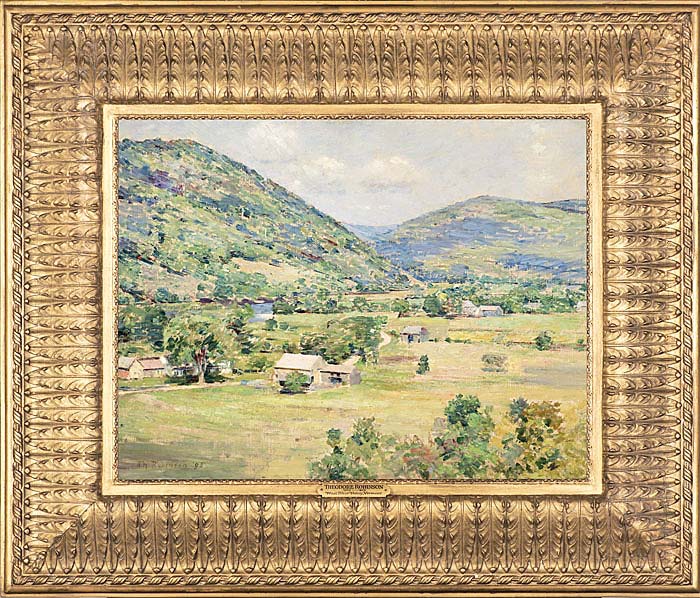
“West River Valley, Vt” by Theodore Robinson was one of Betty Krulik’s star pieces; she had interest from a museum during the show. Photo courtesy Betty Krulik Fine Art, New York City.
“I loved it, there was a good vibe in the hall,” Krulik told Antiques and The Arts Weekly. “There were very knowledgeable and qualified visitors. While I did not have any sales on the spot, I have museum interest in the Robinson, as I do in the Benton suite.”
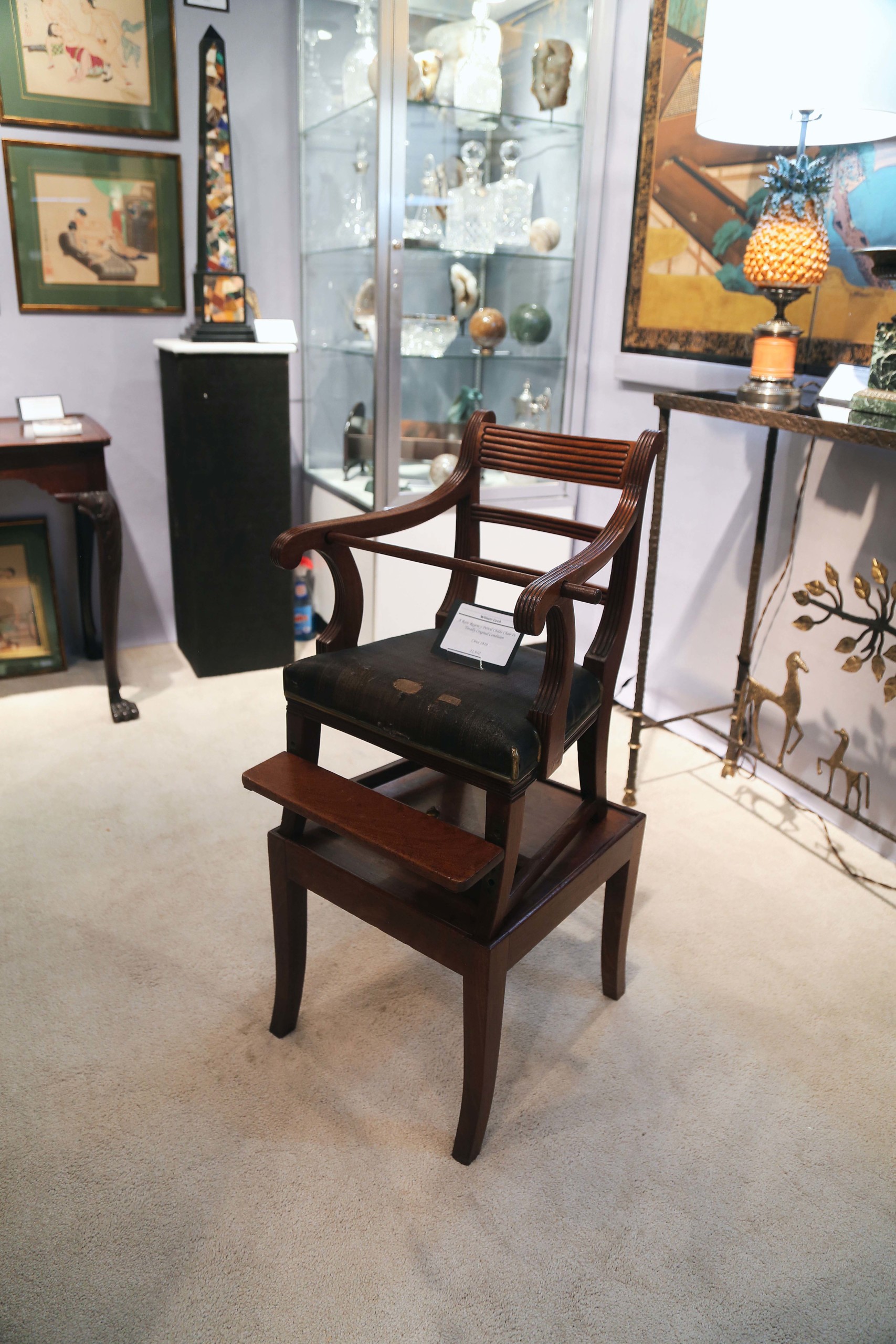
William Cook showcased a 1969 painted and upholstered red chair designed by Lord Snowden for Prince Charles’ 1969 investiture ceremony at Caernarfon Castle. It featured the distinctive Prince of Wales’ plume embossed in gilt on the back. He also had a pair of Nineteenth Century Edo screens and a “museum-quality” Regency child’s chair, circa 1810.
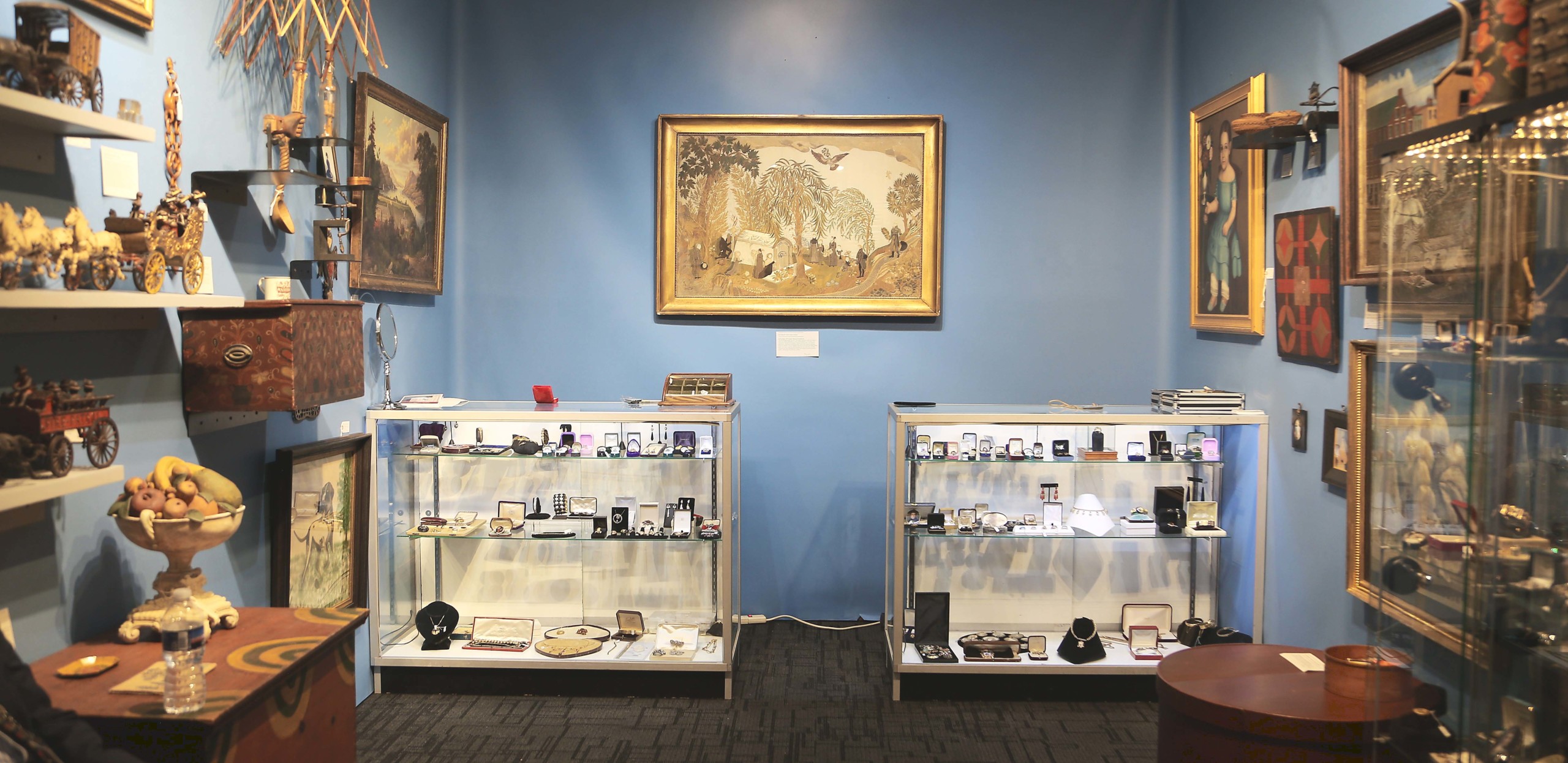
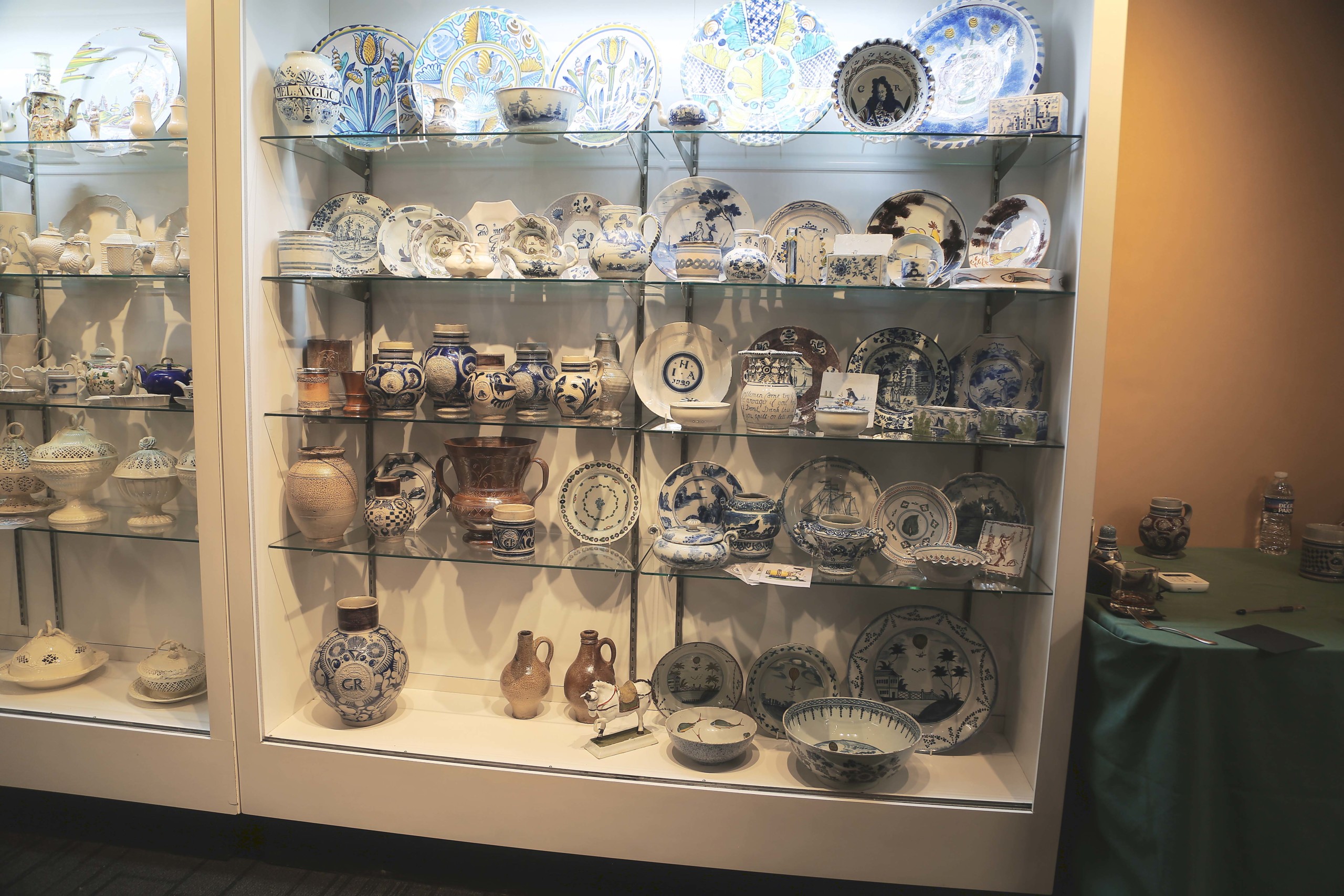
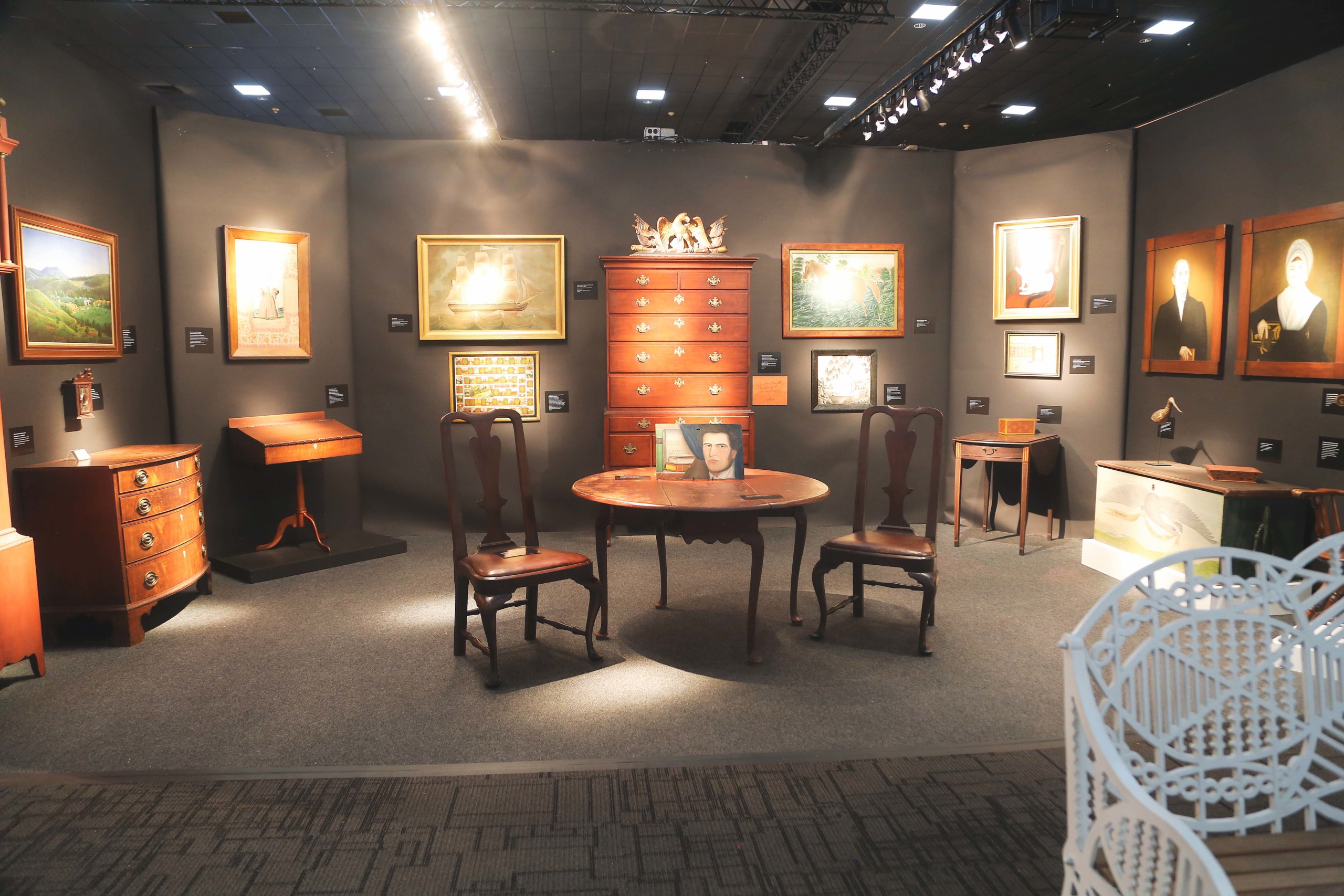
Hollis Brodrick and Brian Cullity shared a booth; the two have complimentary inventory, so their joint layout was visually seamless, save for different-colored papered walls. On opening night, Brodrick immediately sold a circa 1720 bannister-back chair from Bermuda and, by the end of opening night, a print of the encampment of the Continental Army and a pair of mezzotint prints were also sold.
“I did the show in the 90s, so it was good to be back. I sold a lot of things, including some wonderfully esoteric things we thought people would like. I do a lot of shows [in New England] and the Delaware show has a greater access to people from Colonial Williamsburg and Winterthur; I hadn’t seen some of them for more than 10 years,” Brodrick reported.
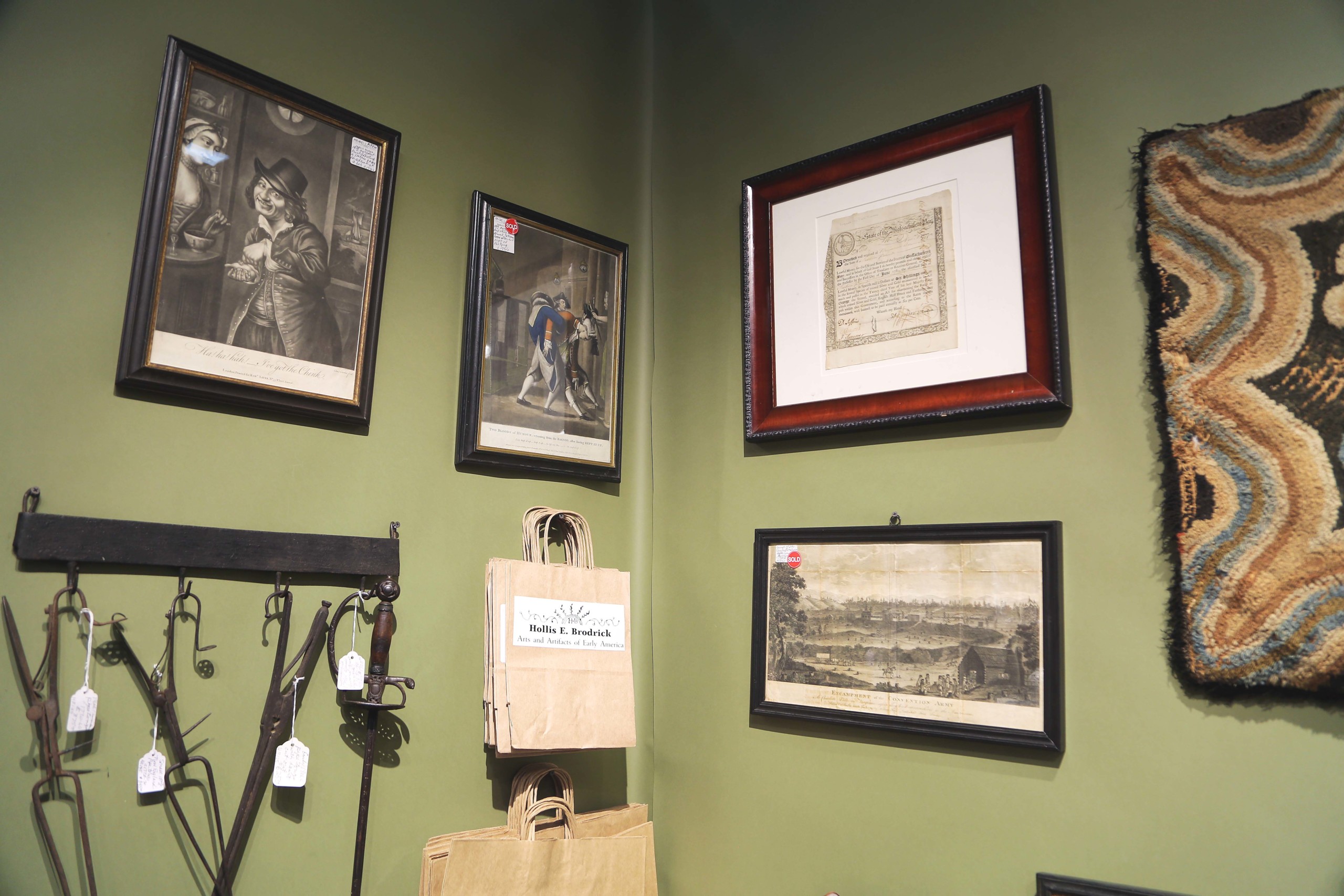
The two prints in the upper left and the print lower right were all sold on opening night. Hollis E. Brodrick, Portsmouth, N.H.
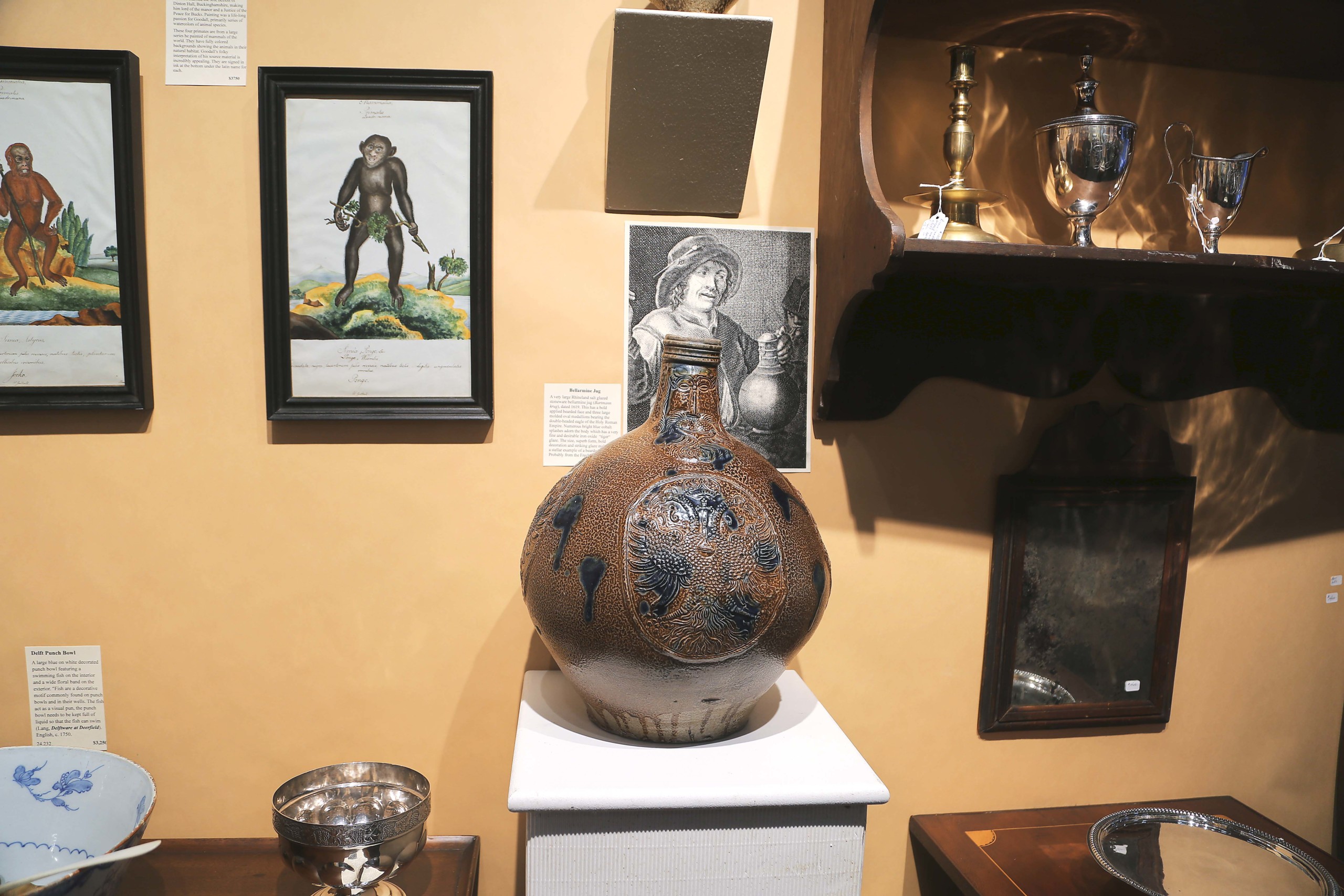
Mere feet away from Brodrick, Cullity said, “I got to see a lot of people I used to see; I saw more younger buyers there than at the shows I do up here [in New England]. Opening night was unusually good for me, with several sales. I was very pleased with that, and also with the reaction of my set-up with Hollis.” He sold a very small Bellarmine jug he said was very rare, several pieces of redware, a big watercolor of Napoleon’s farewell, a candlestand and “a lot of interesting smalls, including silver.”
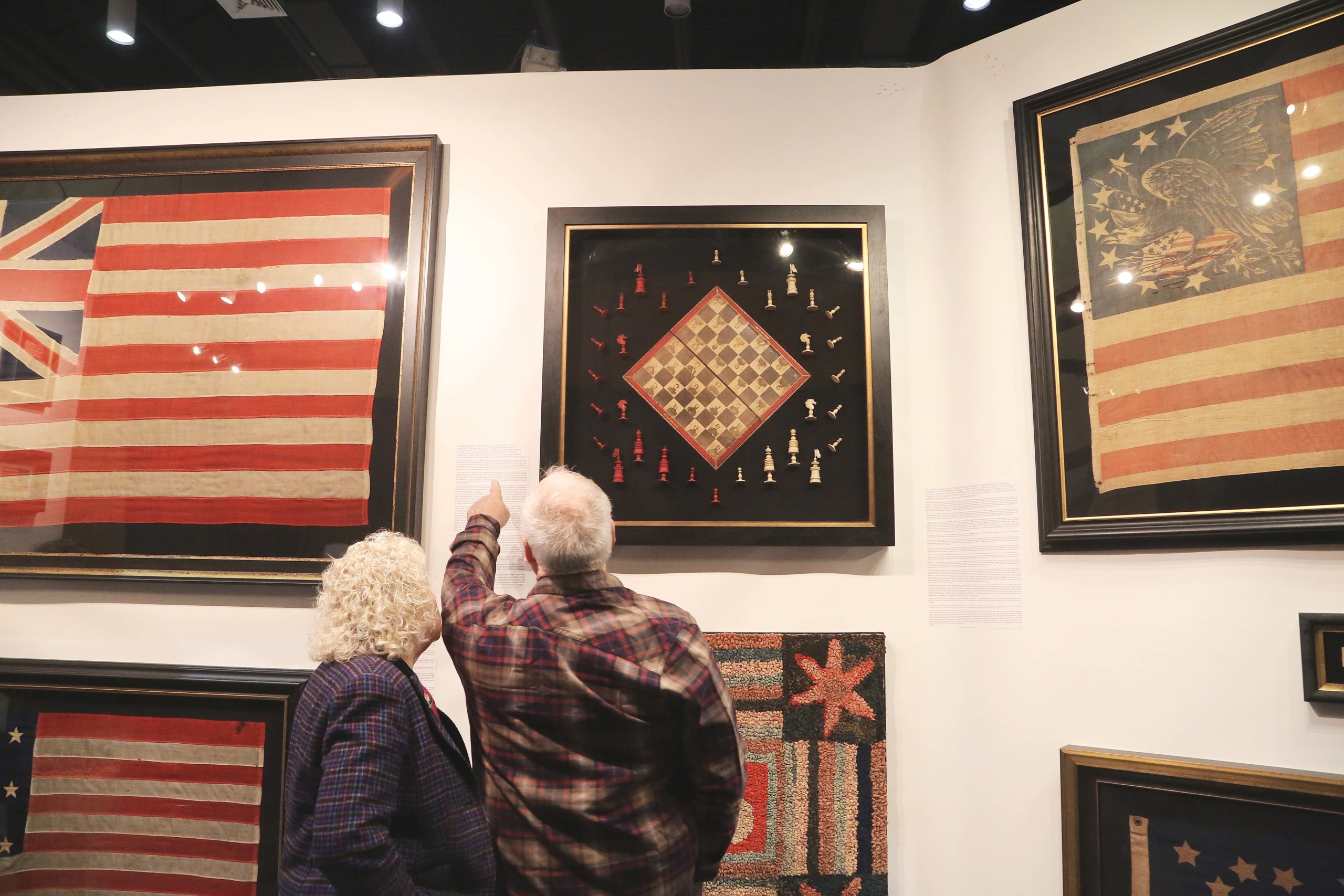
Flag specialist Jeff Bridgman did the Delaware show for the first time in 2024 and was returning to his same place on the floor, the long side aisle in the front hall that is the perfect venue for the extensive space his material requires.
“The show was tremendous. I sold four great 13-star flags — two of which were six-figure ones — as well as a wonderful banner and a bunch of other things,” he told us. He indicated that the country’s upcoming 250th birthday “definitely played a part” in helping fuel interest.
Gary Sergeant has been doing the show for several years, but this was the first year he was in a booth in the front hall. By the end of the first night, he had sold a camelback sofa, a set of eight Newport chairs and a Thomas Birch painting.
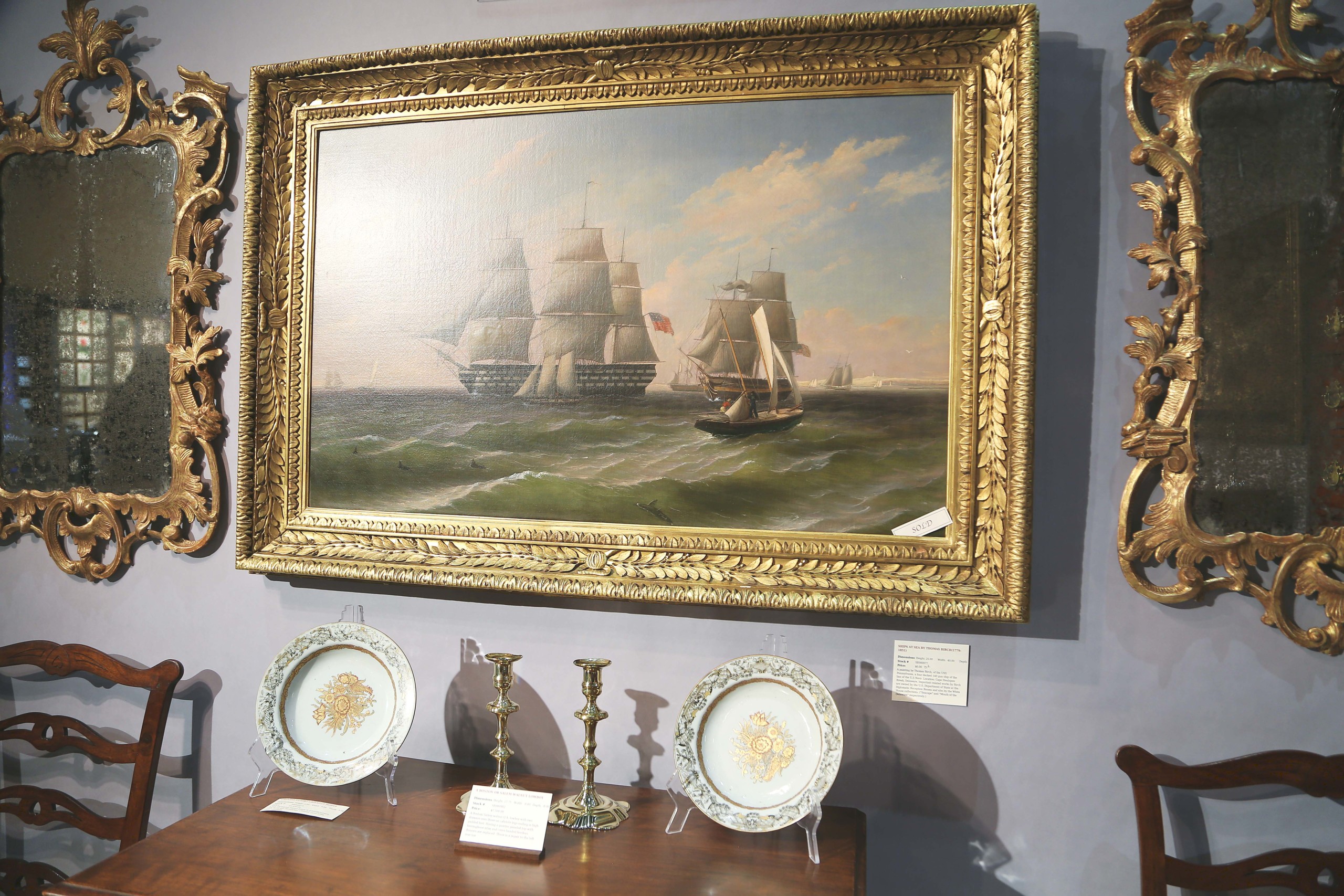
“Thomas Birch’s painting of the USS Pennsylvania, at Cape Henlopen Break, Del., was one of my best pieces,” Gary Sergeant told us. It was purchased by an existing client who “lives locally.” G. Sergeant Antiques, Woodbury, Conn.
“We had some very good sales, mostly upholstered furniture,” Sergeant said. “I was very happy with the show. I thought the attendance was a bit ‘off,’ but there was very serious interest in everything. Anything that had local interest got attention; people were really looking hard and considering purchasing. There was a real sense of wanting something and if they had a need, they would buy. I also bought well on the floor.”
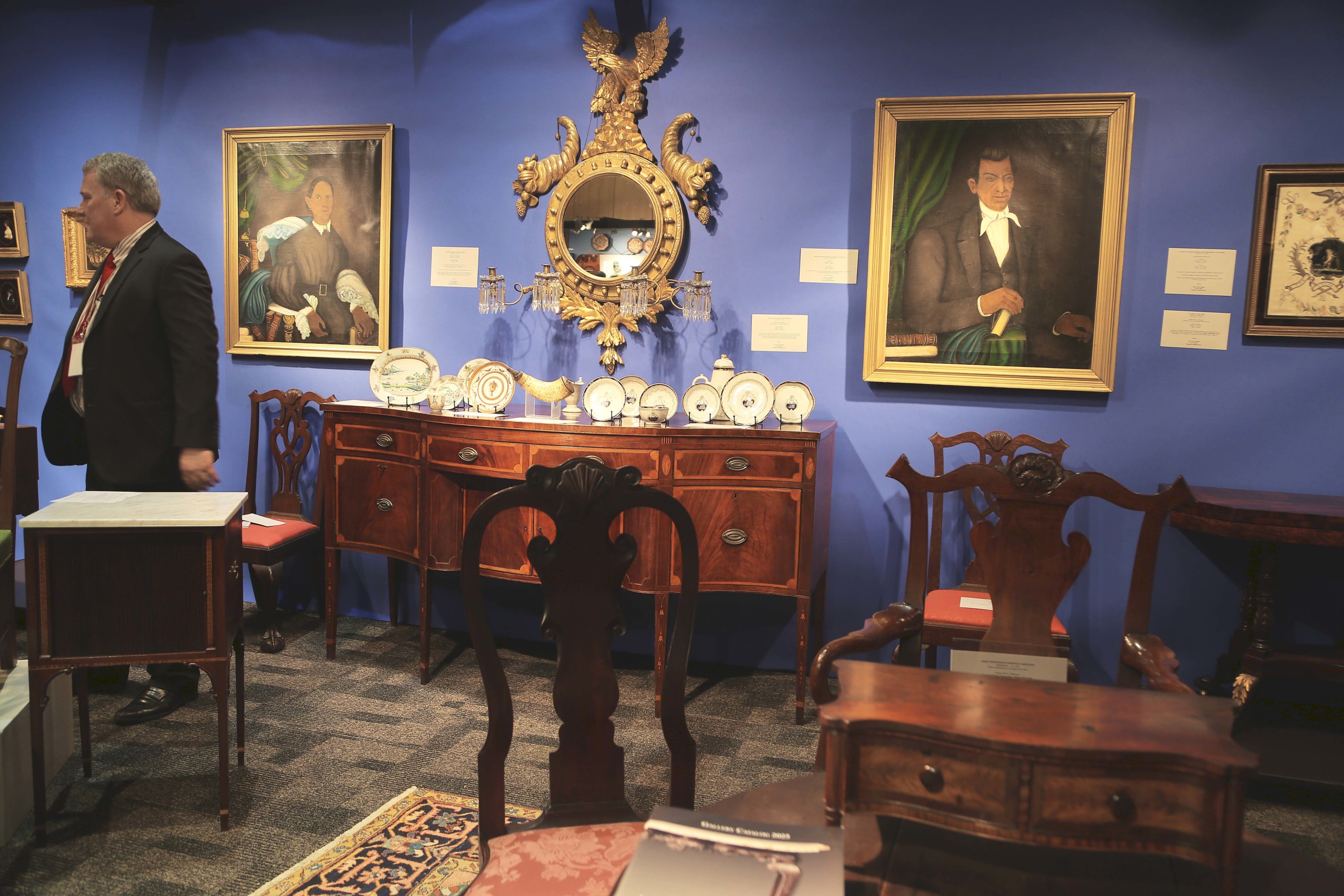
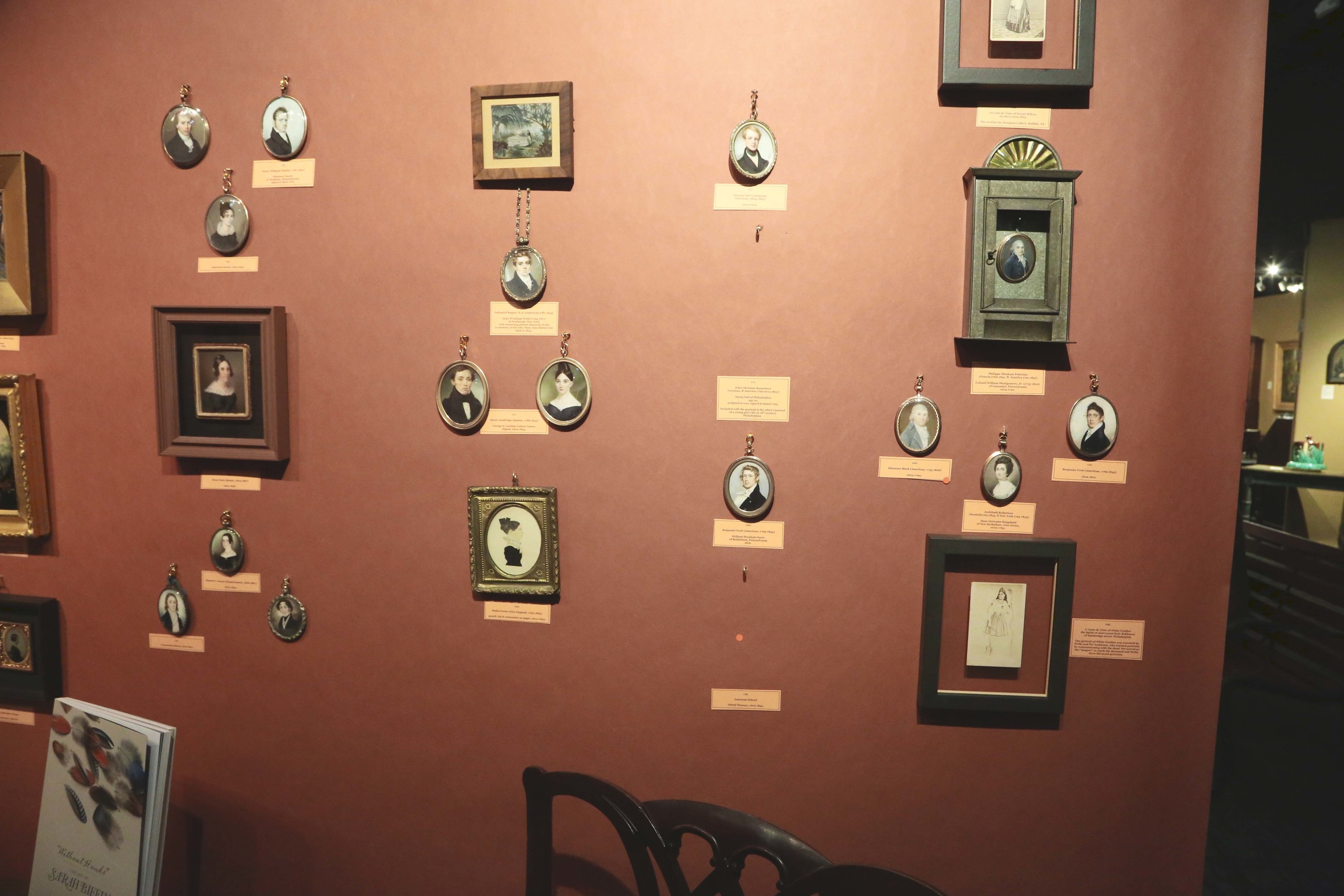
Frank Levy, showing near Sergeant, noted the event “is geographically very mixed and draws from all over.” He reported, “I saw a lot of people from New England there, as well as from Texas. It was a great show and I’m very happy; Winterthur does an incredible job.” He made several new connections, with sales to existing clients as well. Among his sales were a pair of miniature wax portraits, a late Federal campaign desk, a pair of unsigned portraits of a Black couple, a Chinese export lidded coffee pot, a powder horn engraved with the Siege of Boston, a miniature box on feet and a tambour basin stand attributed to John Seymour.
“Delaware continues to be the best place for Americana and American furniture; there, you can sit down and visit with real collectors,” asserted Taylor Thistlethwaite. The dealer noted sales to both existing clients and new ones. Some of his sales included a painting of an American schoolhouse that came from a Kentucky estate and an English petticoat mirror.
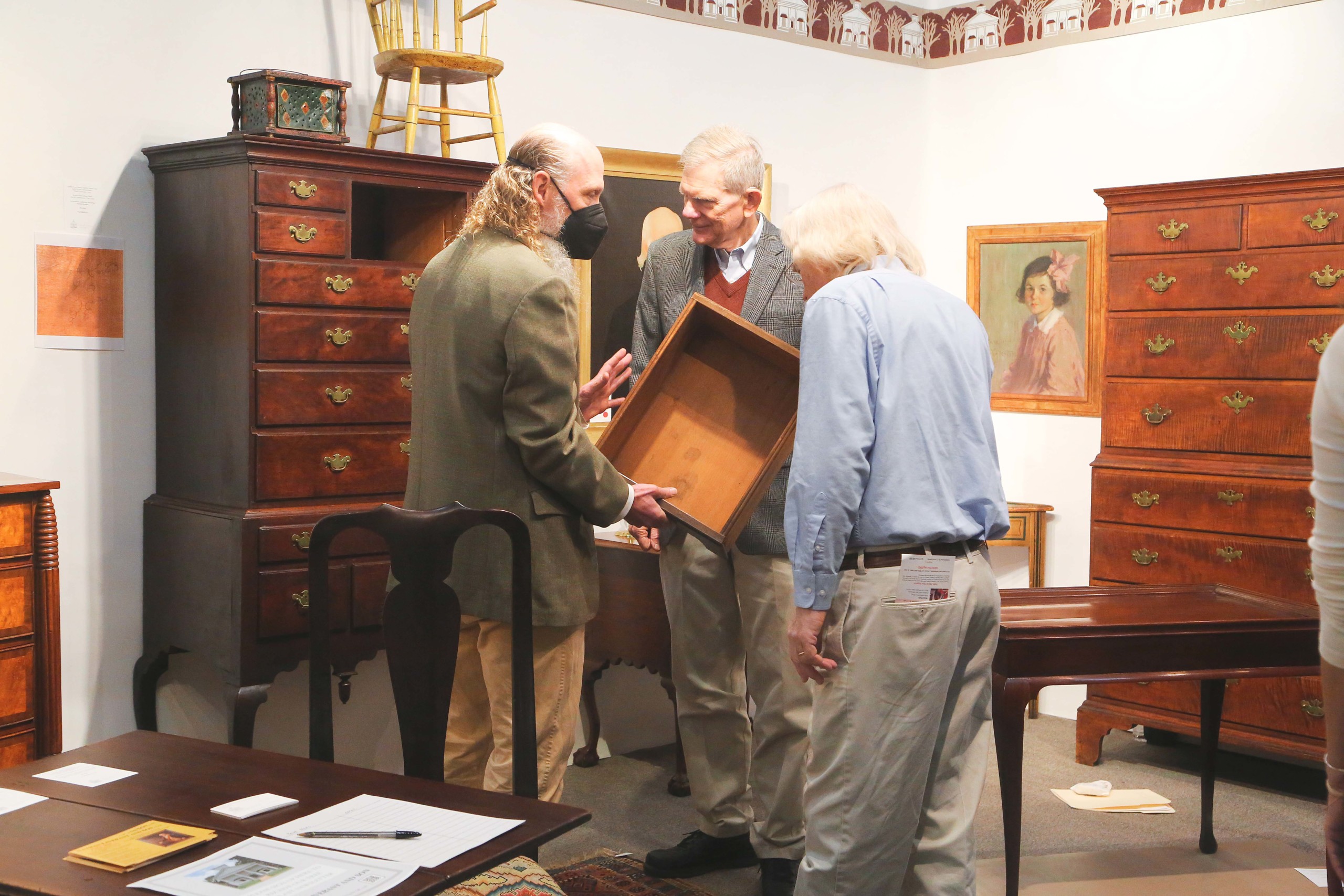
Winterthur’s presence and influence are felt throughout the show and the museum’s curators — both emeritus and active — could be spotted throughout the event. Here, Nathan Liverant associate Kevin Tulimieri (left) examined the drawer of a high chest signed by Elijah Loveland with Brock Jobe (center) and Greg Landry (right). Nathan Liverant and Son, Colchester, Conn.
One of Arthur Liverant’s most important sales was a portrait of President John Quincy Adams holding the Declaration of Independence, which was painted while he was in office. While the painting was unsigned, Liverant said he thought was painted by John Brewster, Jr; it was acquired by a client the Liverants had known but who had not previously purchased from them. Other sales the Connecticut dealer transacted were a Federal server, a pair of wax portraits, a Pennsylvania walnut dressing table, a “really rare circa 1700-20 adjustable candlestand with ratchet mechanism — the first one we’ve ever had” and a William and Mary butterfly table, which sold to buyers younger than 50 years old who live in the Delaware area and were buying from Liverant for the first time.
“Delaware was very good for us; we were pleased,” reported Skip Chalfant. The West Chester, Penn., dealer told us he sold a chest-on-chest and lots of smalls, with follow-on interest after the event. A new client purchased a carved wooden bowl, and a miniature tiger maple kast sold on opening night.
It might be quicker to list what Jim Kilvington didn’t sell. By noon on Friday, things that had either left his booth or remained with a “sold” tag included a George II walnut mirror; a pair of silver spoons, a Queen Anne chair with six slats; a Queen Anne balloon-seat side chair; a Lancaster County, Penn., sackback chair; a pair of English hurricane shades; a pair of Dutch chinoiserie-style delft vases; a bannister-back chair; and a landscape painting by Edward Leroy Loper, Sr.
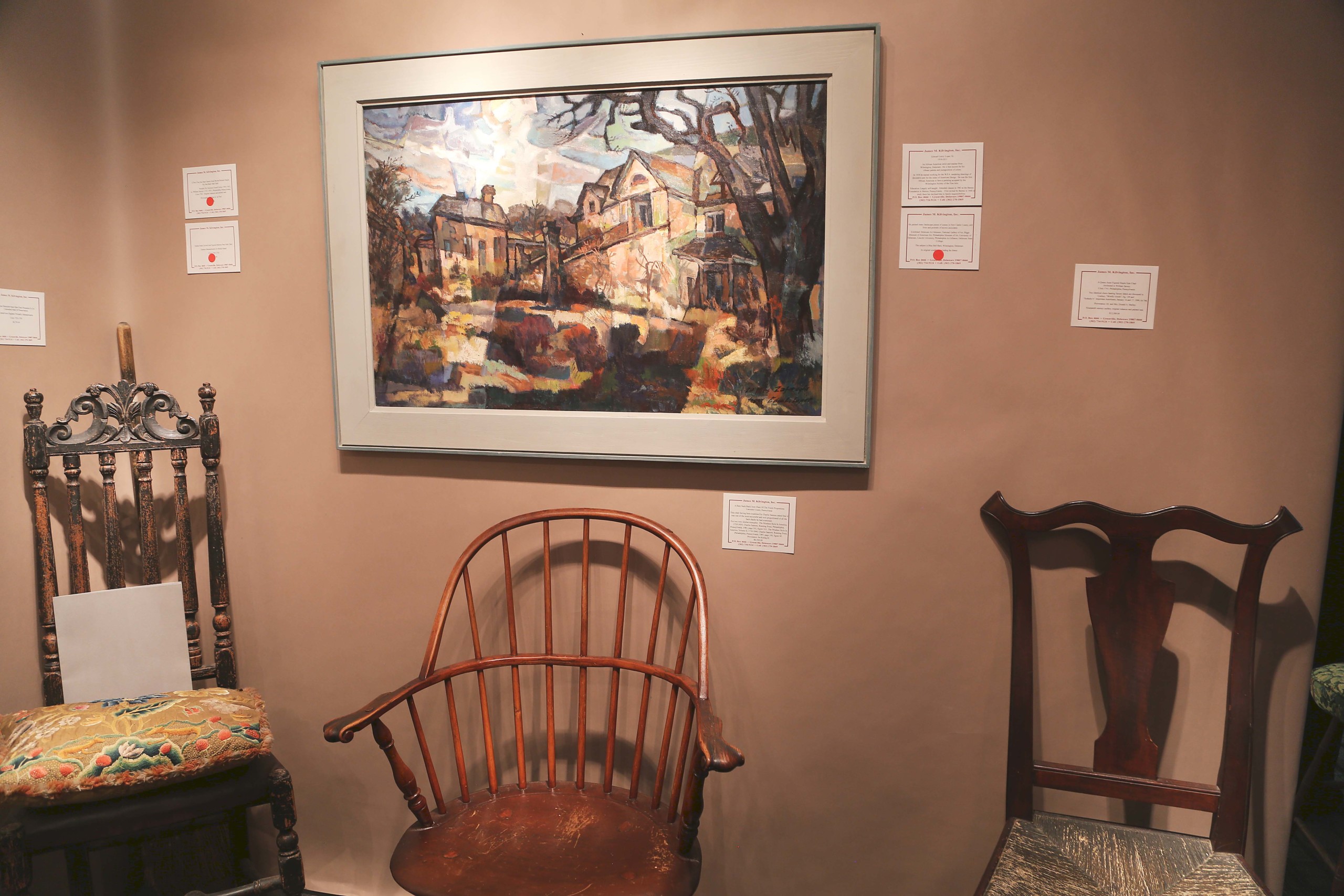
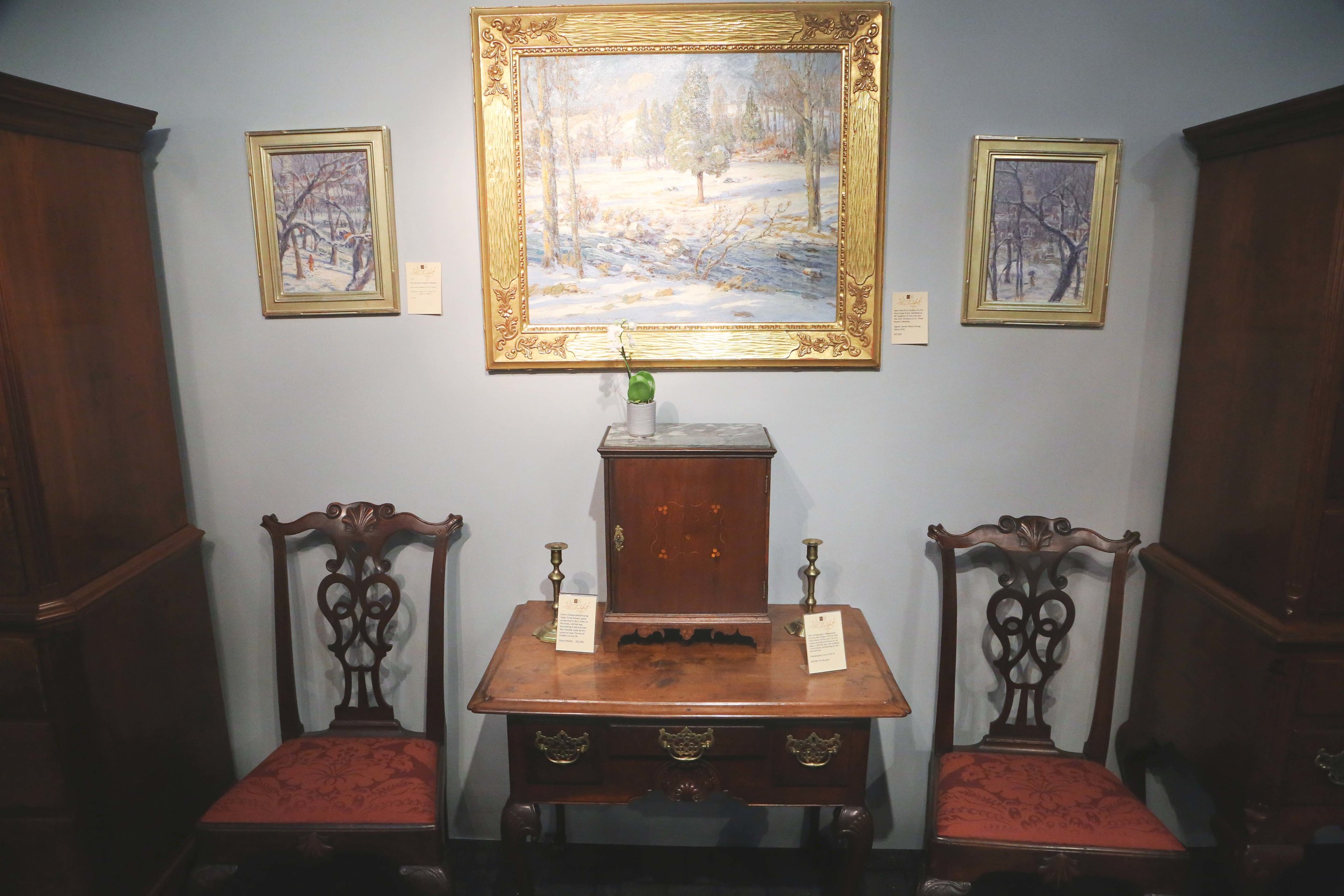
Both this painting and the chair beneath it were among the pieces Greenville, Del., dealer, James M. Kilvington sold.
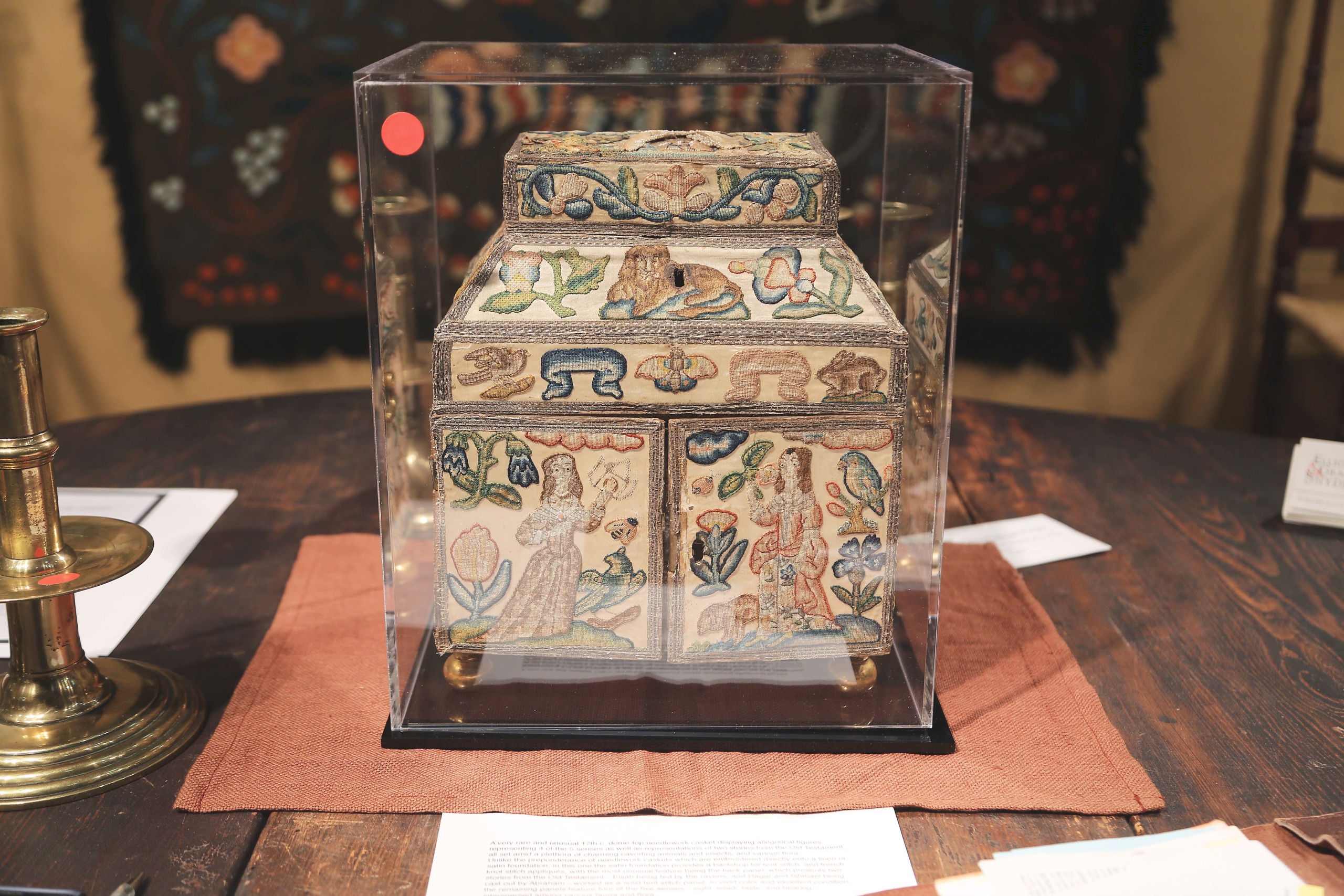
Across the aisle from Kilvington, Elliott and Grace Snyder were doing an equally robust business, with sales in every category. Among their sales were an important Seventeenth Century English casket, a piece of Seventeenth Century beadwork that sold to a museum, an hour glass, a pair of Spanish candlestands, an early candlestick with an Eighteenth Century miniature, an English slipware dish, an oval tea table, a lowboy, a Connecticut chair with a crest carved with a rose, a watercolor memorial that had been in the collection of Nina Fletcher Little and a historically important pair of trumpet candlesticks that had been at the Guild Hall in London. The Snyders’ target market is the educated connoisseur of early rarities rather than people shopping for “a look” and they meet that market in Delaware.
“The show was fabulous for us and I thought it was uniformly good throughout; most people did quite well overall,” Grace told us. “It felt like the good old days; we had numbers we haven’t hit since before we dropped Eastside [The Winter Show].”
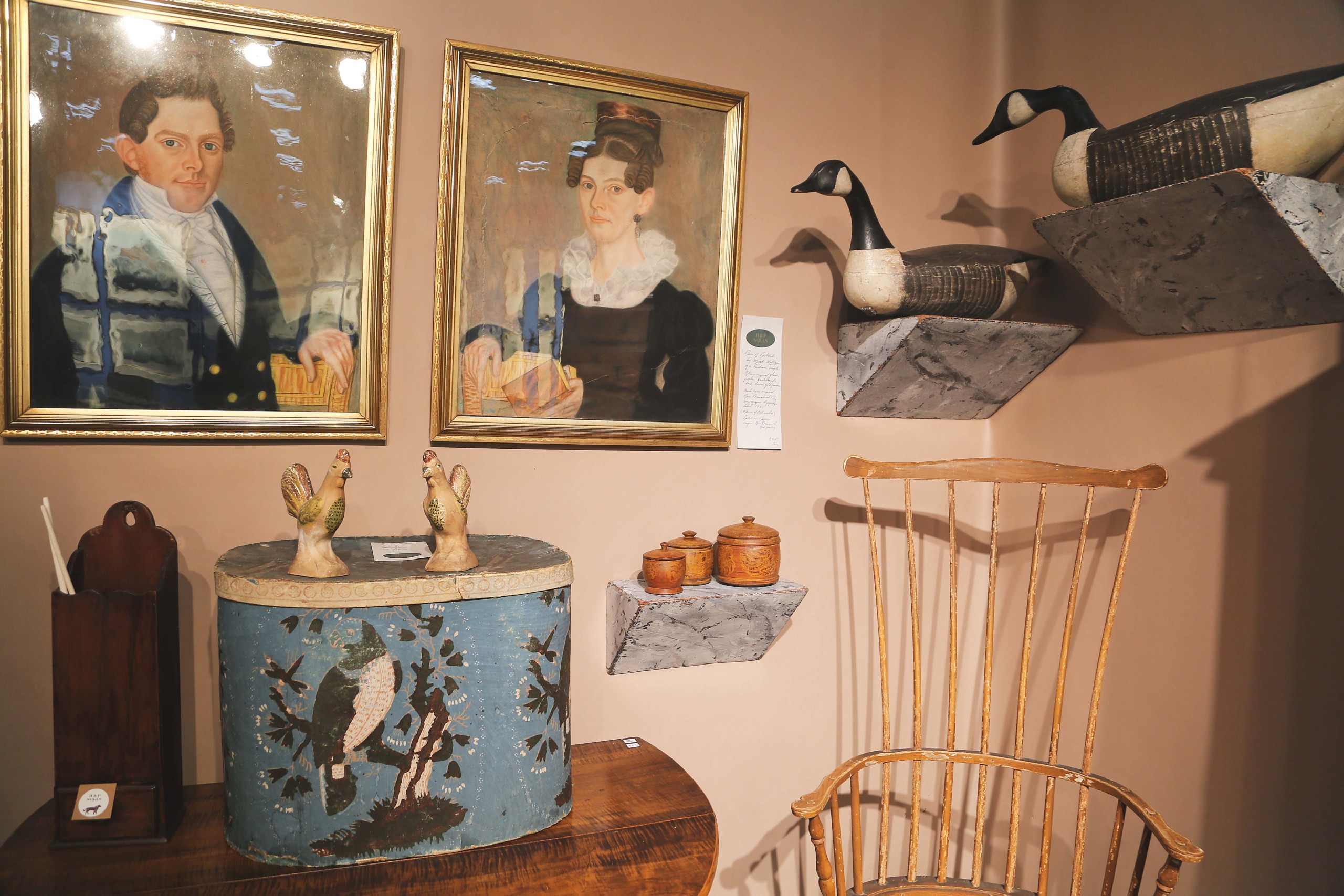
Hilary Nolan echoed Snyder’s comments. “I had a run on everything and sold across the board. I sold mirrors, a good Windsor chair, a tavern table and a Queen Anne table. My Micah Williams portraits went on opening night. Quite a few of my early sales were to repeat customers, but as the weekend proceeded, I sold to more new clients, including some younger people. It was one of my best Delaware shows ever.”
Ron and Joyce Bassin always have a good time at this show, and this edition was no different. Among a handful of opening night sales were a Grenfell Mission silk stocking mat depicting a leaping salmon that they’d advertised in the show’s catalog, a J. Norton stoneware crock and a Black Forest carved deer’s head.
“We sold 28 things, which is a lot for us, but nothing over $4,000,” Ron reported. “We met a lot of new clients; most of our sales were to new people, which I thought was interesting.”
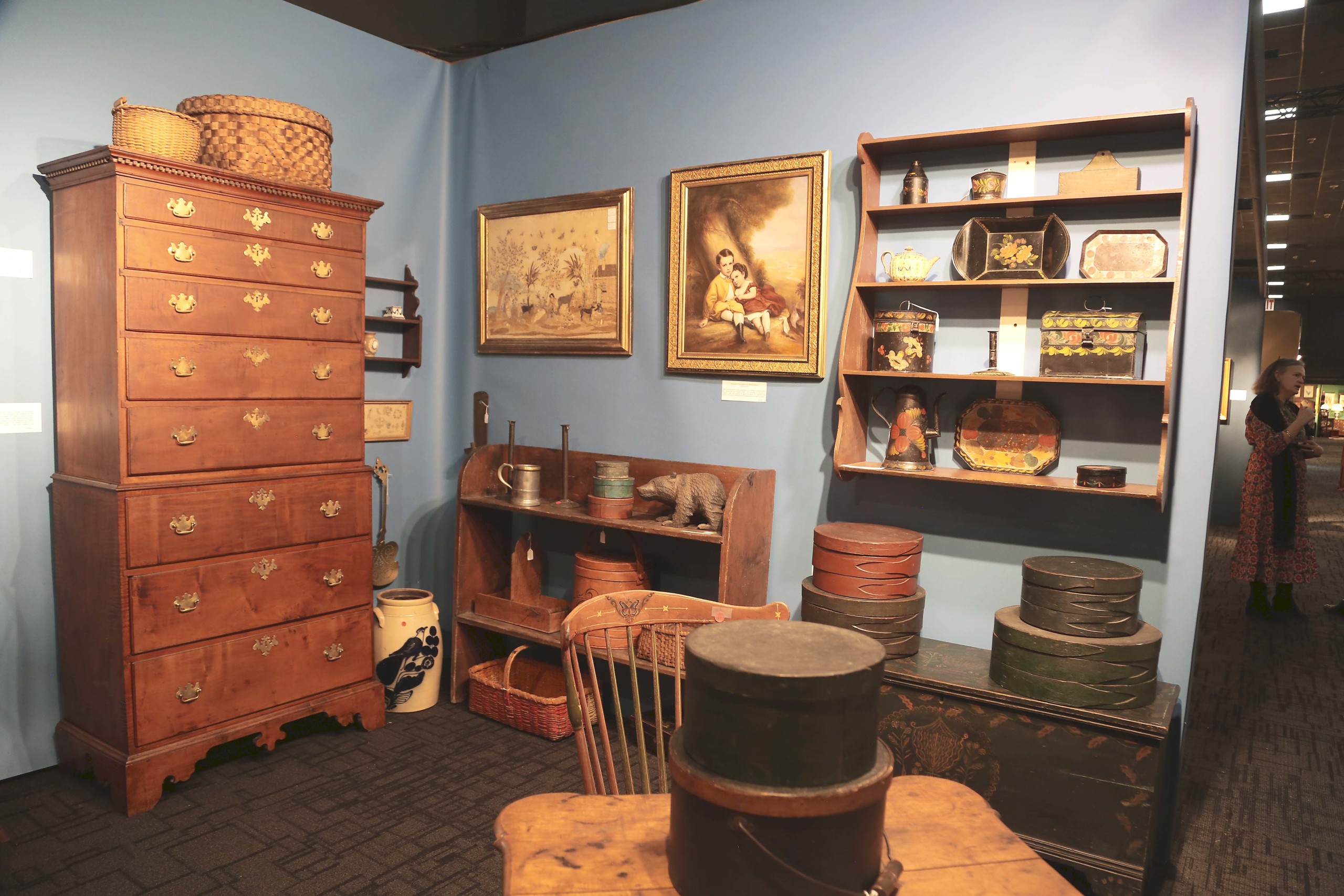
The porringer-top tavern table in the foreground of this photo and the red-painted chair next to it were early sales for Daniel & Karen Olson, Newburgh, N.Y.
Daniel and Karen Olson had a flurry of sales to a new client on opening night that included a painted chair, a pair of candlesticks, a stoneware crock by White & Son and a Queen Anne turret-corner tavern table. “We were very happy and had more than 30 sales, and someone there looked at some photos of things we have back at the shop and they bought from those. We made sales to both new and repeat customers, from a broad range geographically: someone was from Texas, we had sales to buyers from Missouri, Connecticut and Ohio. Our best sale was a Queen Anne porringer-top tea table that went to someone local,” Karen reported.
Folk art and jewelry specialist Sandy Jacobs said she sold well, both before and during the show, and had some follow up interest after it closed. She noted several new connections and was happy with how the show did. One of the exceptional pieces she had acquired just before the show — an extraordinary 45-by-52-inch Eighteenth Century memorial needlework — was still available at press time.
Litchfield, Conn., dealer Jeffrey Tillou closed the deal on a number of sales within the first 24 hours the show was open, including a diminutive Chippendale slant lid desk, a Jewell horse weathervane, a watercolor portrait of a couple in a garden and an American School watercolor view of a homestead.
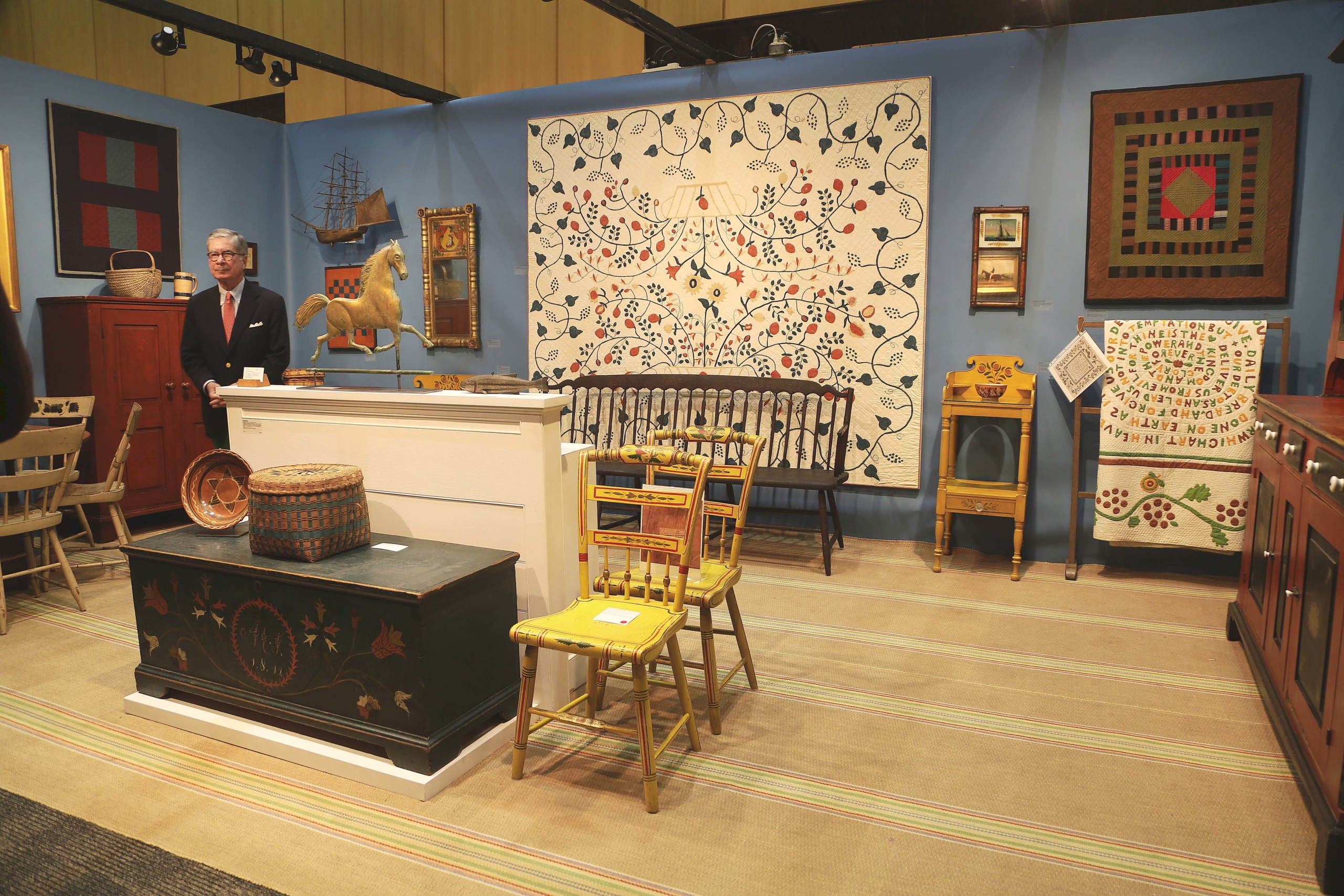
The pair of painted yellow chairs in the center of this photo were an opening night sale, to the Philadelphia Art Museum. Olde Hope Antiques, New Hope, Penn. & New York City.
Olde Hope Antiques’ Ed Hild — speaking to us by phone after the show — said they were fielding lots of post-event interest. “We sold a wonderful Amish crib quilt and a host of small things, including a sale to the Philadelphia Art Museum of a pair of fancy yellow-painted chairs that were made in Philadelphia and had an original label under the seat. Several of our sales were to new connections, which is always a nice thing; in one case, it was a collector I’d known for years but who hadn’t bought from us previously. We had a very good interaction with the Fine Object Society: Ben Miller brought a group through the show and they were a very interactive, younger group that asked a lot of questions.”
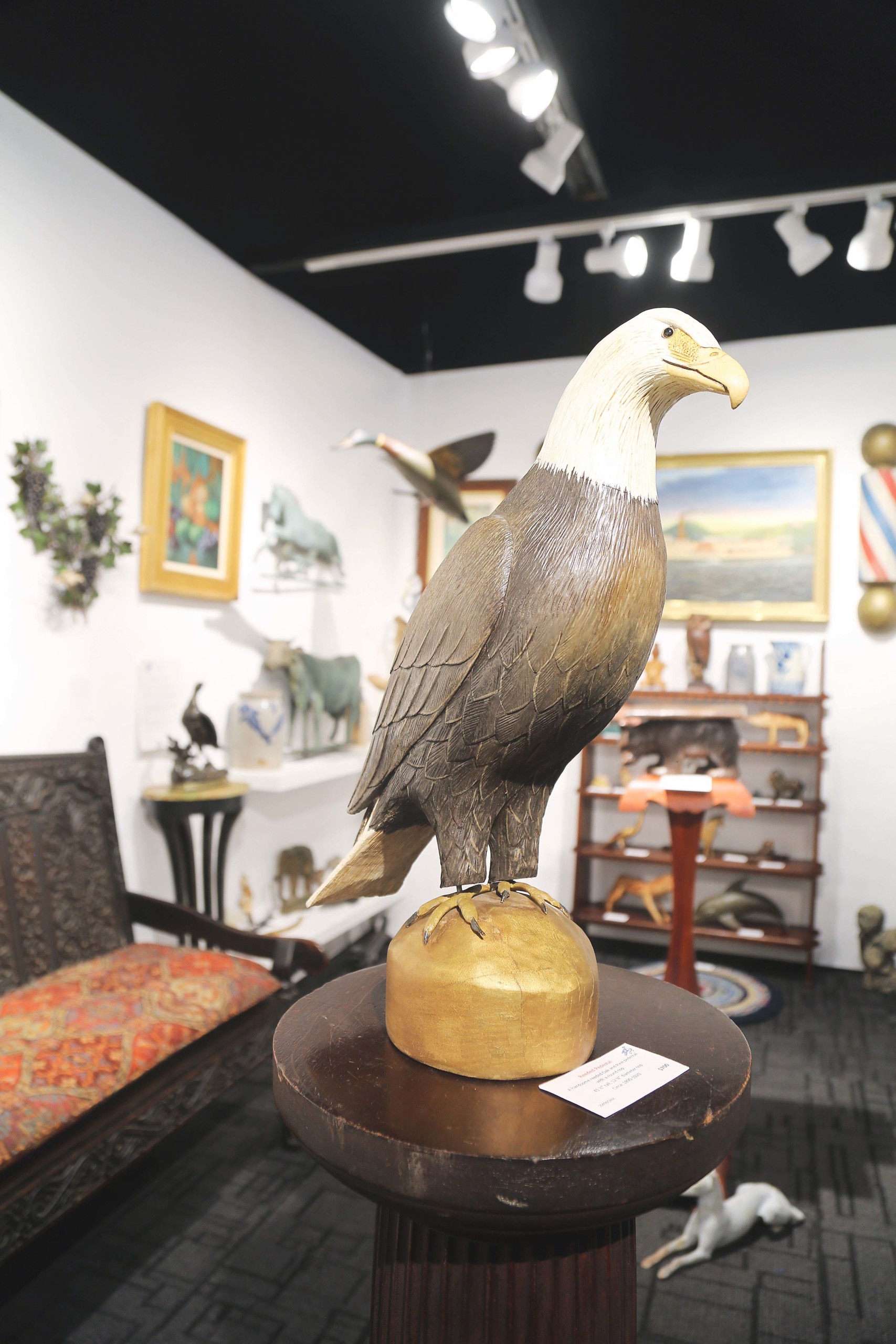
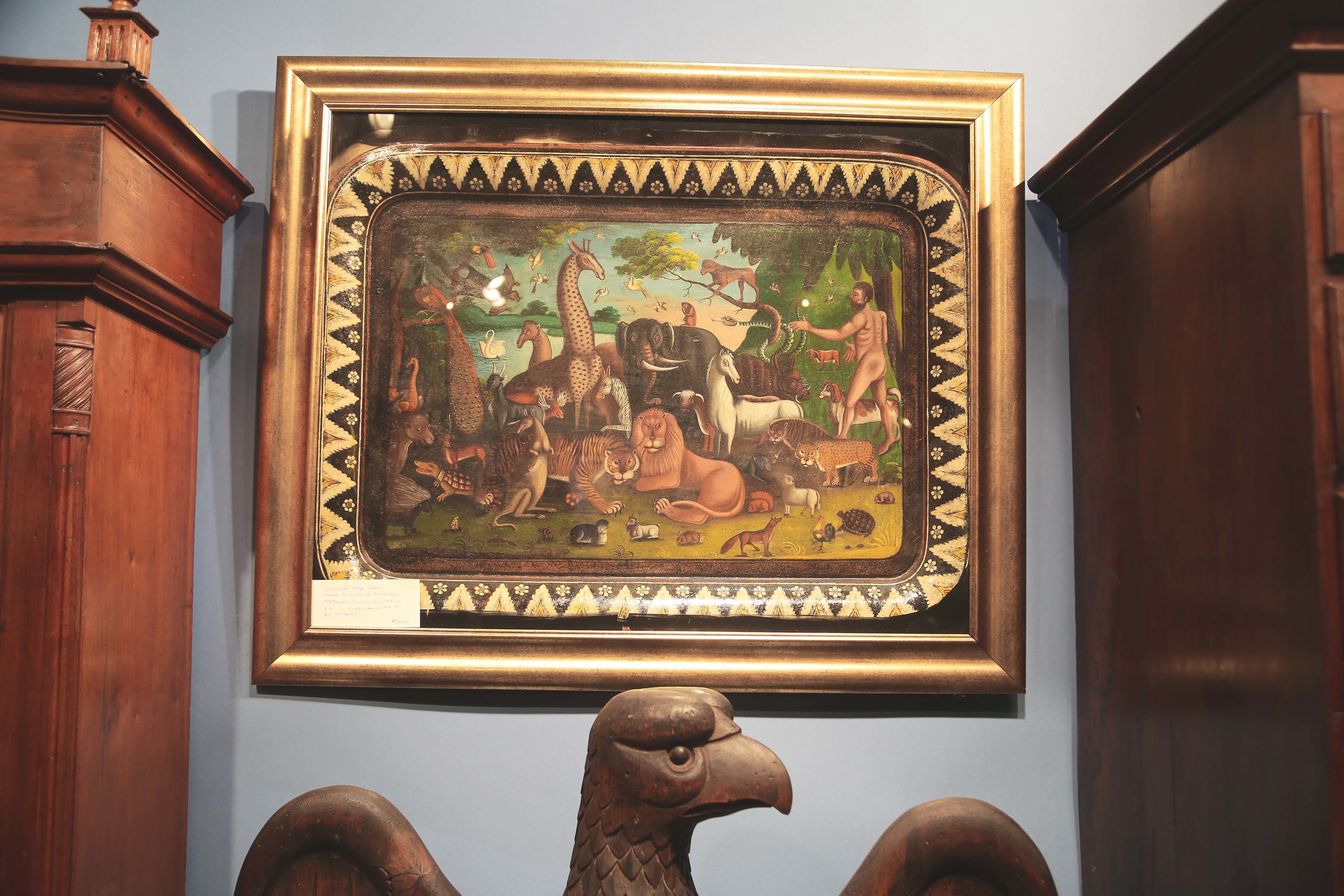
“I did some business and thought it was a good, steady crowd,” David Schorsch told us. “We sold a pair of Jacob Frymire portraits and a carved eagle on opening night. On Friday, we sold a Windsor armchair, and after I got home, I sold the portrait of a boy by Frederick Kemmelmeyer to Colonial Williamsburg.”
There was no shortage of patriotic paintings at the show, but one that appeared in perhaps an unexpected place was in the booth of Antique French Fine Arts. Alphonse Lalauze’s “First Defense of Bunker Hill” had been discovered by Thierry Doussiere in Paris and was the first time Doussiere had brought it to a show.
“I had a very good show in Delaware this year and was delighted to be back! I loved my new booth location,” Doussiere said. “Despite missing some clients, those who turned out did buy some great paintings, among which was a repeat client who purchased one of my favorite paintings from Victor Charreton. One of the other ones to go was a view of the Sacre Coeur from the Boulevard des Batignolles. I also sold bronzes of Emmanuel Fremiet, including one of the last ones I received, which had a charming and rare design of a goat and her kid. I look forward to returning next year!”
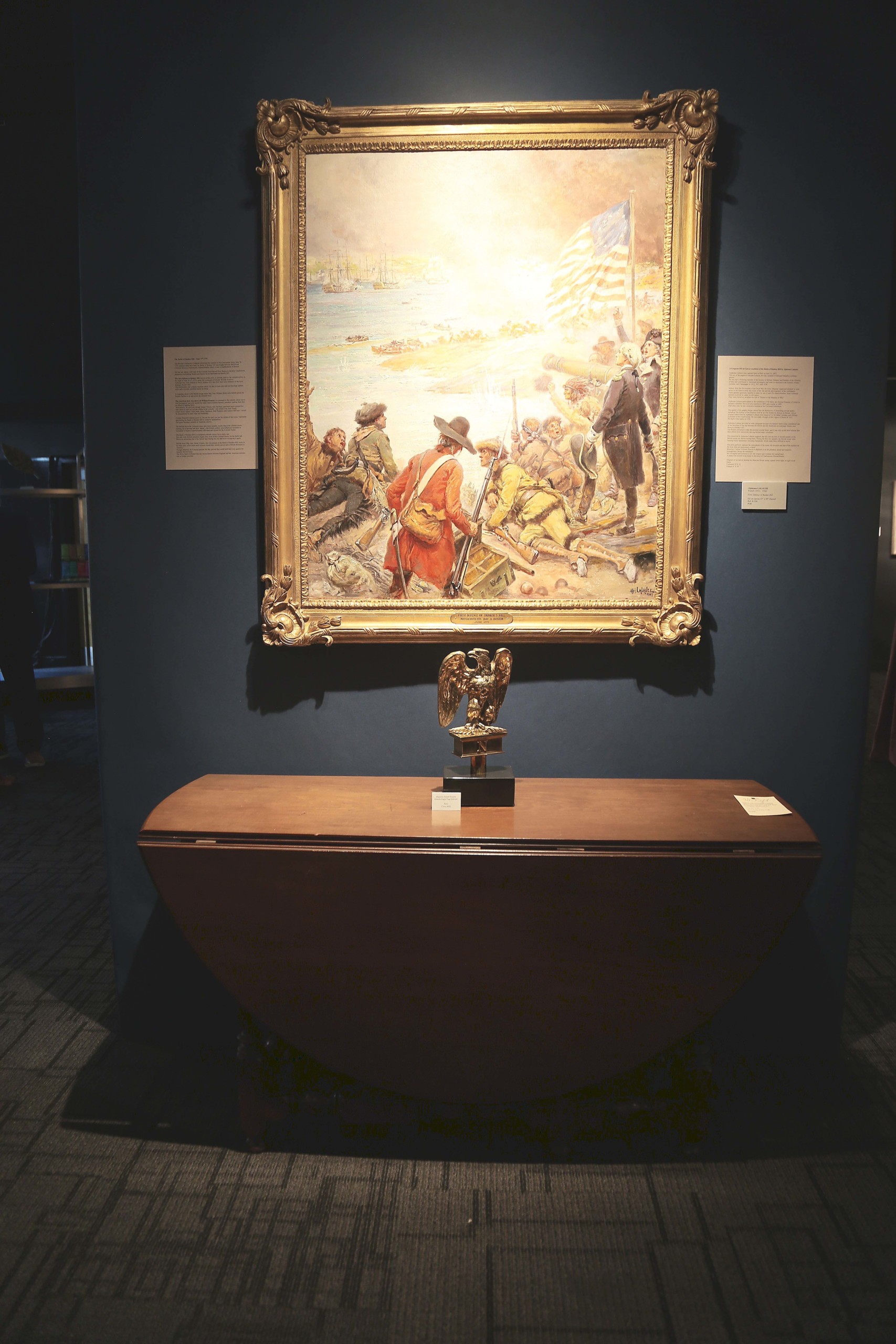
“First Defense of Bunker Hill” by Alphonse Lalauze (French, 1872-1936). Antique French Fine Arts, Marseille, France.
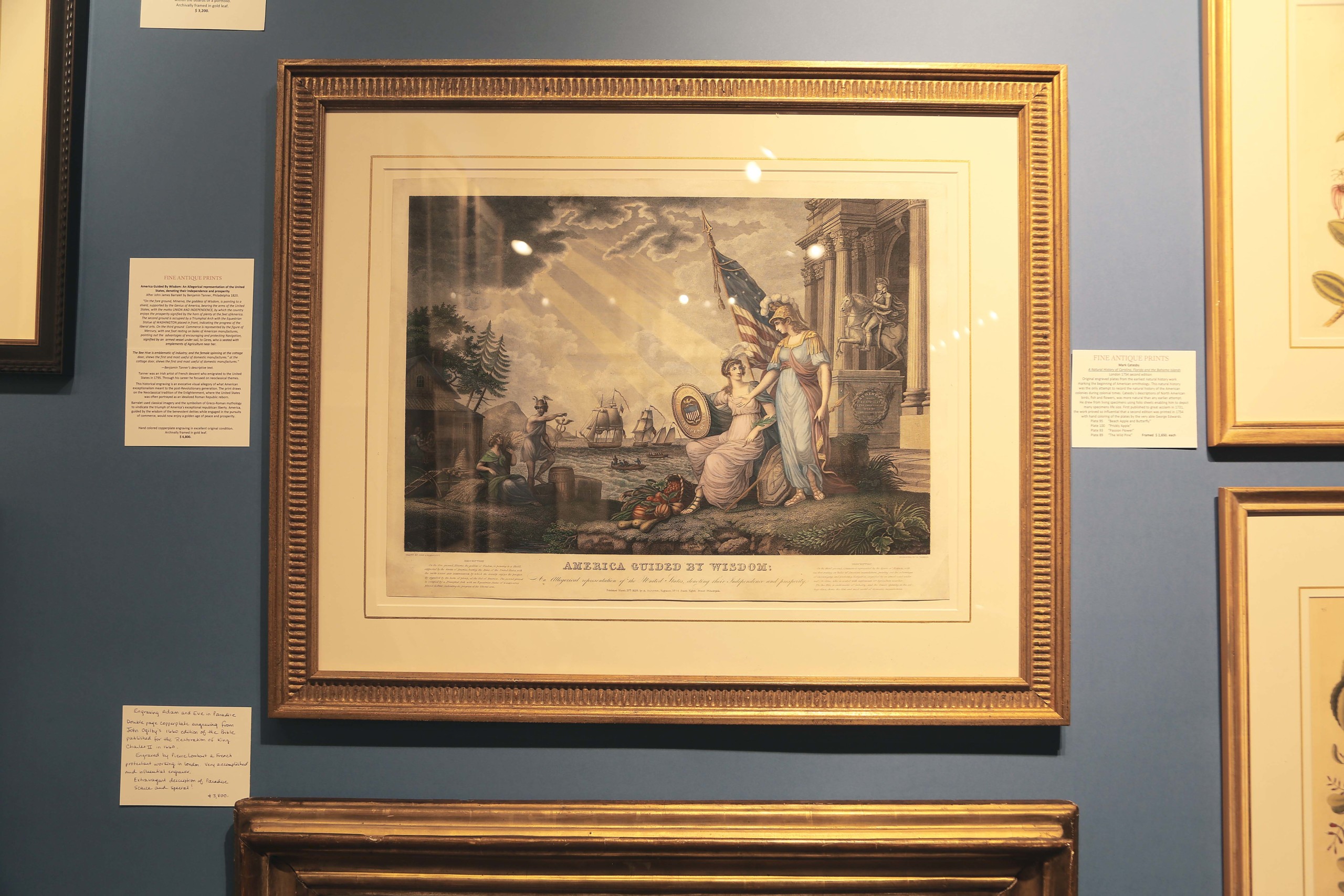
If one were compiling a list of patriotic pictures at the show, one would certainly need to include “America Guided by Wisdom,” which was a hand-colored copperplate engraving of an allegorical representation of the United States, after John James Barralet, by Benjamin Tanner and published in Philadelphia in 1820. Denise De Laurentis was thrilled to have it.
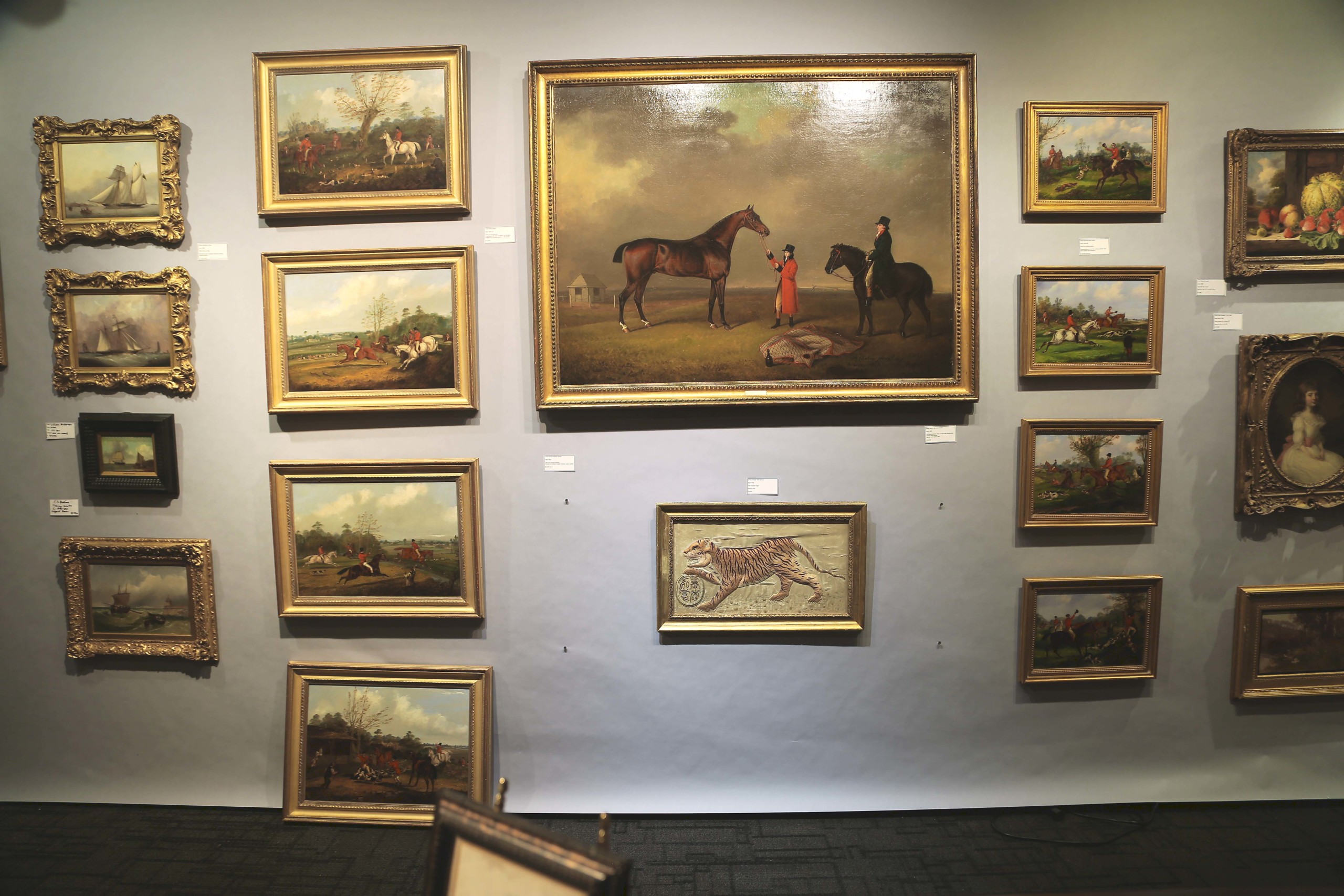
Winterthur has, until recently, been home to an annual Point-to-Point steeplechase horse race and the rolling hills of New Castle, Del., and Delaware and Chester Counties, Penn., are home to many horse farms. Like he has for a few years, David Brooker brought a broad selection of small sporting pictures of dogs and horses to meet this audience, and he made several sales, including a set of four circa 1850 fox hunting pictures by Edward Robert Smythe.
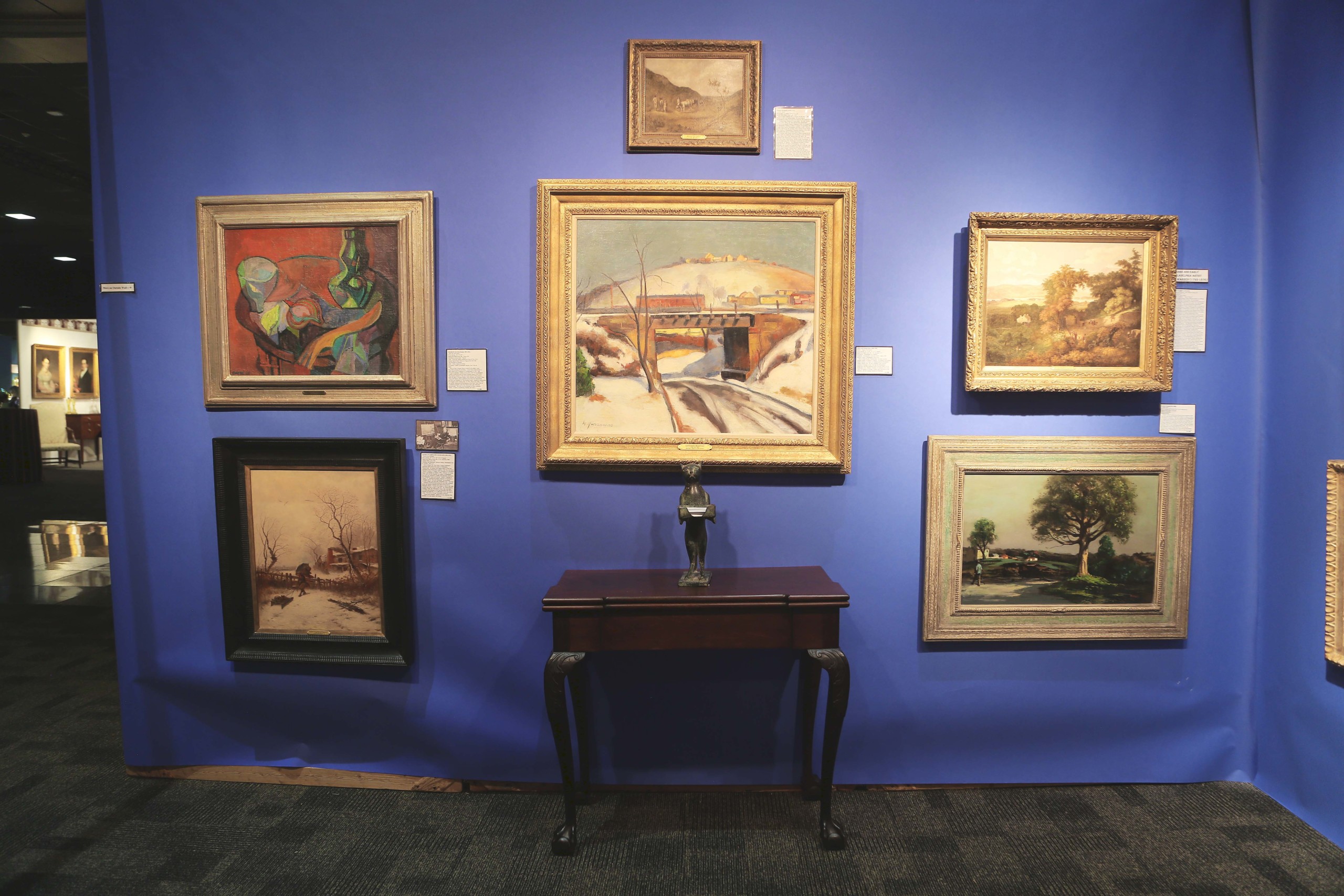
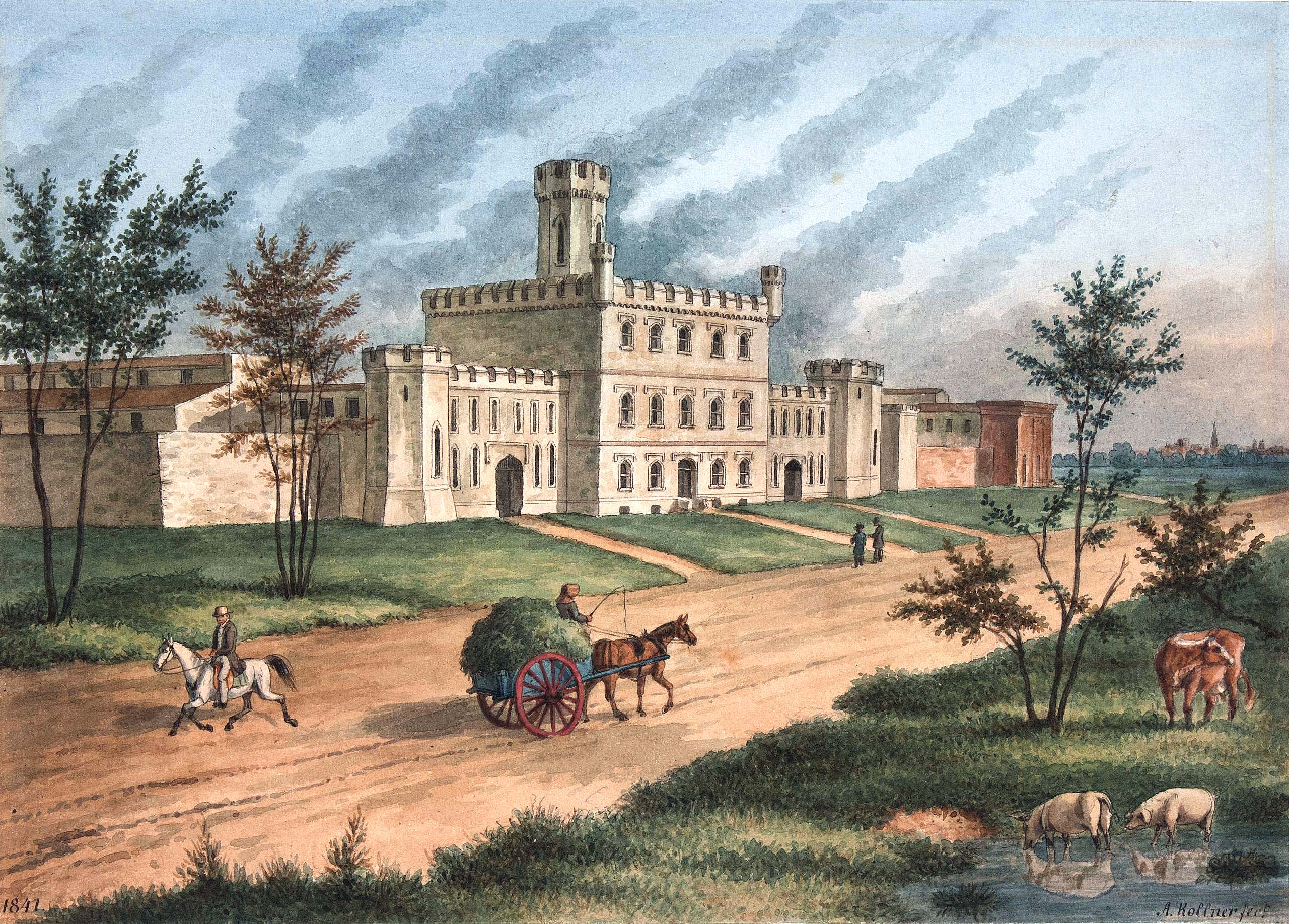
American fine art dealer Robert Schwarz was now in a new place, in the front hall. Situated between Gary Sergeant and Frank Levy, he had steady traffic. “Horse and Jockey at Belmont Driving Park, Lower Merion, PA” by Charles Spencer Humphreys and “Bird of Prey by the Shore” by Newbold Hough Trotter dominated one wall, while across the booth, a selection of 15 small works by George Washington Sully caught our eye. On opening night, he closed the deal on an 1841 watercolor of Moyamensing Prison by Augustus Köllner.
One of the very first booths show visitors get to upon entering the show is that of Schoonover Studios, which specializes in illustration art, primarily that of Frank E. Schoonover. A wall facing the booth was hung with three locally-painted landscapes: “Delaware River Near Trenton,” “A Real Fall Day” and “Across the Brandywine.” Within the booth were two recently acquired works: “One of Three,” which was the cover of the May 1906 issue of Outing Magazine, and “The Freezing Man,” another cover illustration, this time for the January 1914 issue of Western Story Magazine.
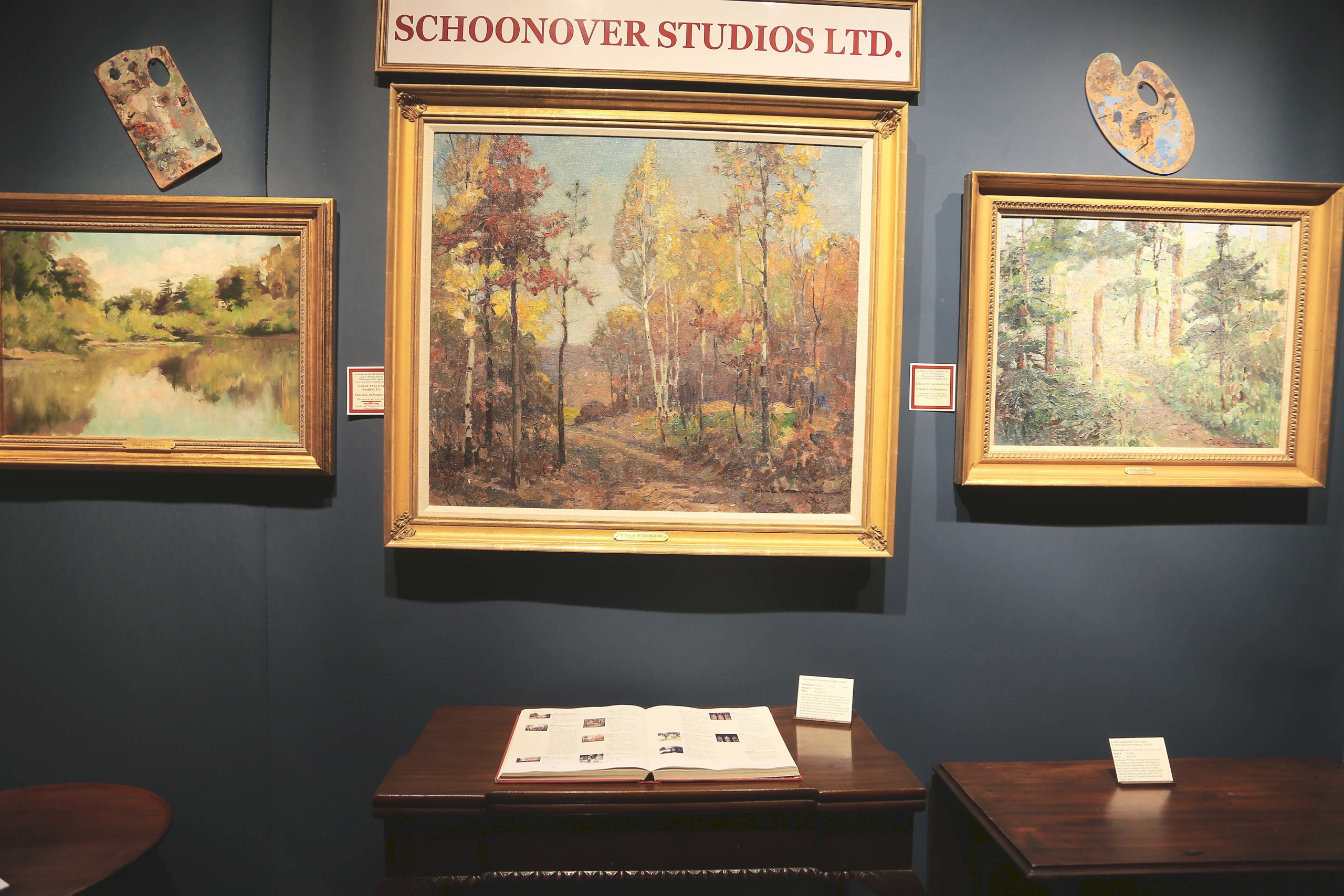
Schoonover Studios offered a good selection of Frank E. Schoonover’s work, including these three landscapes. From left, “Delaware River Near Trenton,” “A Real Fall Day” and “Across the Brandywine.” The second volume of Schoonover’s catalog raisonne was on the table below. Wilmington, Del.
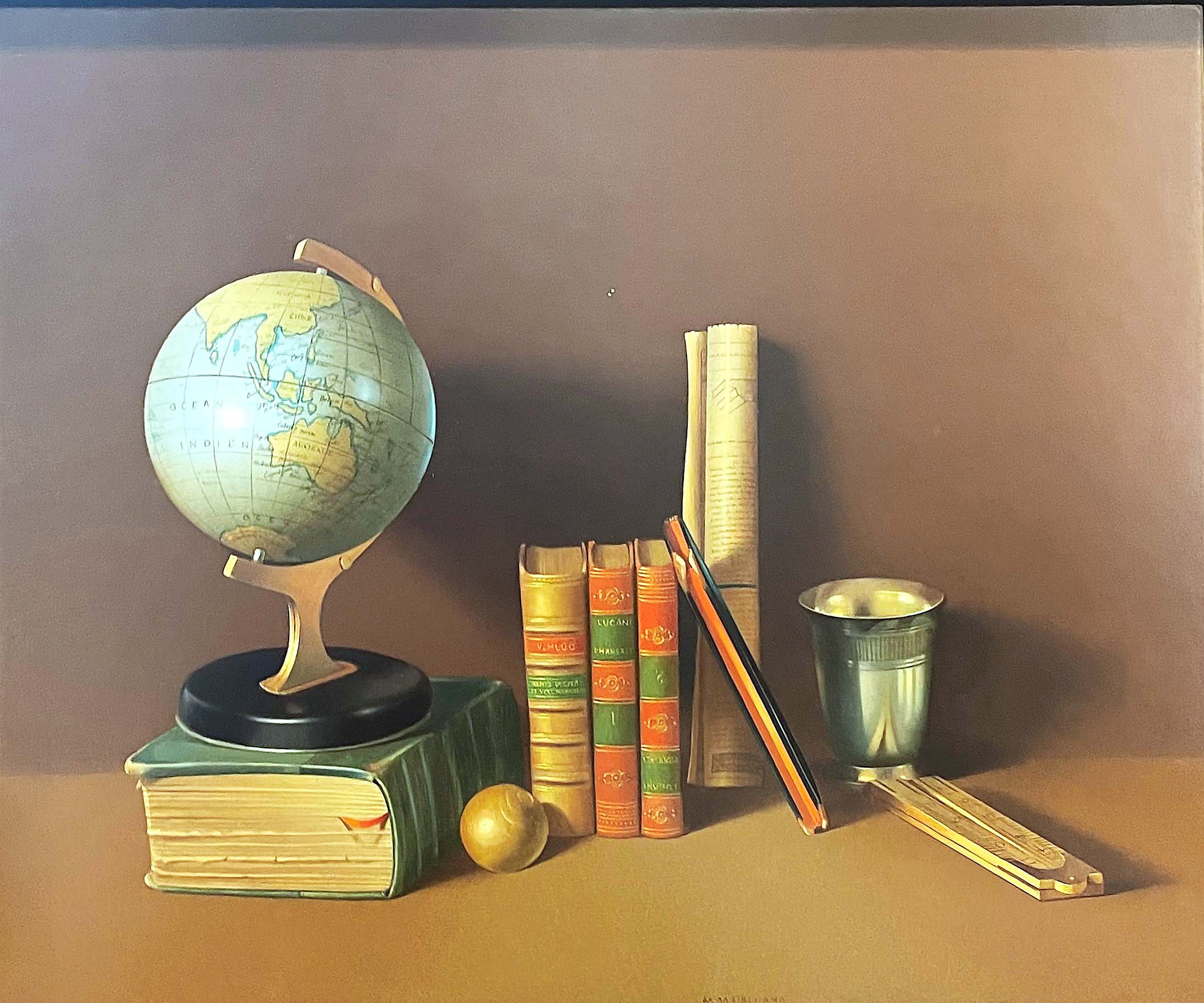
Richard Schillay, Schillay Fine Art, had a large selection of works by contemporary husband-and-wife artists, Antonio Matallana (b 1953) and Sabine Satur (b 1954). Schillay noted it is believed they would collaborate on a given work, though only one or the other would sign. The small compositions — none larger than 20 inches high or wide — combined the modern and historical in photorealistic still life paintings of everyday objects, rendered in egg tempera on wood, using techniques used by the Old Master artists.
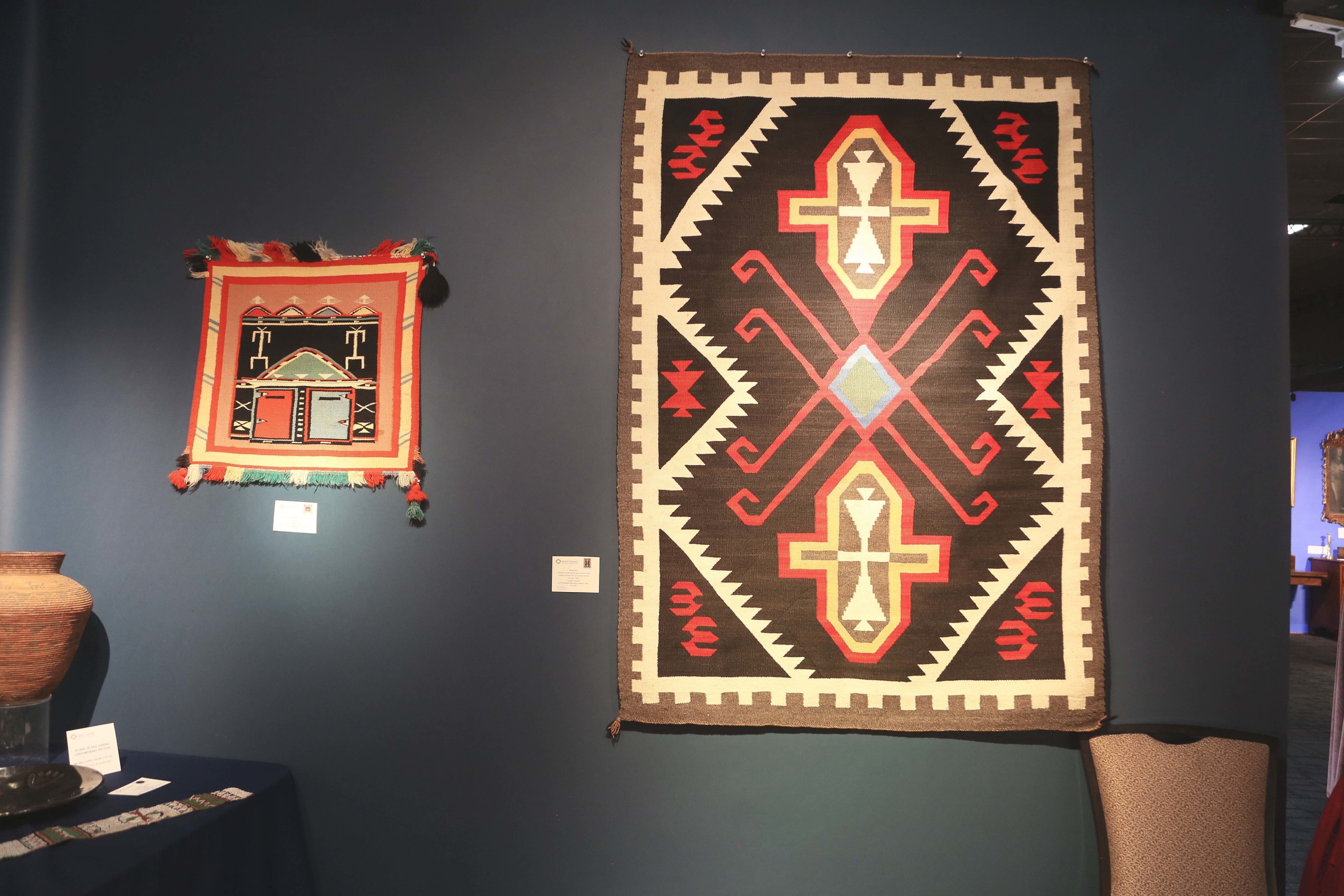
Native American art was in limited supply, but longtime specialist Marcy Burns brings a strong selection each year. For this edition, she was debuting two pieces from her personal collection: a Navajo (Diné) single Sunday saddle blanket with tableta images from the 1880s-90s and a Navajo (Diné) J.B. Moore Crystal rug with green and blue center, possibly the work of Bi-leen Al-pai-Bi-zha-ahd, circa early 1900s.
Tucked into a far corner, Francis Purcell had three models of a cast iron parlor stove designed and patented in 1851 by Frederick Schultz and made in Philadelphia by Leibrandt McDowell & Company. “They were made in good number but are now scarce; I found them all together in one house in Philadelphia.”
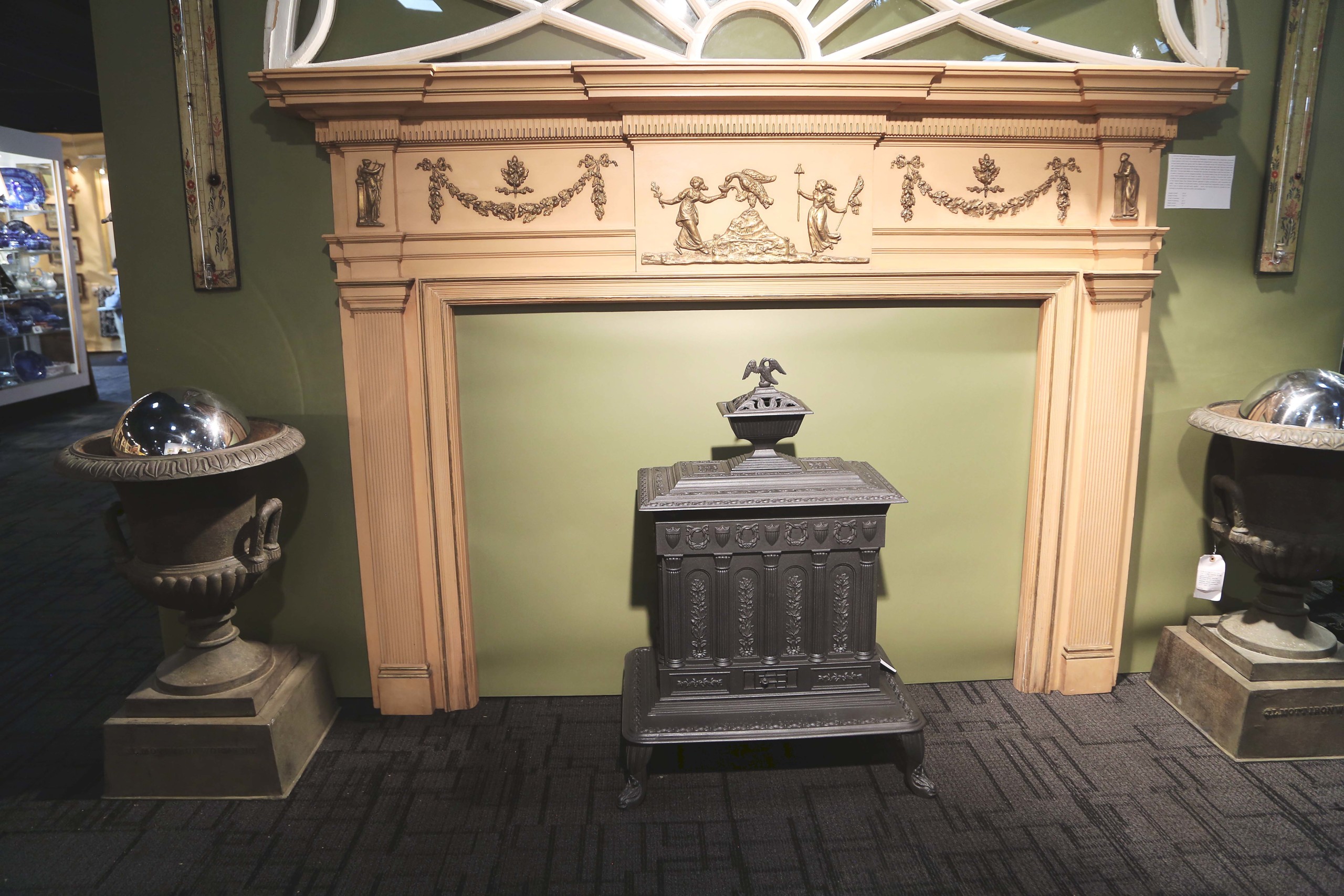
One of three models of a cast iron parlor stove made in Philadelphia, shown how it would have originally been situated, under a mantel. Francis J. Purcell, Philadelphia.
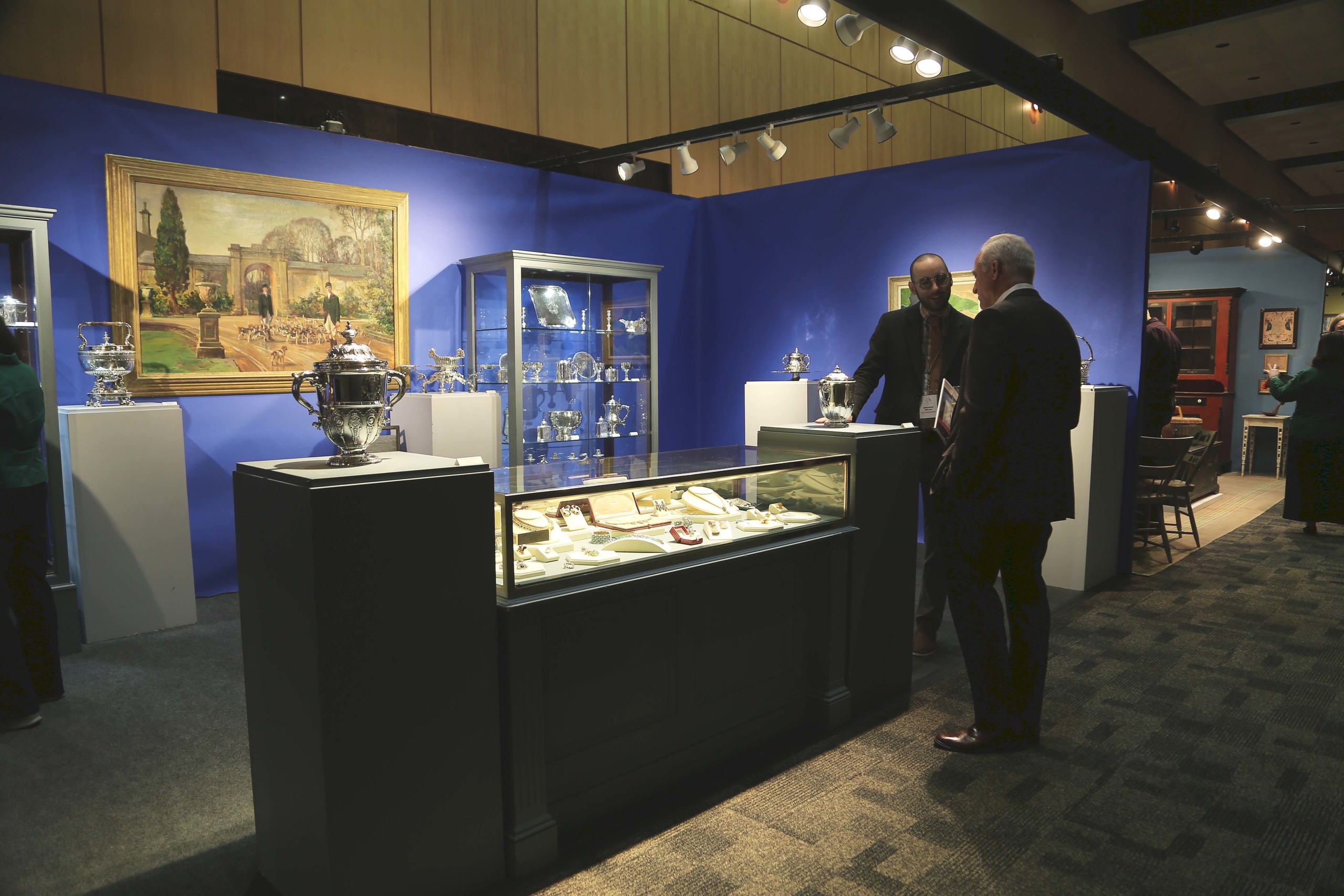
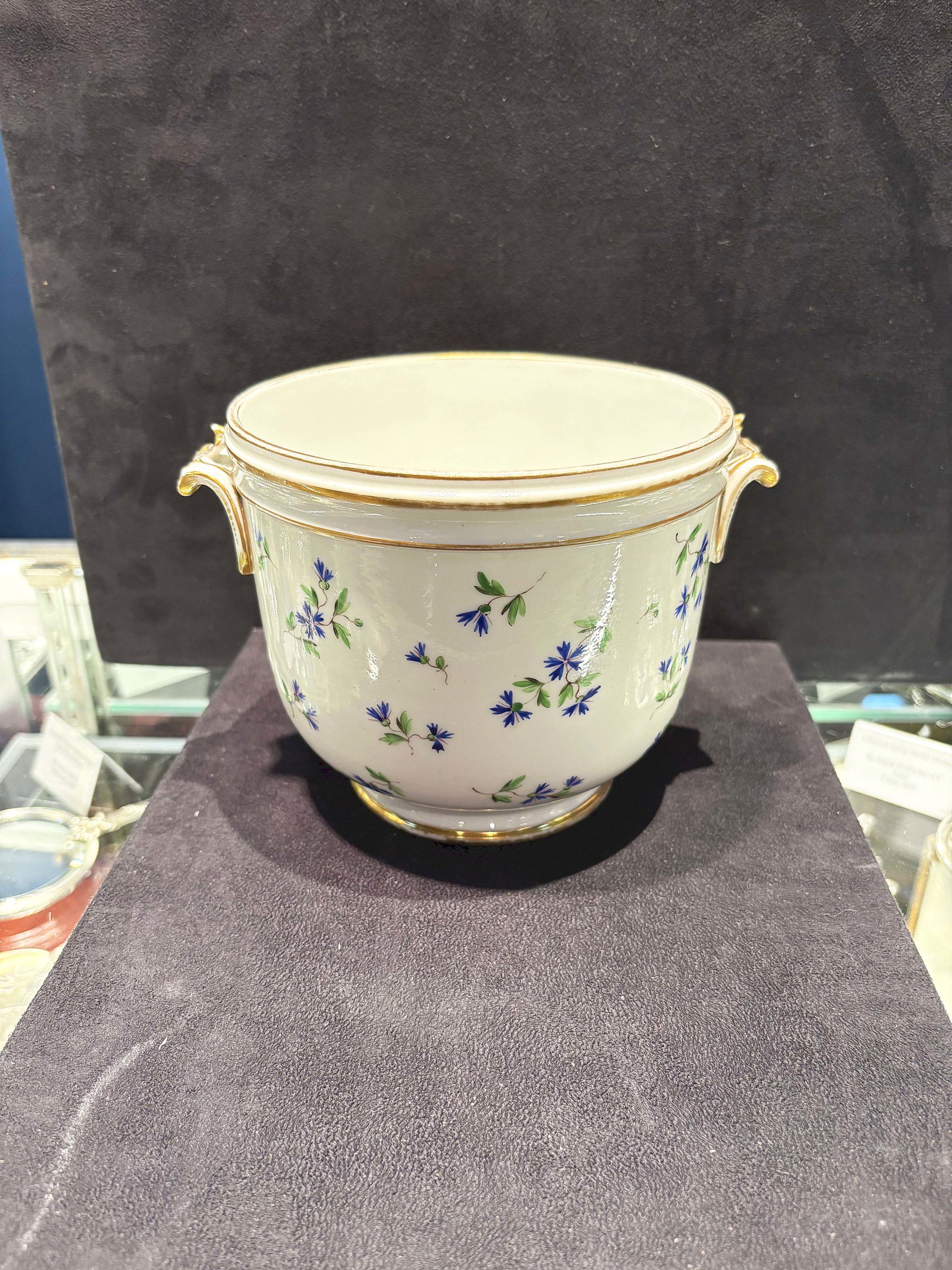
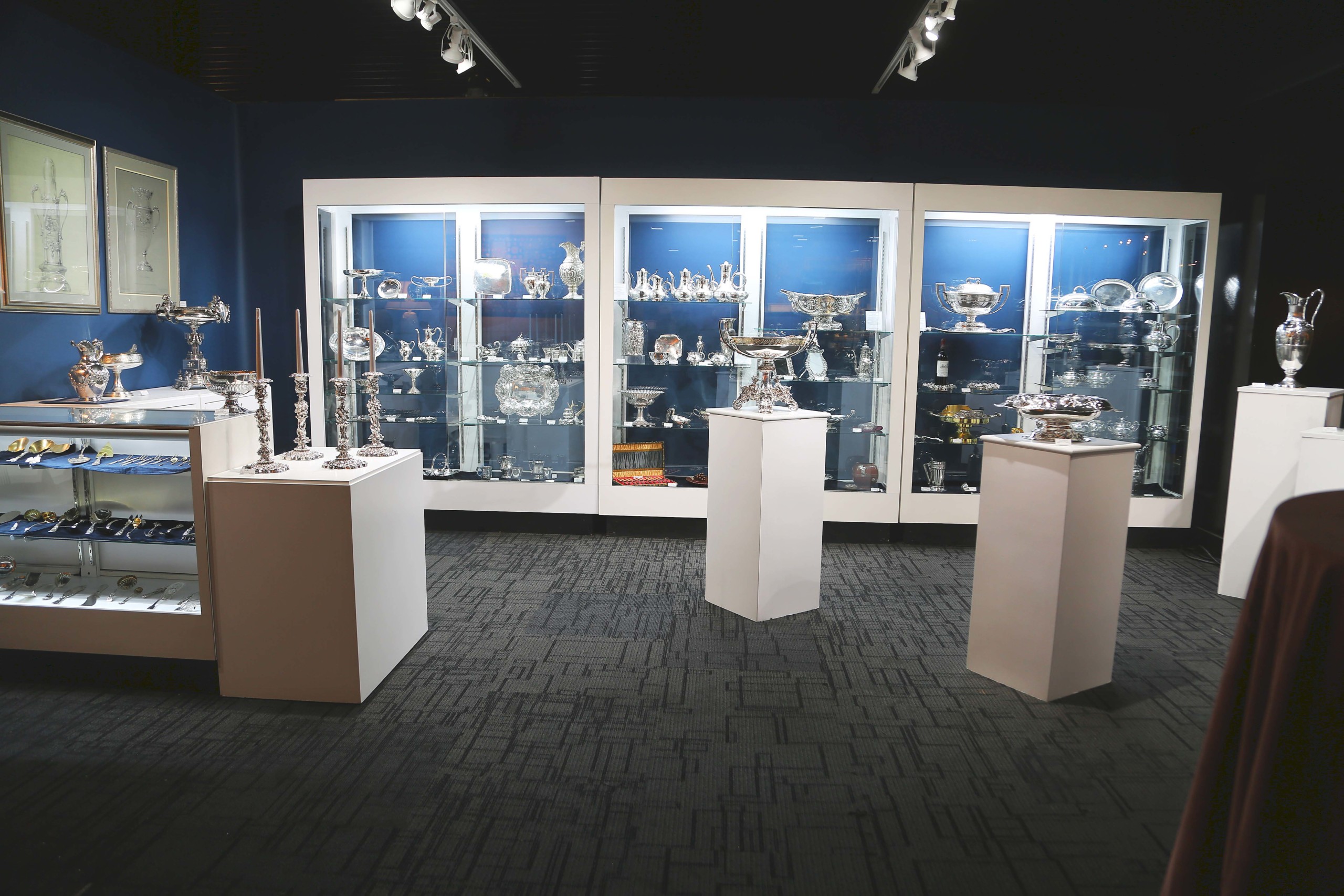
Jasmine Doussiere, Silver Art by D&R, always has a gorgeous booth gleaming with silver, gold and crystal. A beautiful breakfast table on loan from Rogert Winter was beautifully laid with a Saint Louis Cristallerie Thistle pattern gilt crystal stemware set for six, made in 1908, and a French vermeil 140-piece flatware service by Cardeilhac, in the Seashell pattern. Of particular note was a wine cooler that had been in Marie Antoinette’s possession at the Petit Trianon, made in 1778.
Jasmine shared her feedback via email: “First of all, I wanted to thank Diana Bittel for her management. The behind-the-scenes part is crucial in a show and the managers rarely get thanked! Despite a lesser attendance, I had a good show. I missed a few clients, but those who came left with lovely items. The new location of the booth was great, and I thought the show looked amazing. Delaware is always one of my favorite shows, and I look forward to being back next year!”
Dates for the 63rd Delaware Antiques Show have not yet been announced. For further information, www.winterthur.org/annual-delaware-antiques-show.