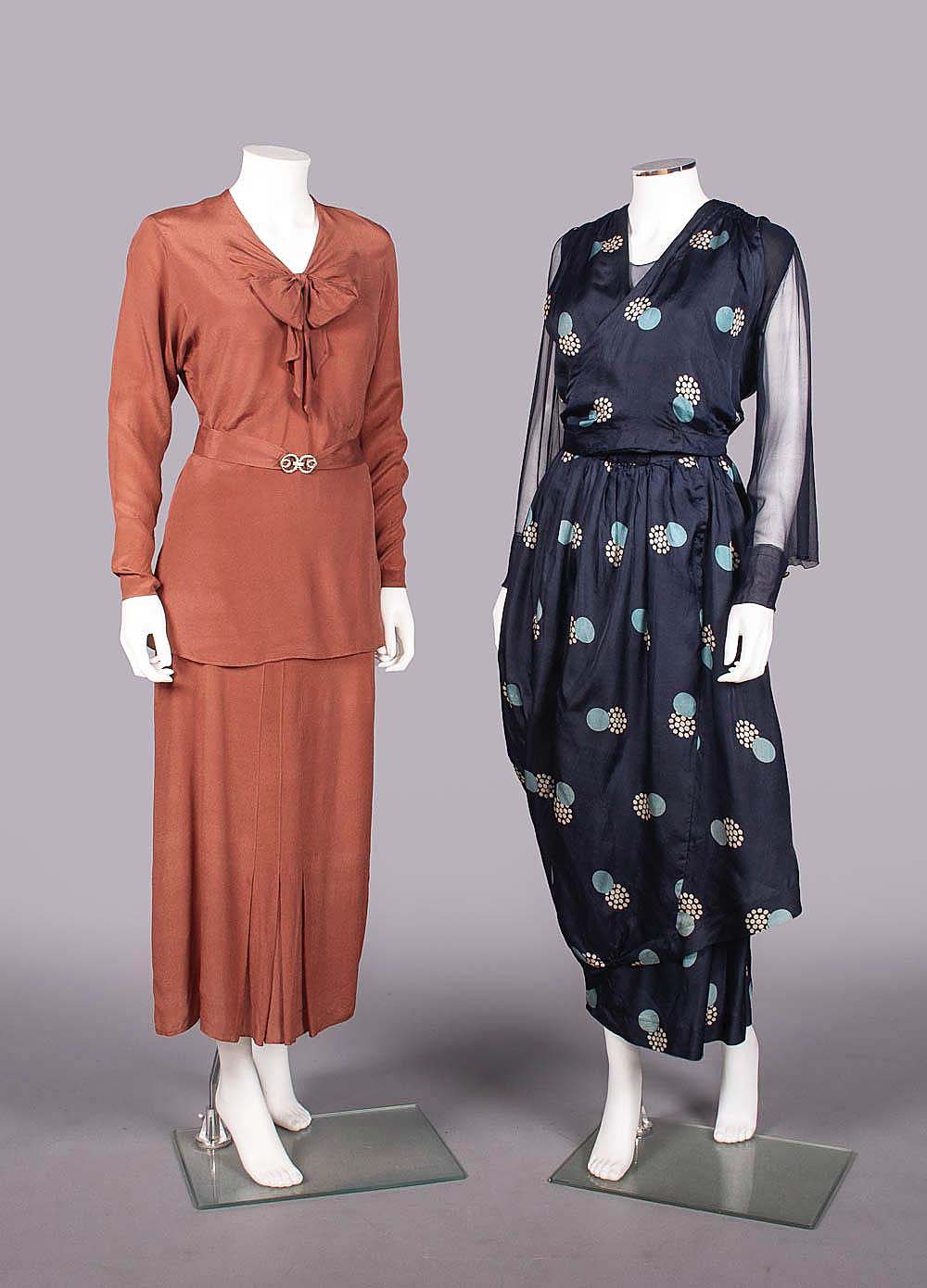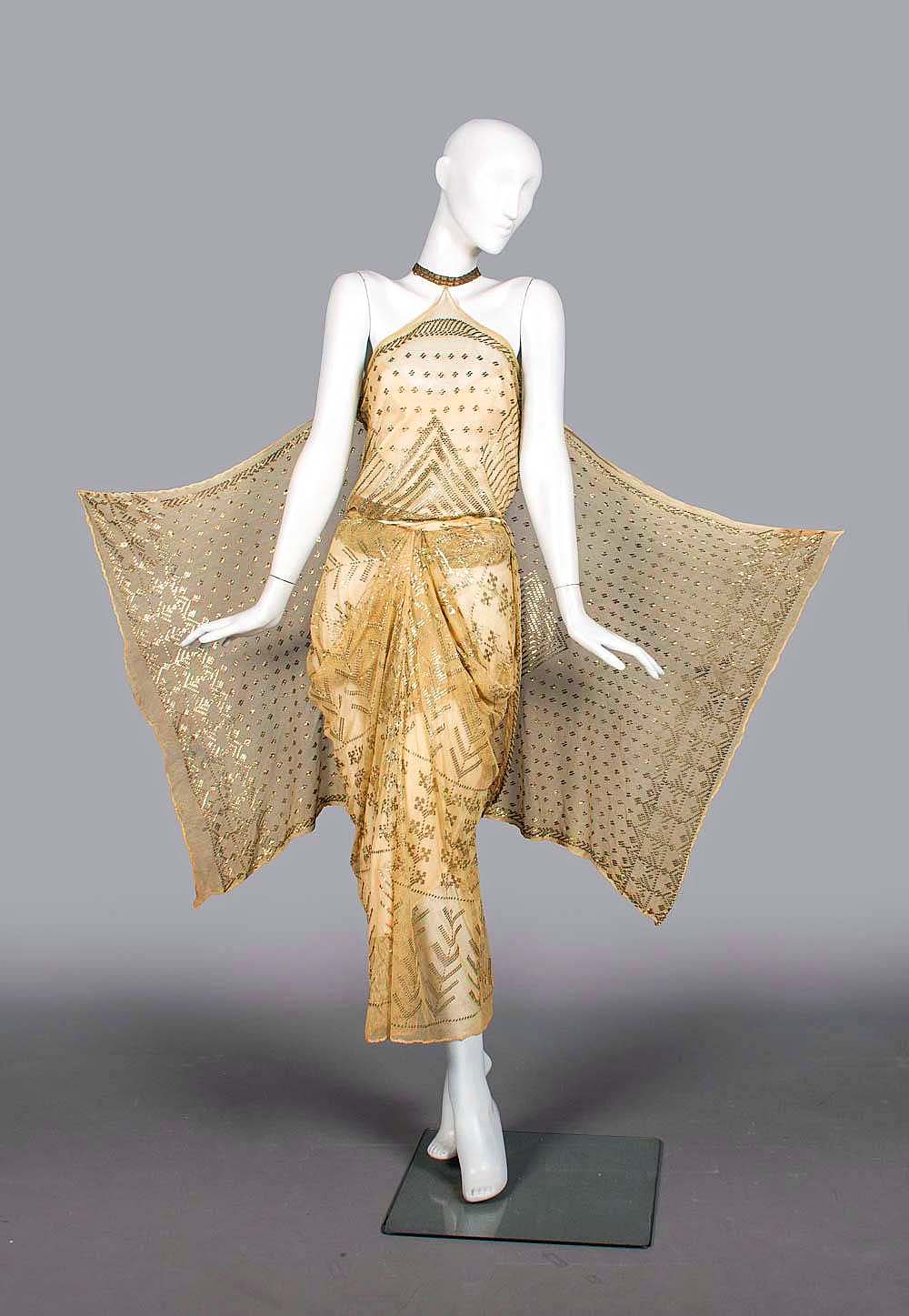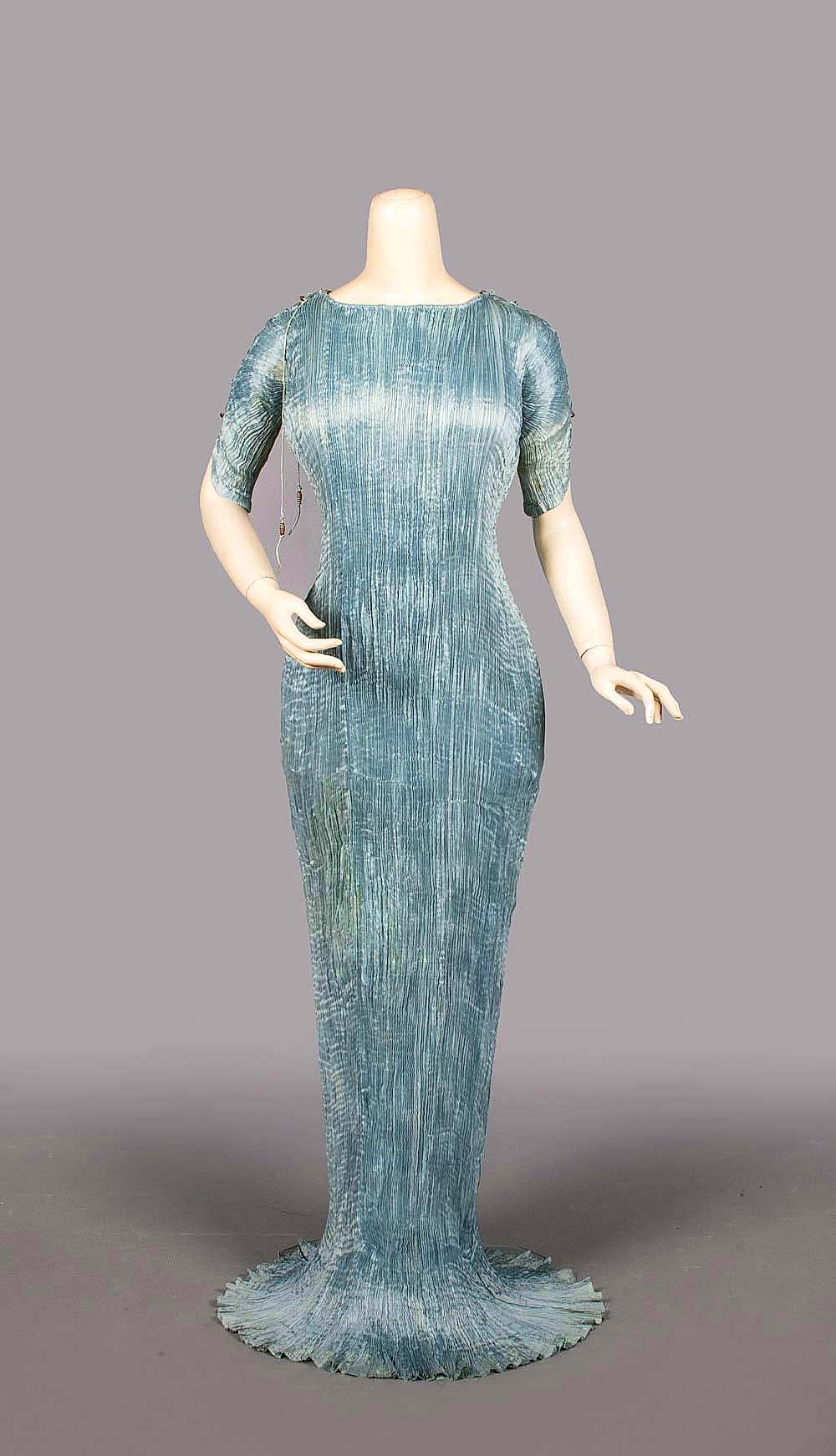
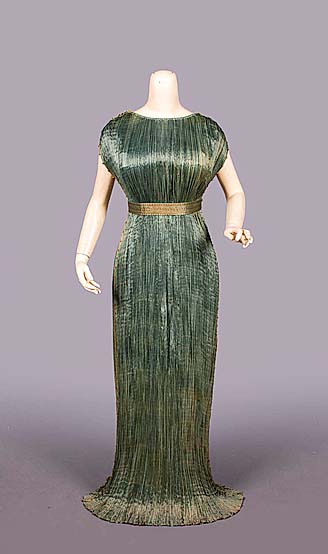
This 1930s Delphos Fortuny gown was the auction’s icon, more than doubling its $6/8,000 estimate to lead at $18,750.
Review by Z.G. Burnett
BELLOWS FALLS, VT. — Augusta Auctions closed out the calendar year with a bang, conducting its Holiday Vintage Spectacular sale with 250 lots of garments and textiles. The Fashion Institute of Technology (FIT) in New York City and the Smith College Historic Clothing Collection in Northampton, Mass., joined Augusta’s roster of prominent institutional consignors and select private collectors. Antique and vintage couture lots led the auction, though there were a few surprising results from the tapestry and collectibles categories. It was “a very successful auction” that totaled $182,812, with a sell-through rate of 91 percent, and attracted worldwide bidding through Invaluable and Augusta Auctions’ in-house platform. “The [top lots] went to a mix of both private collectors and notable institutions both domestic and abroad, with a noticeable uptick in international bidders,” commented an Augusta Auctions representative.
The auction’s top three lots were all estimated at $6/8,000, and each surpassed expectations. First was a seafoam green gown in pleated silk from the house of Fortuny. Established in 1921, it is now the last operational textile factory in Venice. The gown was from its Delphos line that was first released in 1909. The design of these gowns was inspired by the “Auriga,” a Greek sculpture of a charioteer discovered in Delphi in 1896, whose Ionic chiton is mirrored in Fortuny’s exclusive silk and taffeta. Each bolt is manually pleated 400 to 500 times for the desired enveloping effect around the wearer’s body and adjusted with selvedge cording through Murano glass beads. Augusta’s example dated to the 1930s, retained its original gold-stenciled belt and was bid to $18,750. Another sky blue Fortuny gown in the auction was more loosely dated to the early Twentieth Century, was in lesser condition and missing its belt, amounting to $9,063 and placing third in the auction.
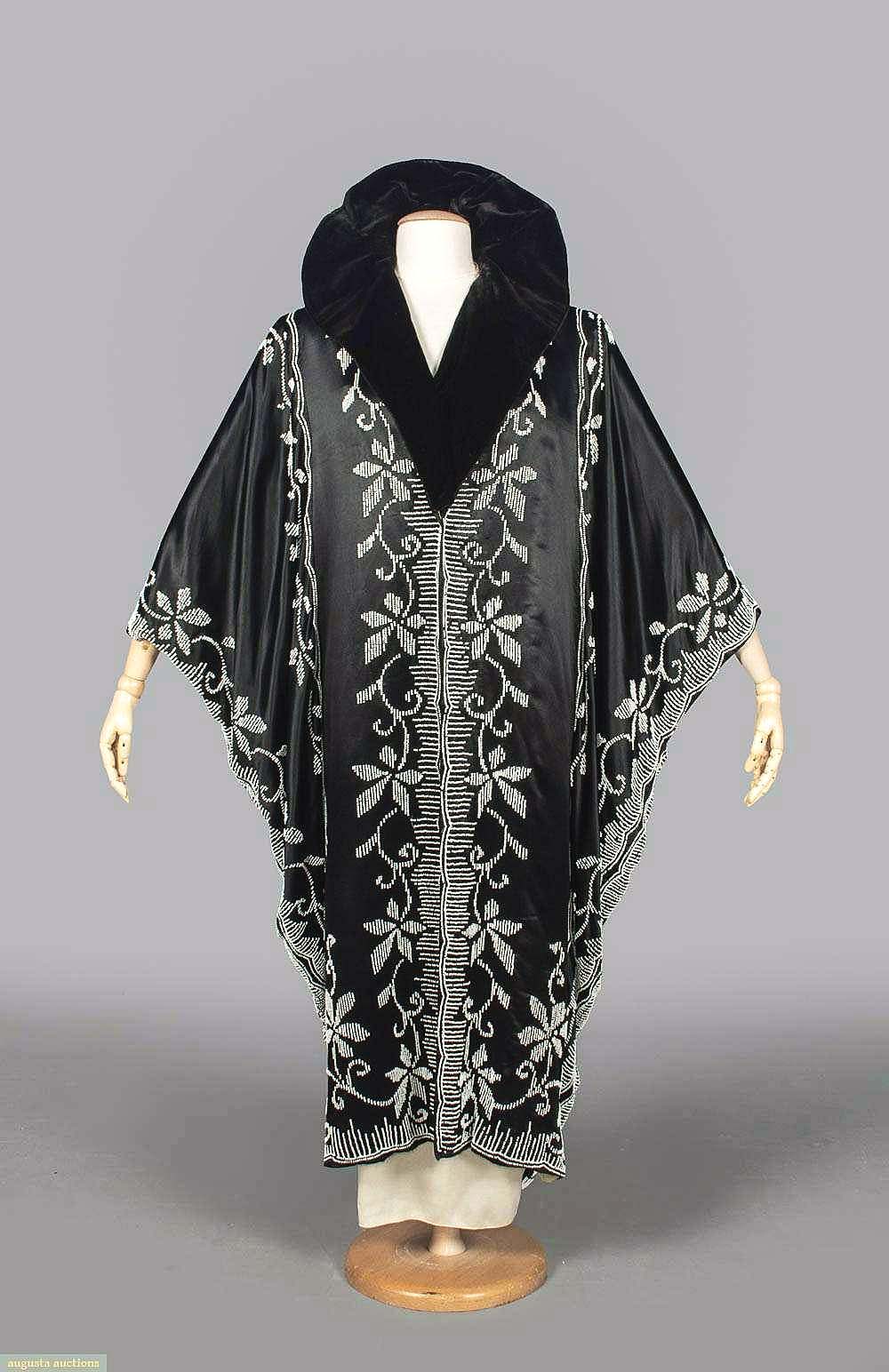
Hand stitched with seed pearls and crowned by a velvet collar, this Dorat silk satin cocoon coat had a shattered lining but still fetched $2,875 ($500/800).
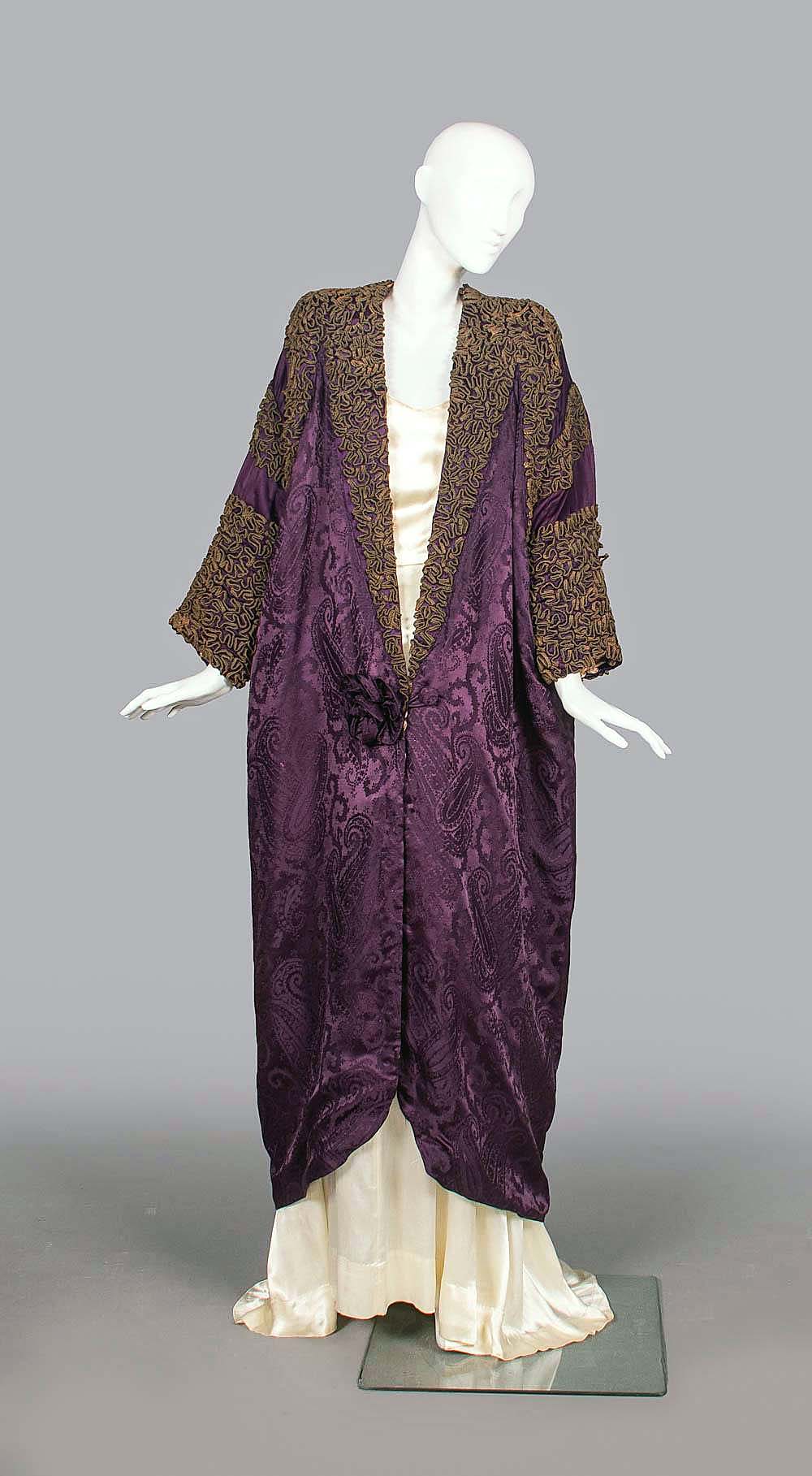
Opera coats from this era also appeared in the upper ranks. One of the auction’s featured pieces was from the French designer Dorat: a black silk satin cocoon coat showing floriate designs with embroidered seed pearls. It also sported an alluring black velvet collar. The coat’s exterior condition was excellent but shattering on the lining was poor. Nonetheless, bidders more than tripled its high estimate to $2,875. Next in price was an even earlier Babani, Paris, coat from the 1910s. Its patterned purple silk was accented with standing lamé appliqué in a vermicelli motif. Despite tarnish and minor damage concurrent from being over a century old, the coat was considered in very good condition and sold for $2,000.
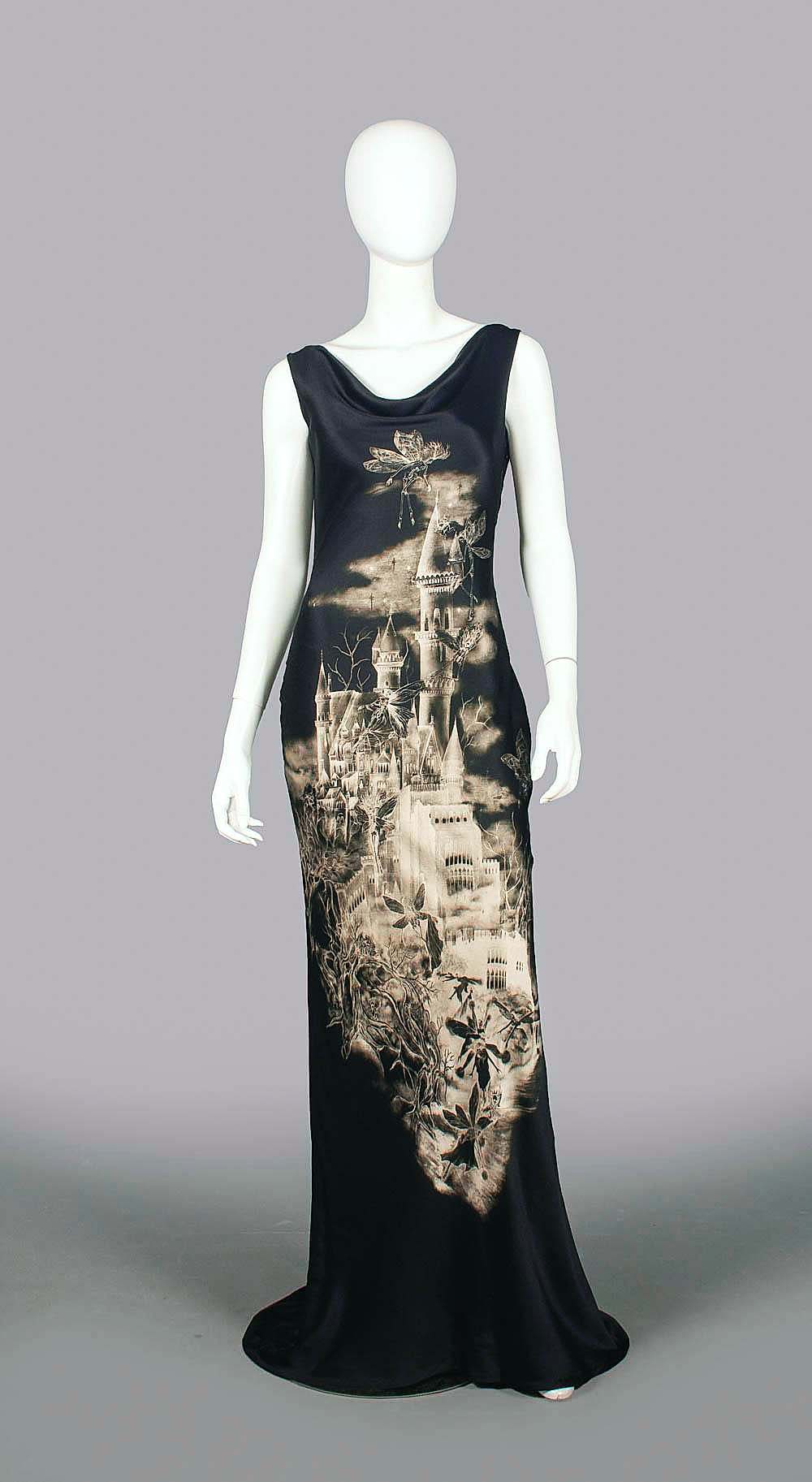
Second was a departure from its Fortuny bookends, a 2007 Skeleton Fairy gown from Alexander McQueen. The floor-length sheath dress was made from black silk crepe-backed satin, showing a fantastical printed image of skeletons with fairy wings flying around a turreted castle, revealing a plunging back on the reverse. McQueen, who died in 2010, is best known by his sculpturesque haute couture gowns and ubiquitous black scarves screen-printed with skulls. The style was shown in the Museum at FIT’s “Fairy Tale Fashion” exhibition (January-April 2016); this example was bought for $16,875.
Another showstopper was an Elsa Schiaparelli, Paris, dinner jacket, made for the Salon Moderne, Saks Fifth Avenue, in 1937-39. Pink sequins, molded buttons and faux pearls adorned the black velvet on its scalloped edge. The jacket was from the closet of Ruth “Sunny” E. Turn (1890s-unknown), an American socialite who married Wall Street stockbroker Ruloff E. Cutten in New York City in June 1921. Another example of the jacket exists in the Metropolitan Museum of Art’s permanent collection, yet this went to a new home for $5,125.
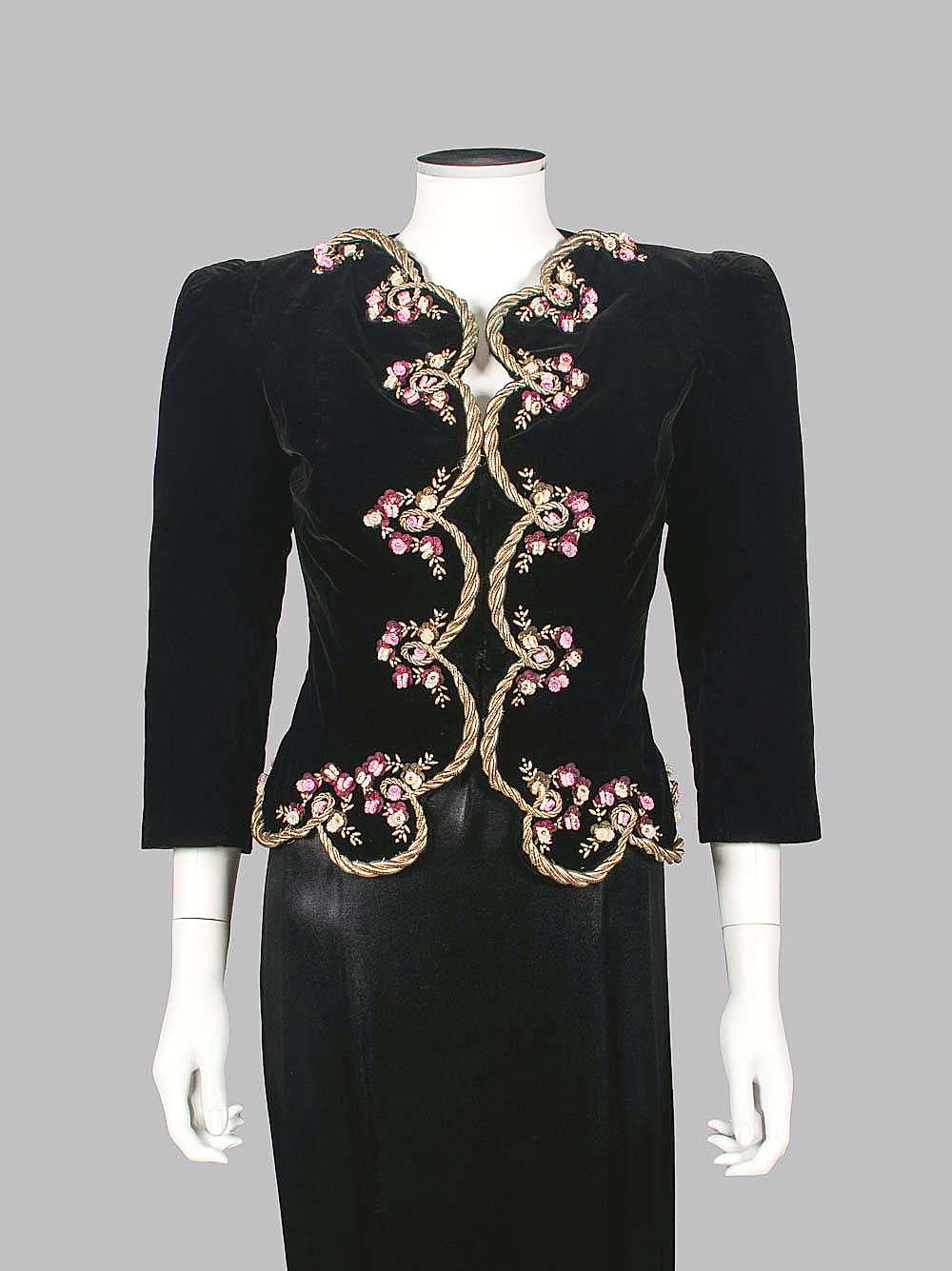
Made by Schiaparelli circa 1937-39, this black velvet dinner jacket’s scalloped hems were festooned with sequins, faux pearls and more; it was bid to $5,125.
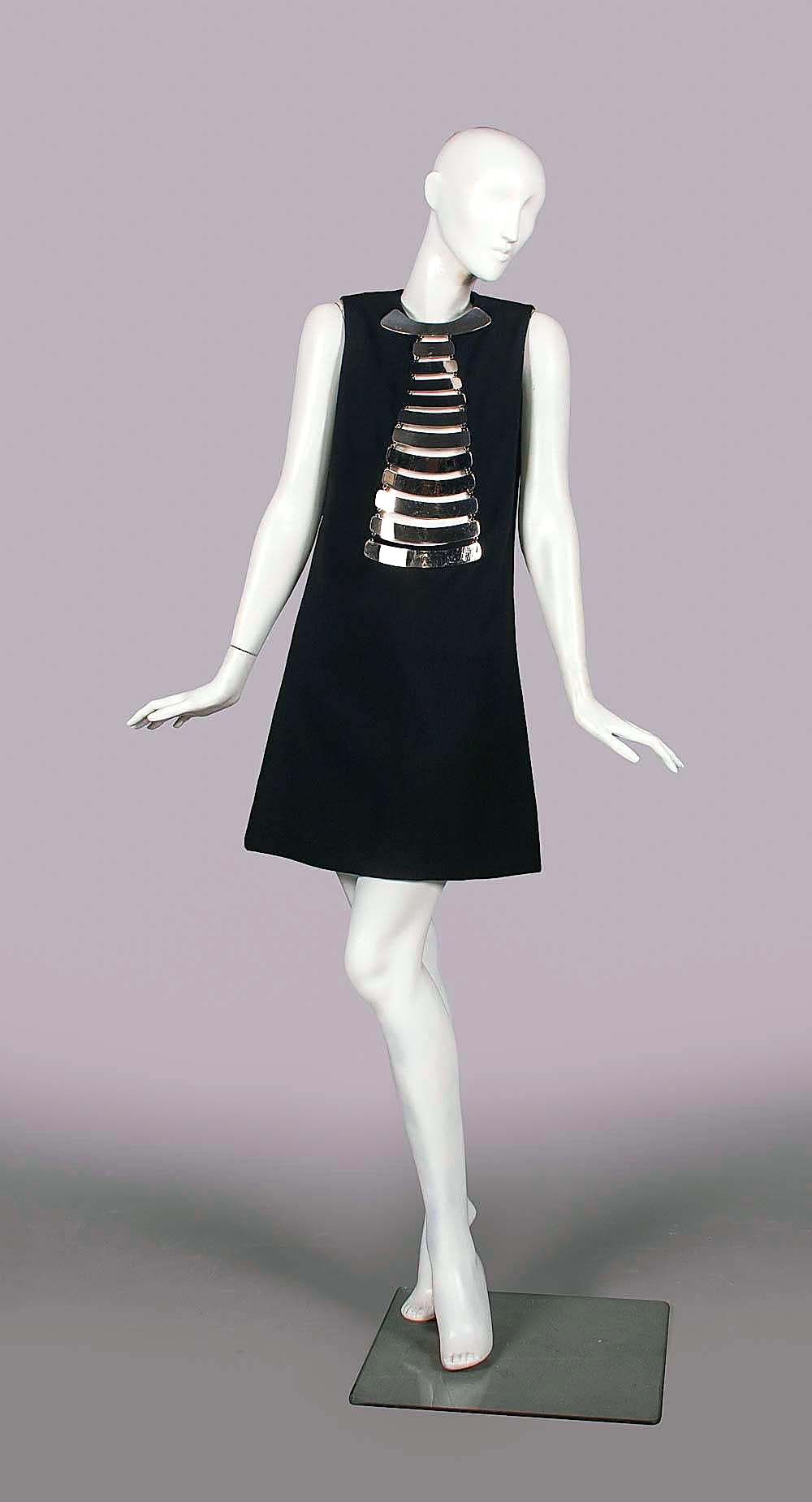
Perhaps more aligned with McQueen’s spirit was a “ribcage dress” from Pierre Cardin, 1969, that followed the Schiaparelli jacket in price at $3,625. The sheath was made with wool crepe and metal plates stitched in to form the “ribs.” It showed some wear yet was also assessed to be in very good condition. This jacket too had a twin in another institutional collection and was acquired by the Museum of Fine Arts, Boston.
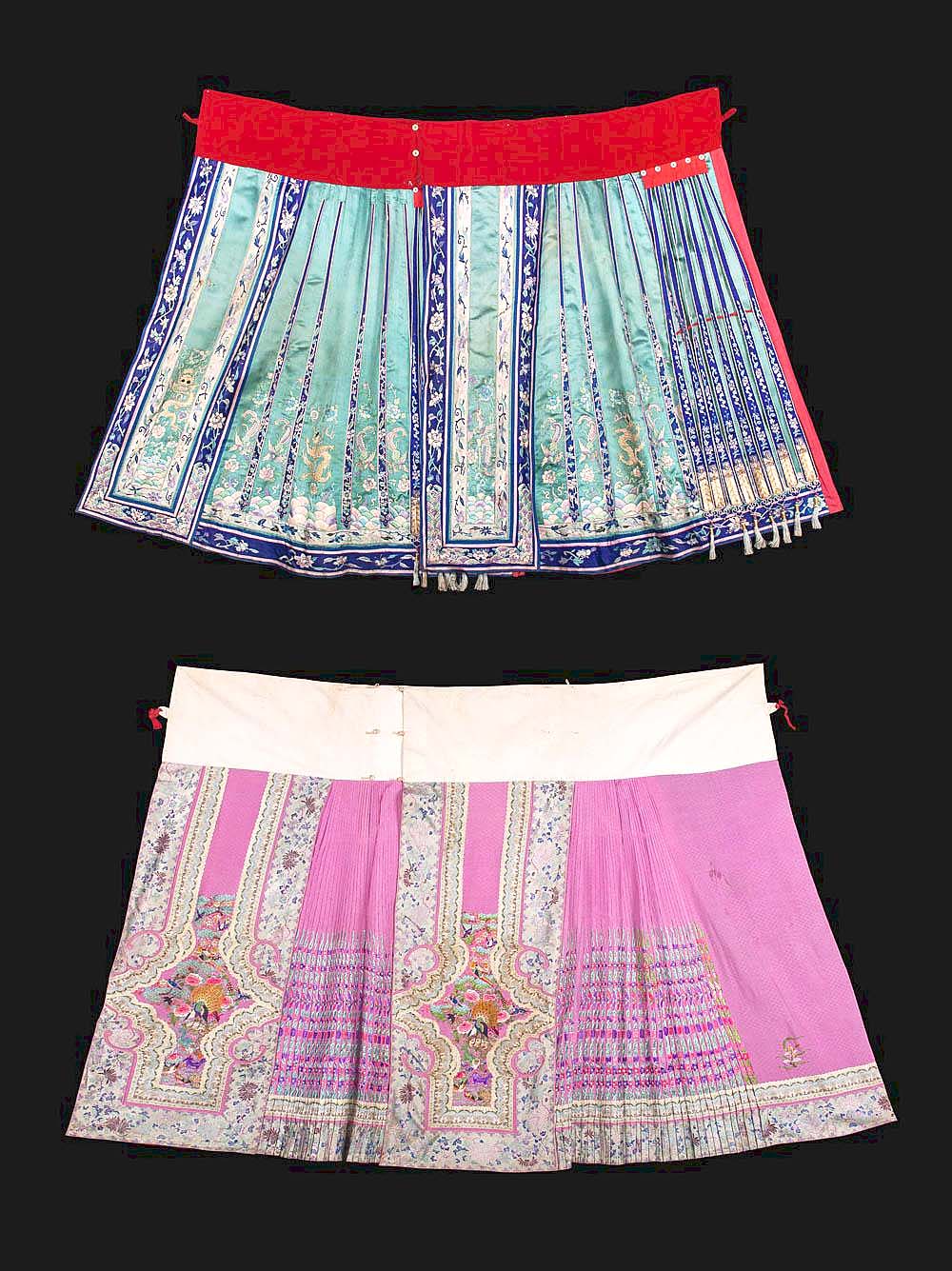
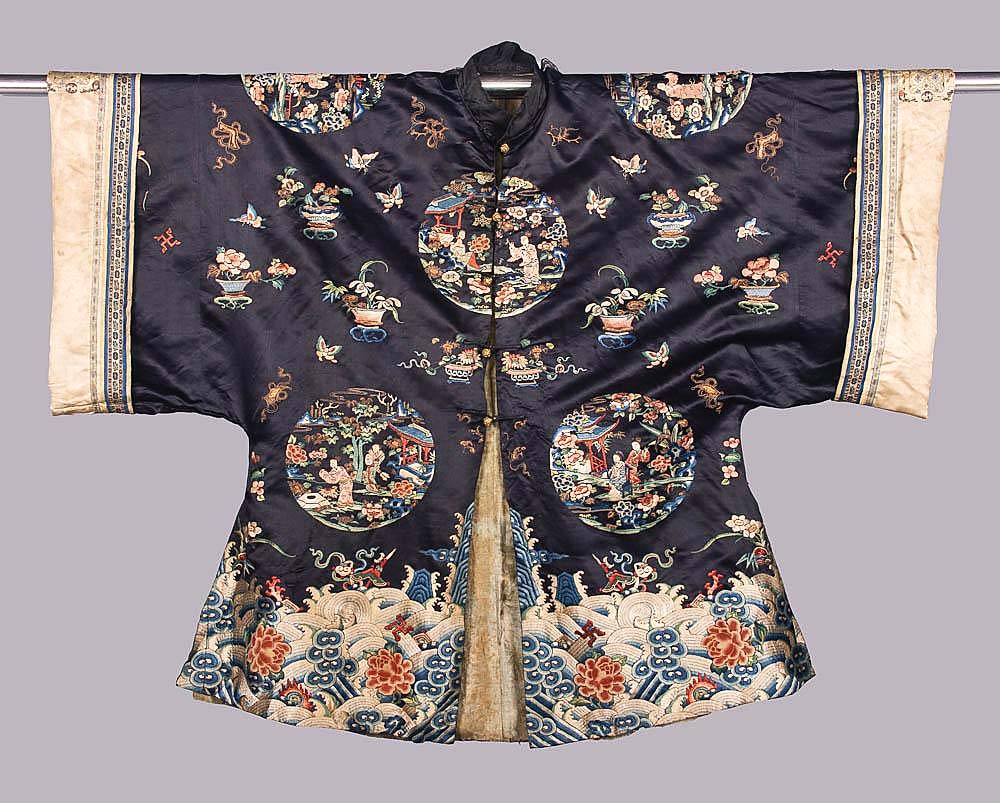
Chinese textiles are popular with Augusta Auction bidders, and this sale was no exception. In step with its embroidered black silk satin trend, a late Nineteenth Century robe showing leisure activities and micro-fine Peking knot needlework was the highest bid in this category at $3,500. Next was a pair of embroidered Mandarin skirts, each cataloged as being in good and excellent condition. Between them, the skirts displayed a menagerie of motifs including five-clawed dragons, phoenixes, peacocks, foo dogs and butterflies. They sold together for $2,875.
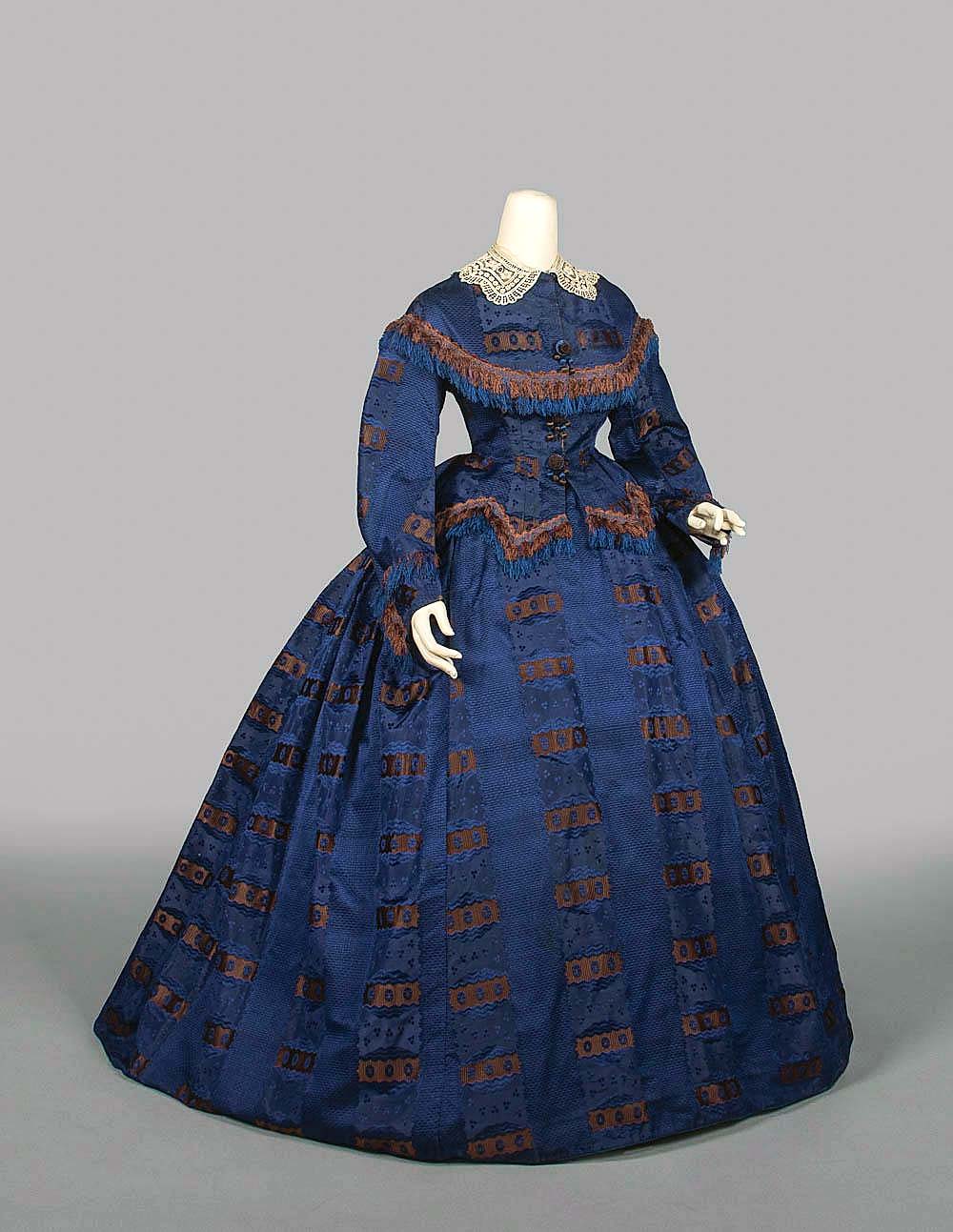
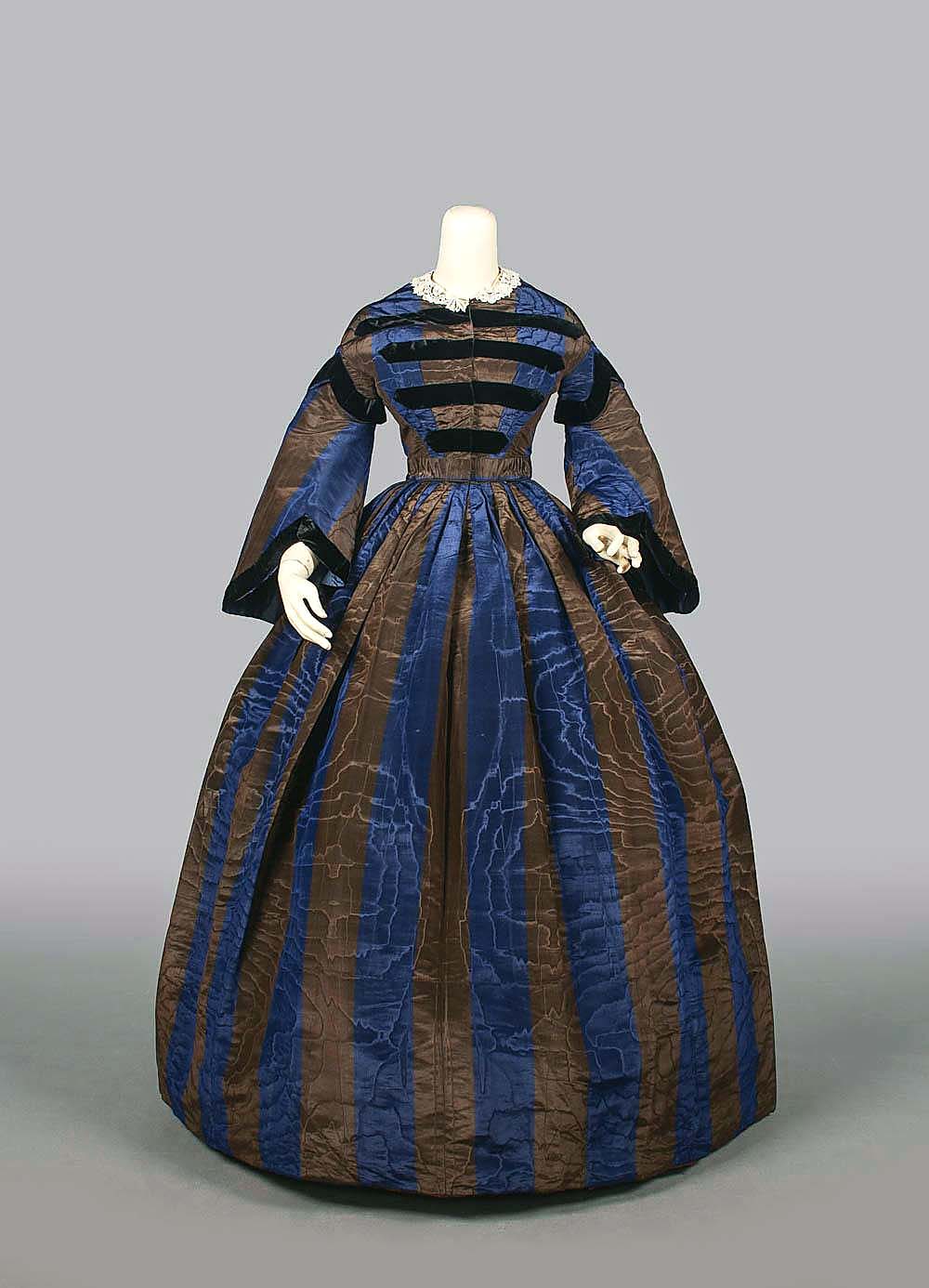
Two mid Nineteenth Century gowns from the Valentine Museum (Richmond, Va.) also found unexpectedly high favor with bidders. First was a blue and brown striped moiré gown with military-inspired black velvet appliqués on its bodice. The gown’s bell sleeve caps and cuffs were also trimmed in velvet, it showed a tape lace collar and achieved $3,375. Second was a silk and satin afternoon dress in two pieces, entirely handmade circa 1854 and updated for sleeve style in the 1860s. Its collar was also tape and needle lace, showed intact applied fringed silk passementerie and sold for $1,875.
Prices quoted include the buyer’s premium as reported by the auction house. Augusta Auction’s Vintage for Valentines February 2026 sale catalog is available online, event date TBA. For information, 802-463-3333 or www.augusta-auction.com.