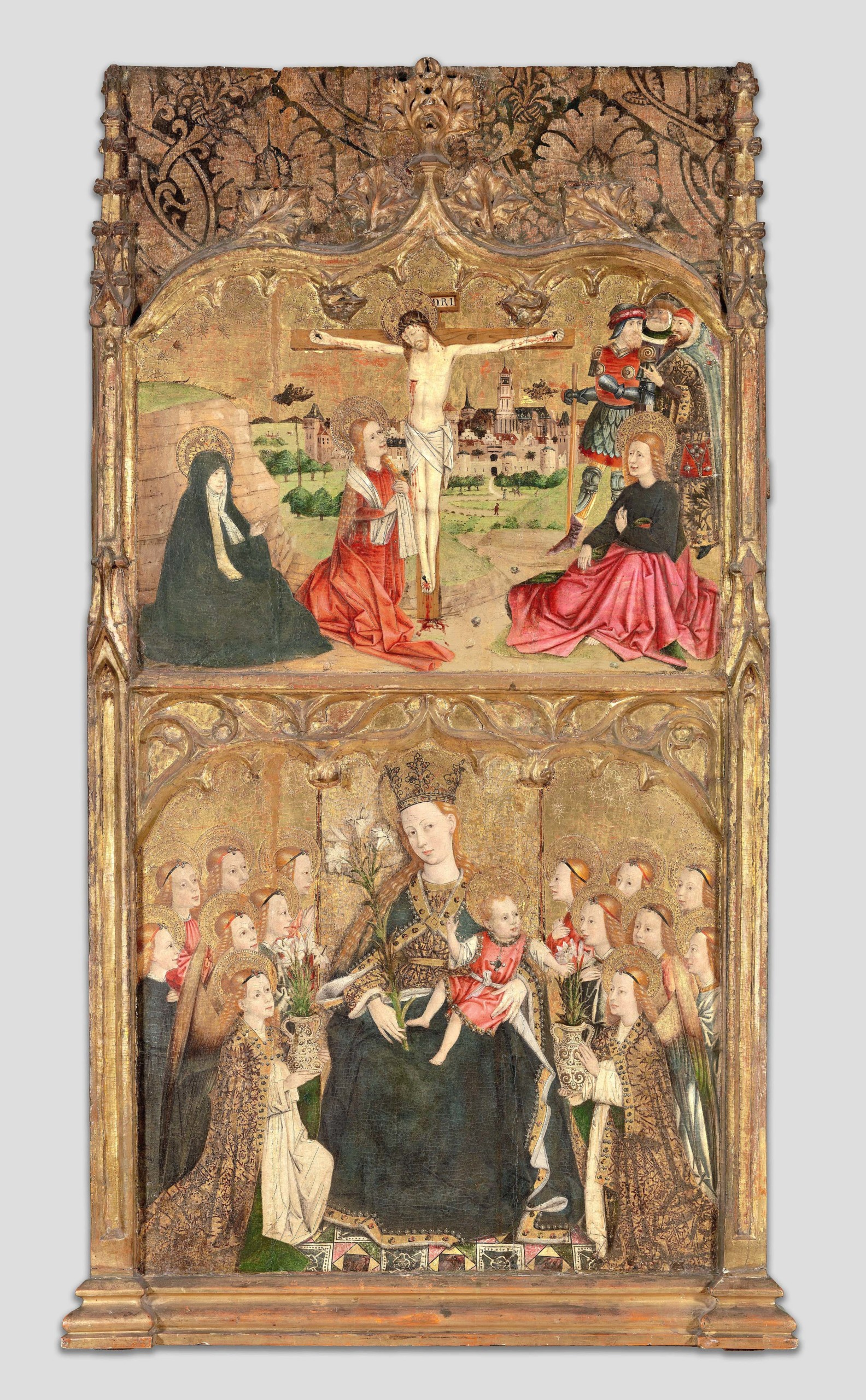
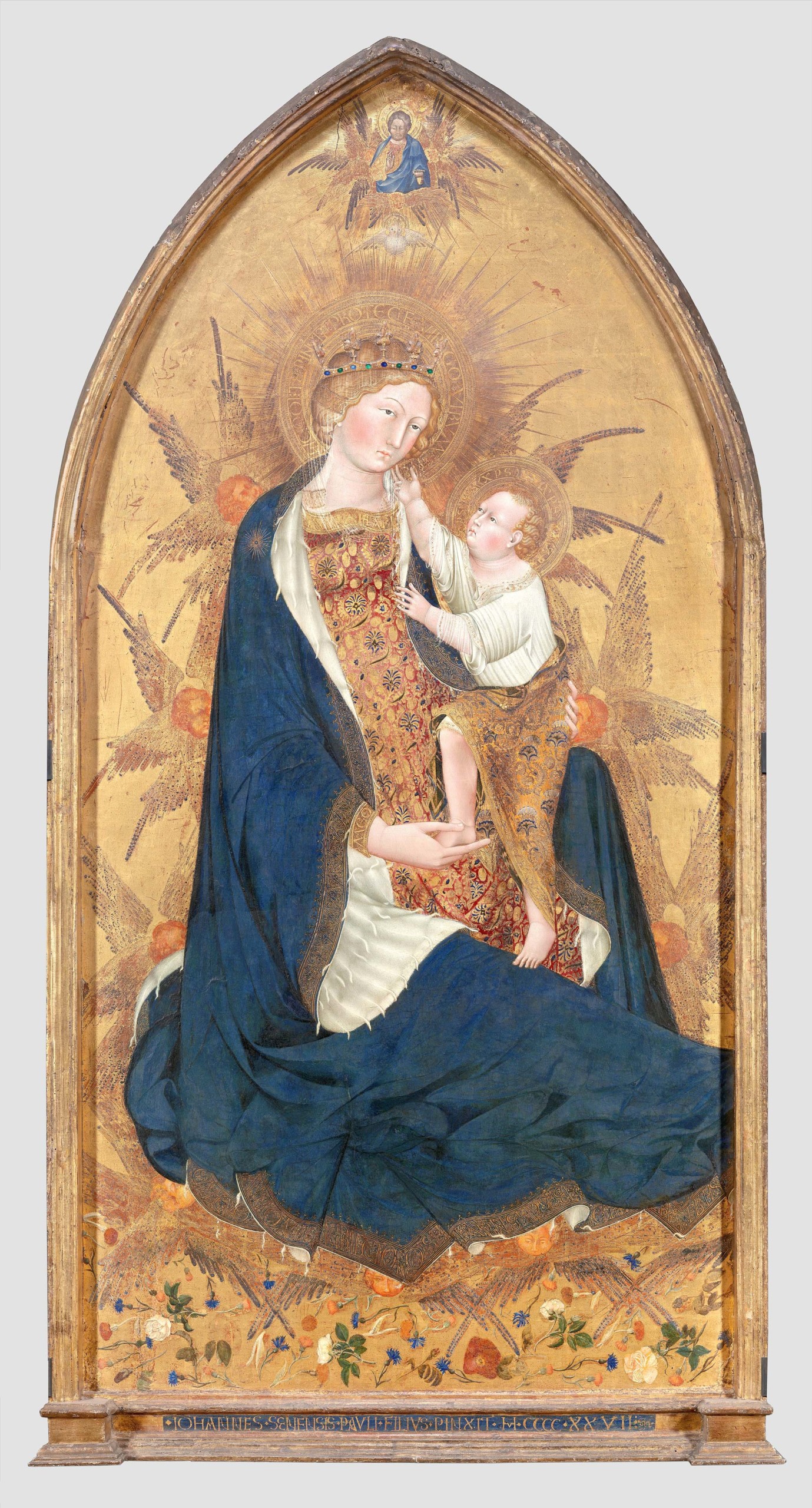
“Branchini Madonna,” by Giovanni di Paolo (Italian, 1403-1482), 1427, tempera and gold leaf on panel, 72 by 39 inches. The Norton Simon Foundation.
By Andrea Valluzzo
PASADENA, CALIF. — Man’s thirst for gold existed centuries before the California Gold Rush or when the Spanish conquistadors plundered the New World. Gold is delicate enough to be fashioned into thread for weaving or ground into paint, yet strong enough to be molded into jewelry or sculptures. It was a bold symbol of one’s social standing and also symbolized purity or a divine presence.
Commemorating the golden (50th) anniversary of the Norton Simon Museum, the exhibition “Gold: Enduring Power, Sacred Craft” is on view through February 16. Nearly 60 objects from the museum’s collection of Southeast Asian, European, North African and North American art give testament to the cultural, artistic and symbolic importance of gold.
Co-curated by the museum’s associate curators Maggie Bell and Lakshika Senarath Gamage, “Gold” is organized into three thematic sections: power, devotion and adornment. It brings together at the museum for the first time paintings, sculptures, jewelry, tapestries and photographs dating from 1000 BCE to the mid Twentieth Century.
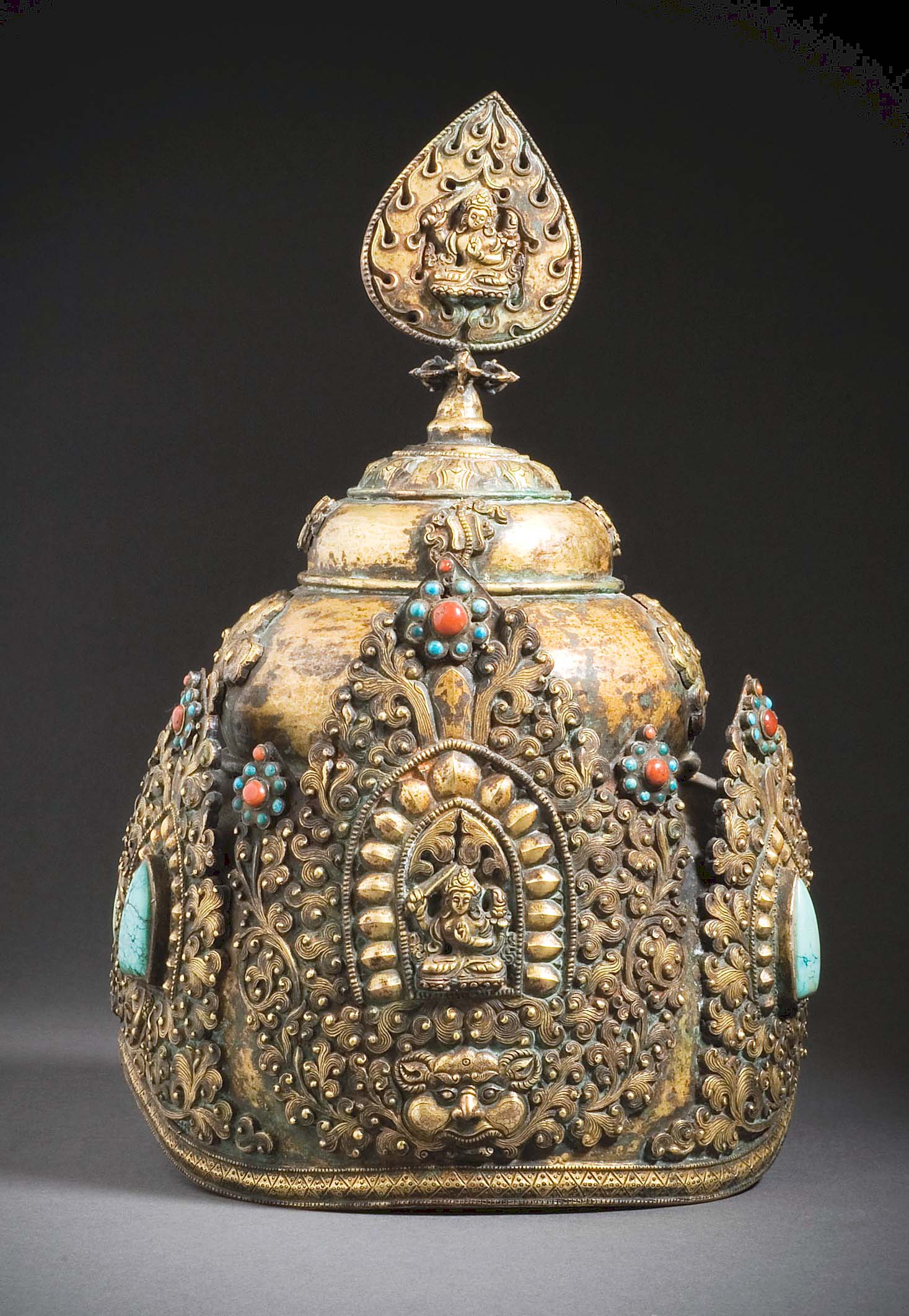
Headdress, China or Tibet, Twentieth Century, gold with semiprecious stones, 11¼ by 7 by 7⅝ inches. Norton Simon Museum, estate of Armand J. Labbé, in memory of his parents, Gertrude and Armand Labbé.
The first exhibition gallery showcases objects used to convey their owners’ wealth, power or status. A highlight is an Eighteenth or Nineteenth Century diminutive gilt copper alloy bovine figurine from Southeast Asia (China/Nepal); it measures a mere 1¾ by 3¾ inches. “We don’t know exactly what it was used for, perhaps it was used in the Chinese feng shui tradition because they still have the bull as one of the symbols,” said Senarath Gamage, explaining that it seems likely this object was frequently handheld due to several areas showing wear. The charging bull, whose musculature is depicted in fine detail to convey strength, has long been an auspicious motif associated with prosperity.
A European example in this section is a mid Seventeenth Century oil on panel portrait of Sir Brian Tuke, after Hans Holbein the Younger, the court portraitist of King Henry VIII. “I think this is a really great encapsulation of the different ways that gold was very powerful in this period,” Bell said. The portrait, which was probably done by one of Tuke’s descendants, depicts Tuke, who served as a treasurer to King Henry VIII. “Holbein had a real sensitivity to representing jewelry, gold and beautiful textiles, which you see in this portrait,” Bell said. “What is kind of fun about this portrait is it is an example of the play of the illusion of gold and the use of actual gold. Where you see the illusion of gold is actually on the crucifix that is hanging around Tuke’s neck but the actual gold is in that beautiful brocade sleeve with gold leaf.” Wearing a cross was seen as talismanic for one’s health as gold does not corrode and having it made of gold makes it even more powerful.
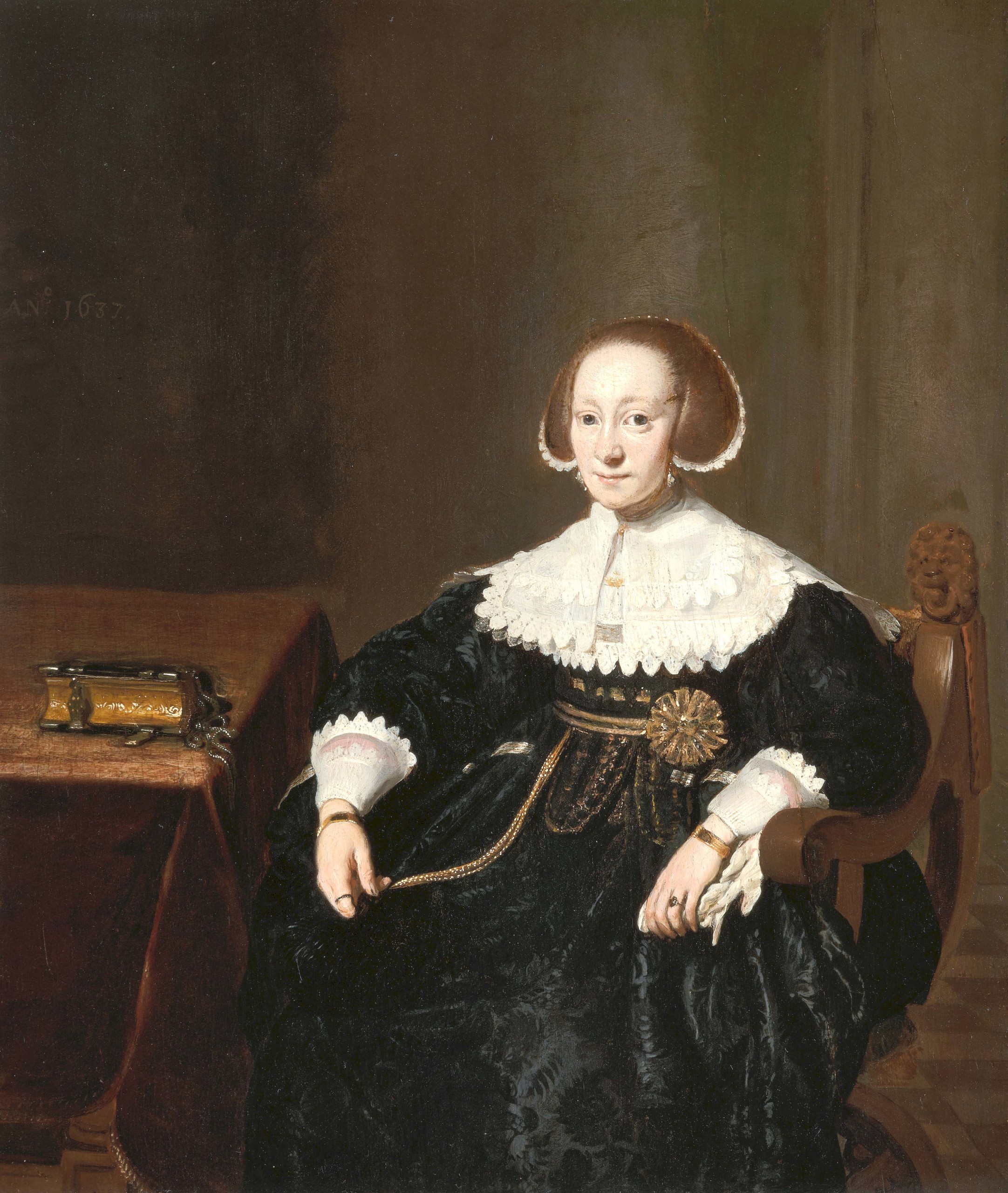
Portrait of a woman by Thomas de Keyser (Dutch, 1596/97-1667), or a follower, 1637, oil on panel, 18 by 15½ inches. The Norton Simon Foundation.
Bell suggests that by wearing the cross, Tuke perhaps was meditating on his mortality, as he had recently undergone a severe illness. He’s also pointing with his left hand to a quote from the book of Job, indicating that a man’s days are few.
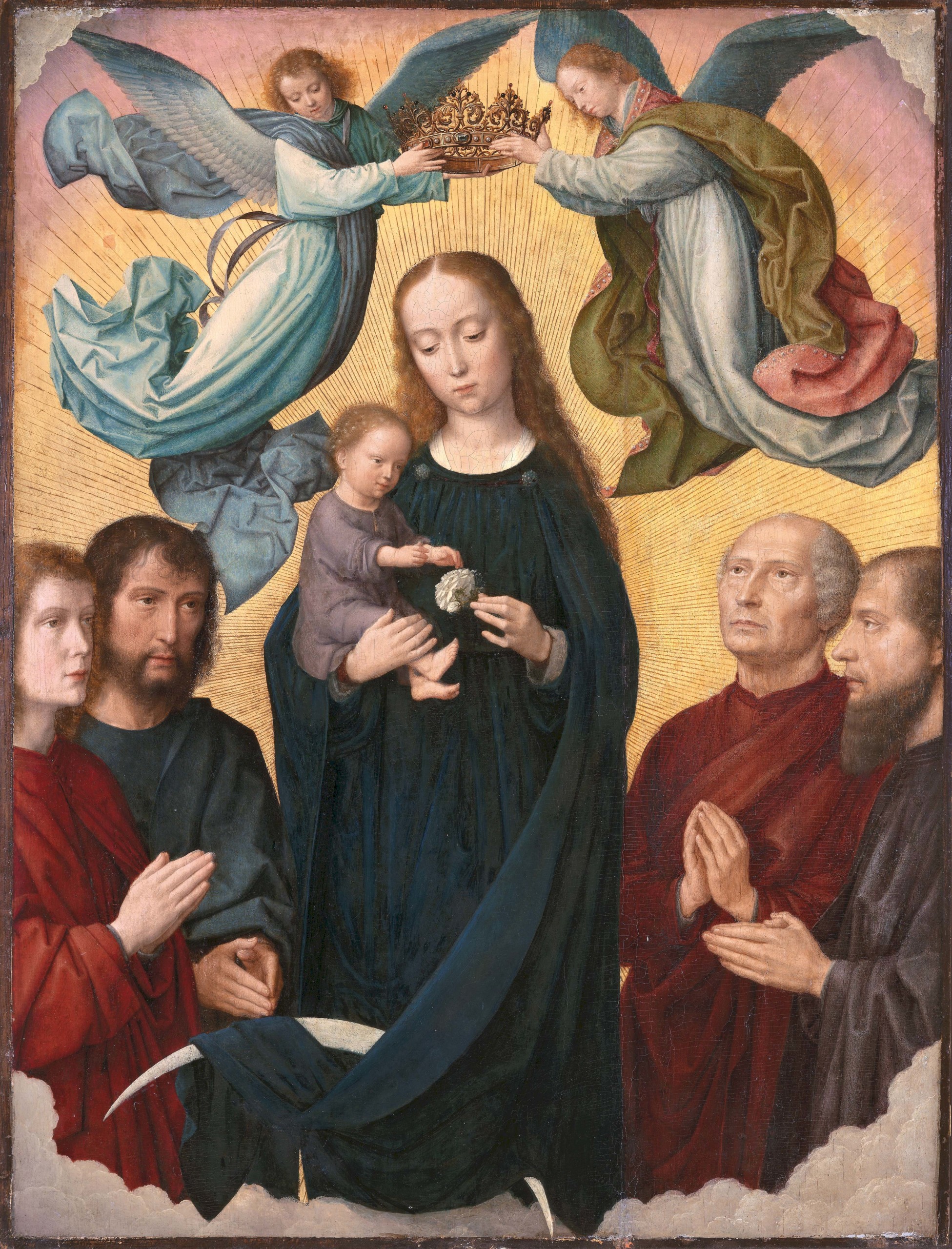
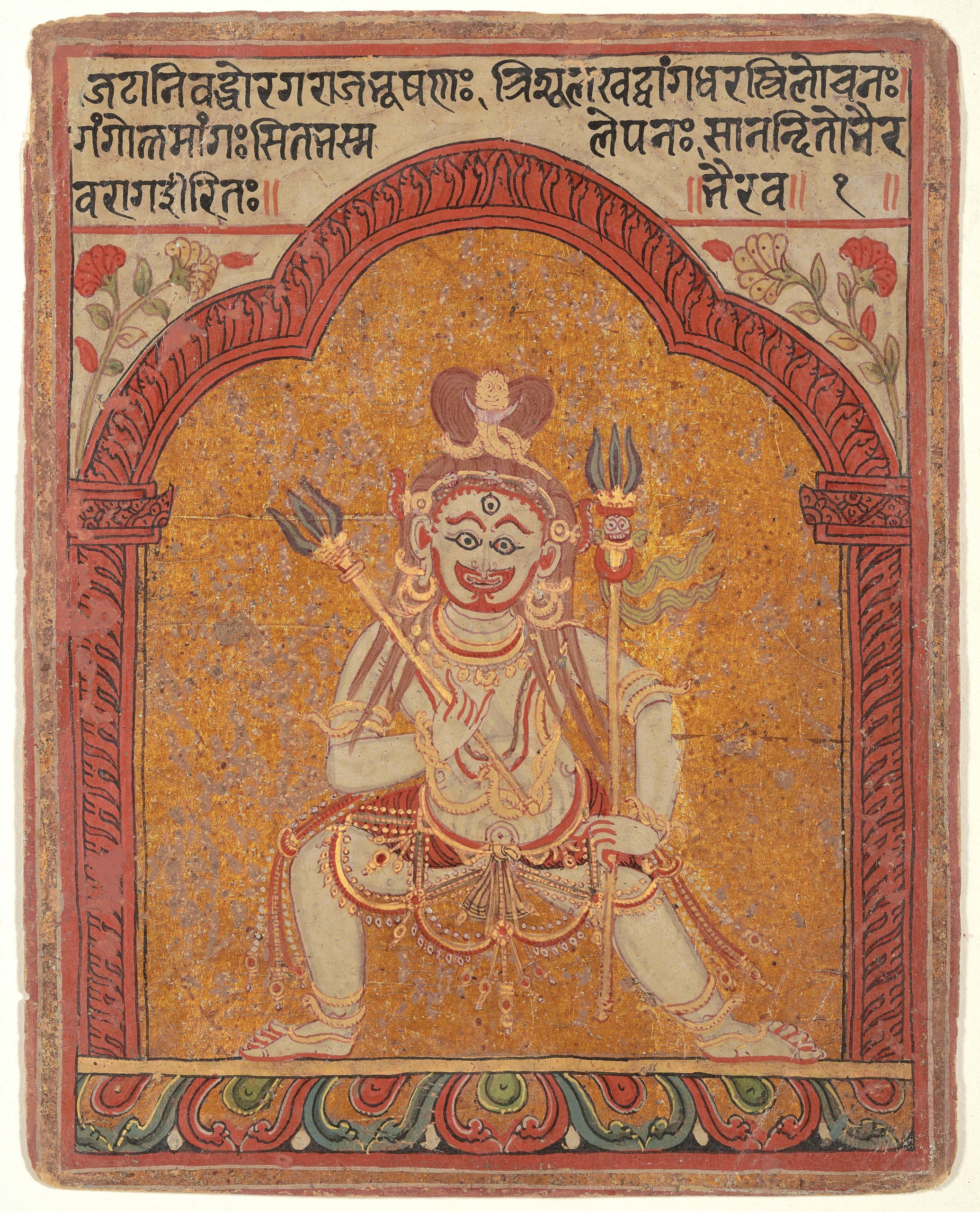
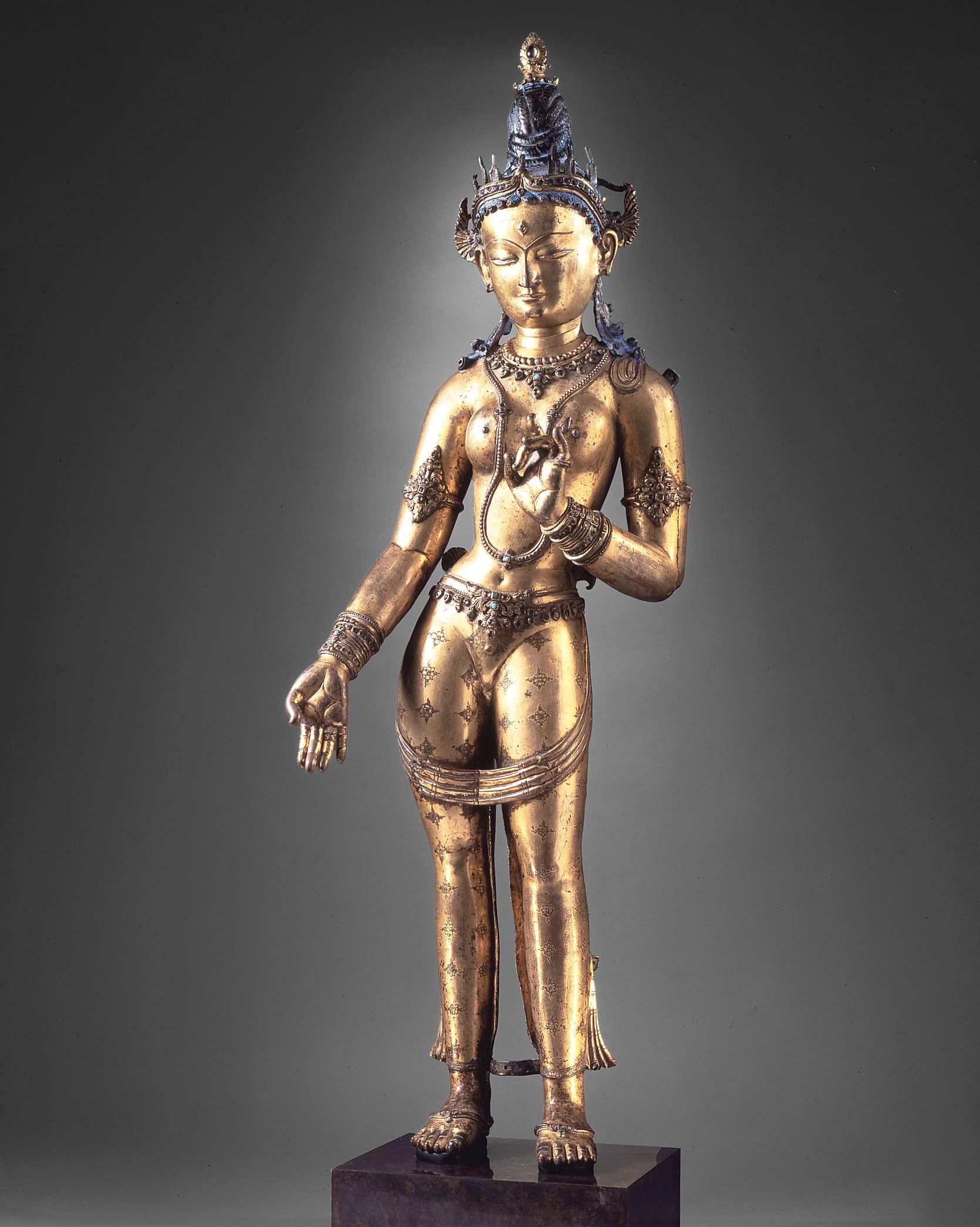
Gold’s malleability made it possible to shape easily and, because it did not deteriorate, it was well suited for use in sacred religious art. In Hindu and Buddhist traditions, gilt sculptures depicting Buddhas and other deities as well as enlightened beings have been commissioned from artists for centuries. Owing to its spiritual purity, gold was seen as a revered offering to provide divine protection and earn religious merit. In Europe during the Fourteenth and Fifteenth Centuries, artists hammered thin sheets of gold leaf in their artworks to portray key figures bathed in holy light.
Among artworks showing gold as a devotional object is a Thirteenth Century gilt-bronze figure of the Hindu god Indra, from Nepal. “This sculpture may have been used in a ritual setting within a temple,” said Senarath Gamage, noting the crown and the horizontal third eye in the forehead were key to identifying the subject as Indra. “To apply gold is a major financial investment, so in terms of the patron, you had to be able to afford the significant costs and to offer it to a temple, they would expect merit in return,” she said, explaining that this sculpture also tells a story about the transactional nature of a patron commissioning this piece from an artist, and then offering it to a temple in exchange for good karma.
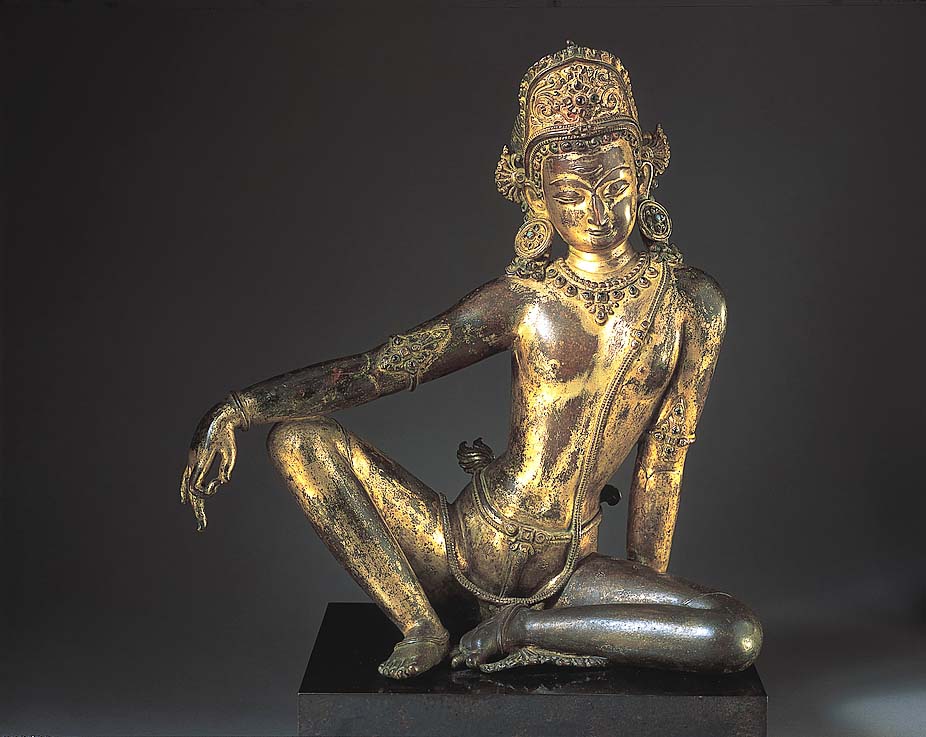
Sculpture of Indra, Nepal, Thirteenth Century, gilt bronze, 16⅛ by 12-3/16 by 6 inches. The Norton Simon Foundation.
A European oil on panel triptych painting, “Adoration of the Magi,” from the workshop of Cornelius Engebrechtsz, circa 1520, explores the complex role of gold in Christian art. Likely a devotional panel made for someone’s home, the painting depicts the holy family receiving gifts from the three kings after the birth of Christ. Proving not all that glitters is gold, the painting shows how artists created the illusion of gold by using pigments or other materials as in the basket of gold coins one king presents. The coins were created not with gold paint but with a mixture of pigments, a practice typically employed by northern European artists instead of using gold leaf, which was more common in southern Europe, Bell explained. Gold leaf was used in the frame though.
“What is tricky about gold in the Christian tradition is that it is seen as it could be a material that is appropriate to the veneration of these holy figures or something that is an ostentatious display of wealth,” she said. “In this scene of the Adoration, it’s very complex because the Holy Family was revered for their poverty…but they are being honored with this precious material.”
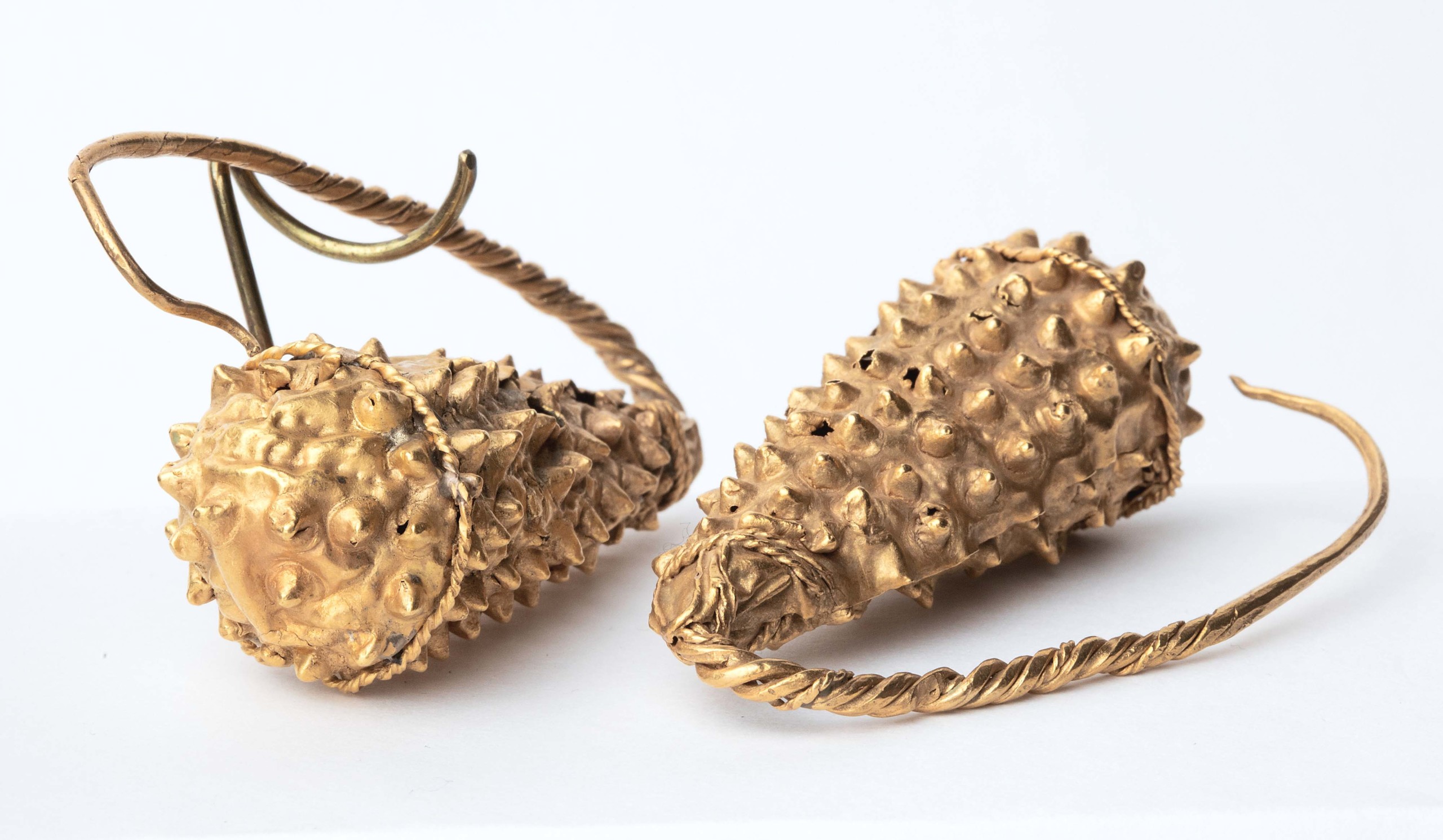
The oldest object in the exhibition can be found in the “Gold as Adornment” section. A solid gold bracelet with animal head terminals, dates to circa 1000 BCE from the Urartu Kingdom, which is present-day Türkiye, Armenia and part of Iraq. In this era, both men and women adorned themselves in gold jewelry to display their status.
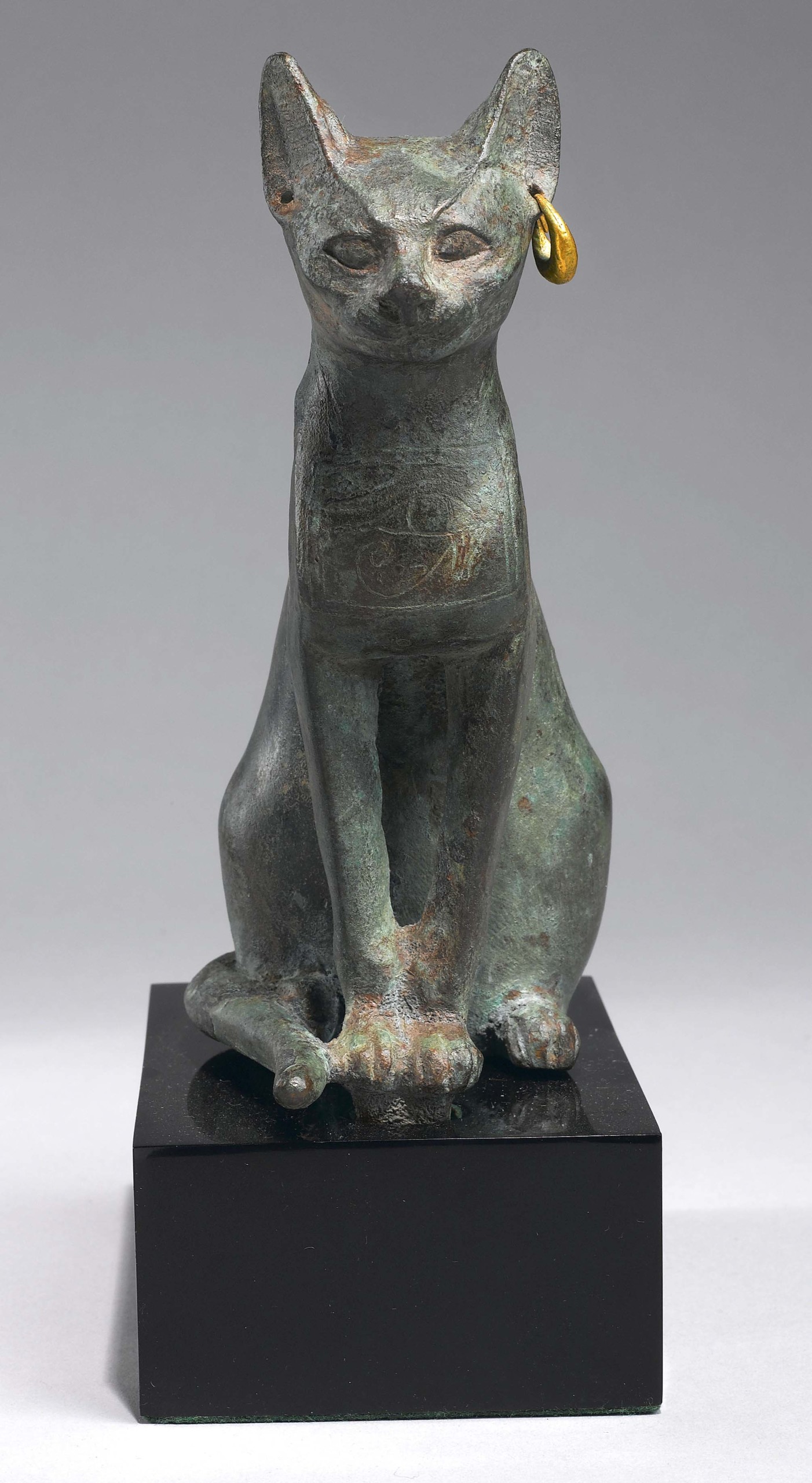
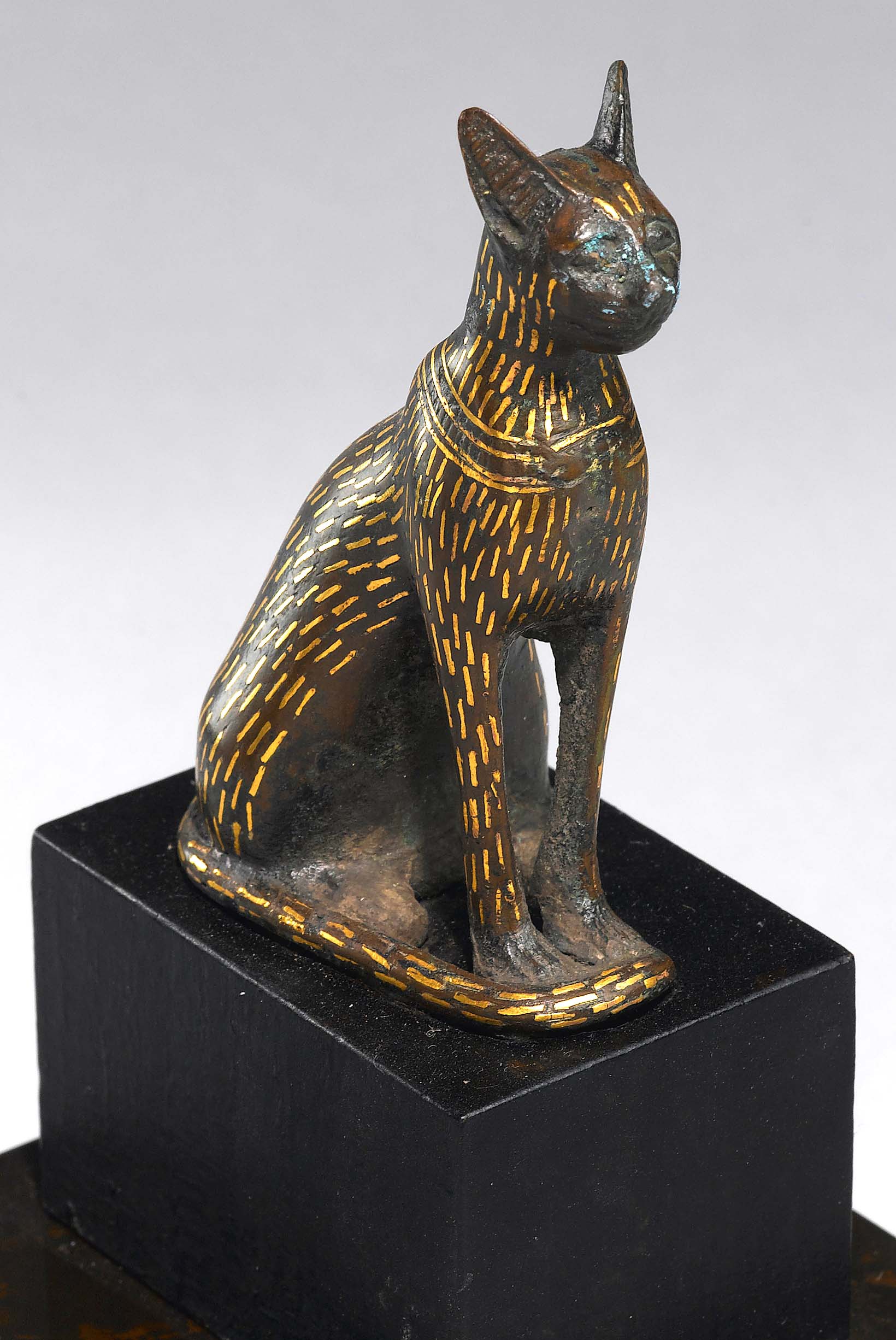
Votive cat figure with earring, Egypt, 600 BCE, bronze and gold, 6⅜ inches. The Norton Simon Foundation.
Animal figures have been a frequent motif for artisans the world over. A pair of Egyptian cat votives, circa 600 BCE, one cat shown with an earring, were made in homage to the Egyptian fertility goddess Bastet. The gilded earring is thought to be original, but the painted details on the smaller cat to imitate gold fur was likely a later addition to improve its perceived value.
Overall, the exhibition gives viewers a new way to think about gold and see the ways it has been used by different cultures and over time. One can also admire the technical expertise artisans had in applying this material in several forms, including gold paint, gold leaf and gilding, said Senarath Gamage.
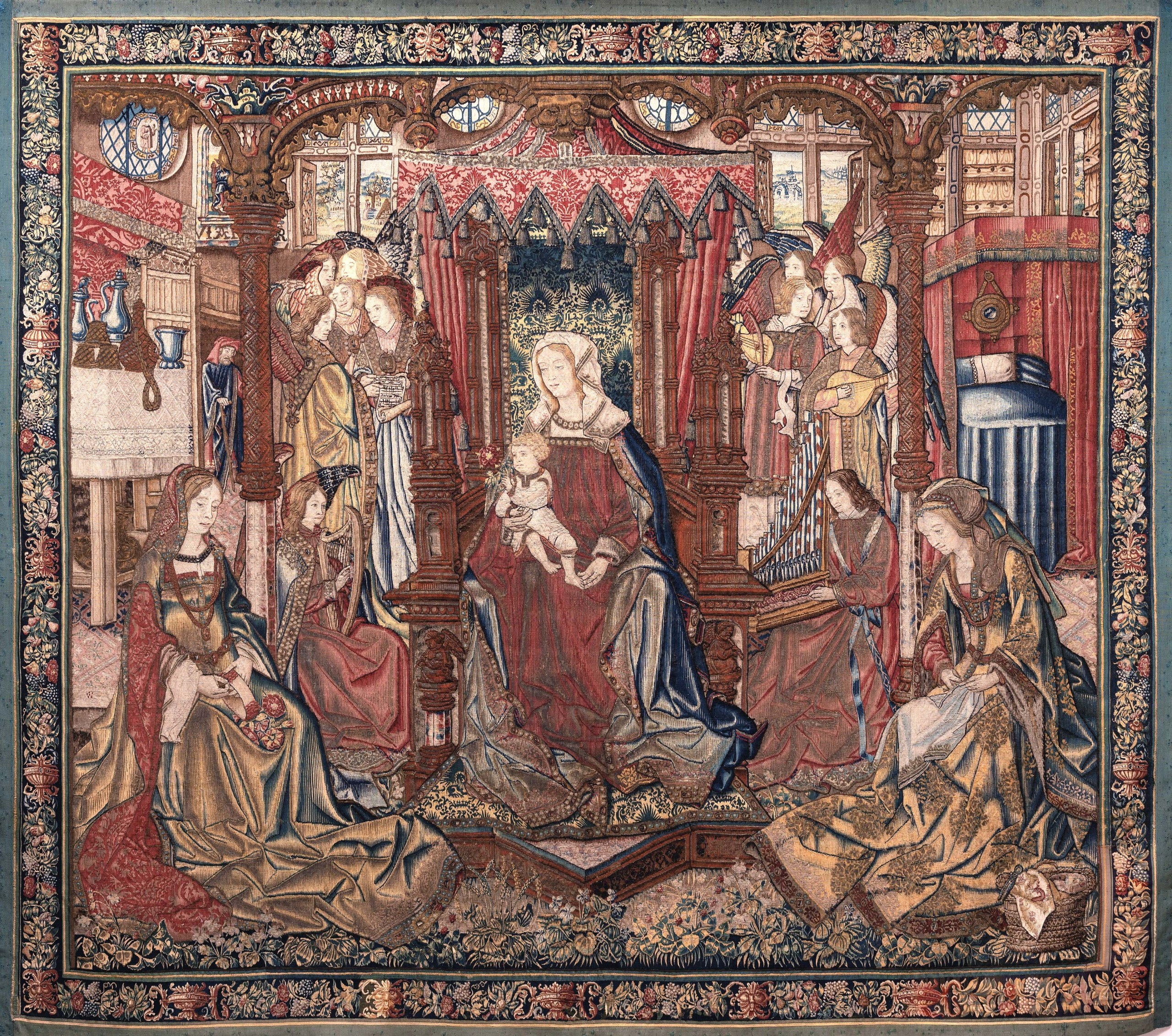
New technical analysis has also clarified understanding of several objects in the exhibition from how artists used gilding to enhance sacred experiences as well as how gold was depicted in art. A tapestry on view, long thought to have gold thread, was recently found to have such skillful working of silk thread to convey the illusion of gold, that it contains no gold at all. Other examples of such artistic alchemy will be on view.
The Norton Simon Museum is at 411 West Colorado Boulevard, at Orange Grove Boulevard. For information, 626-449-6840 or nortonsimon.org.