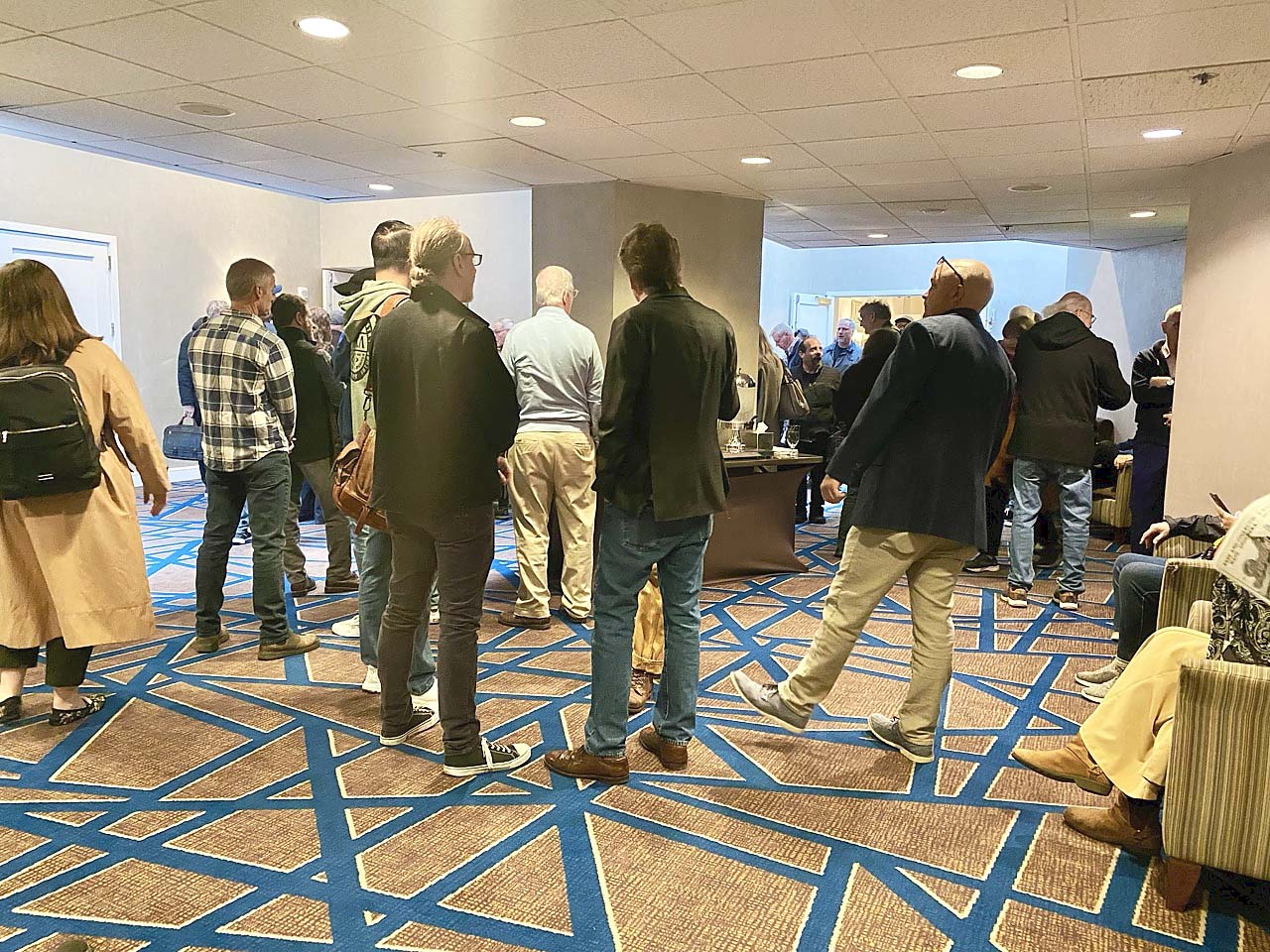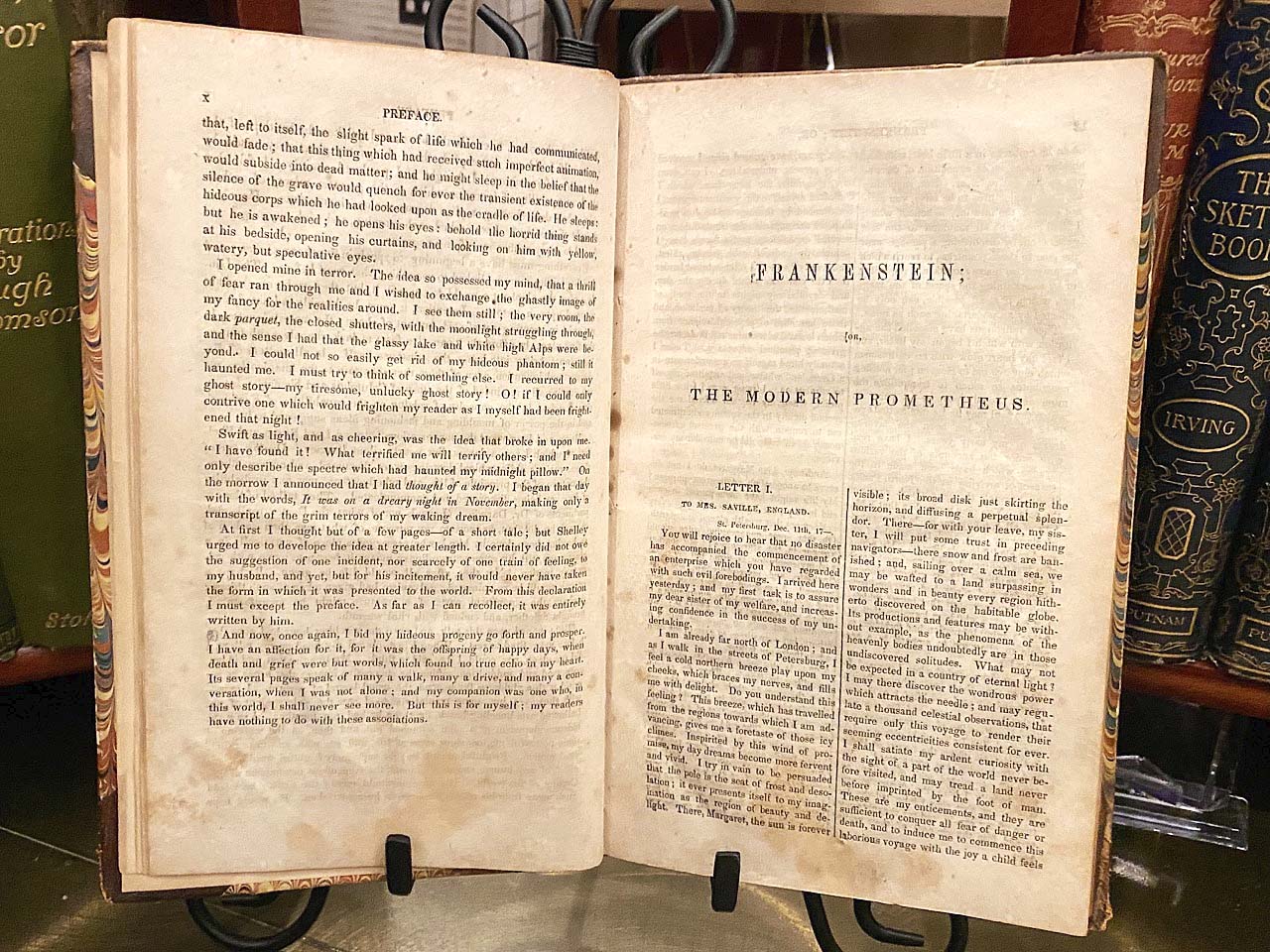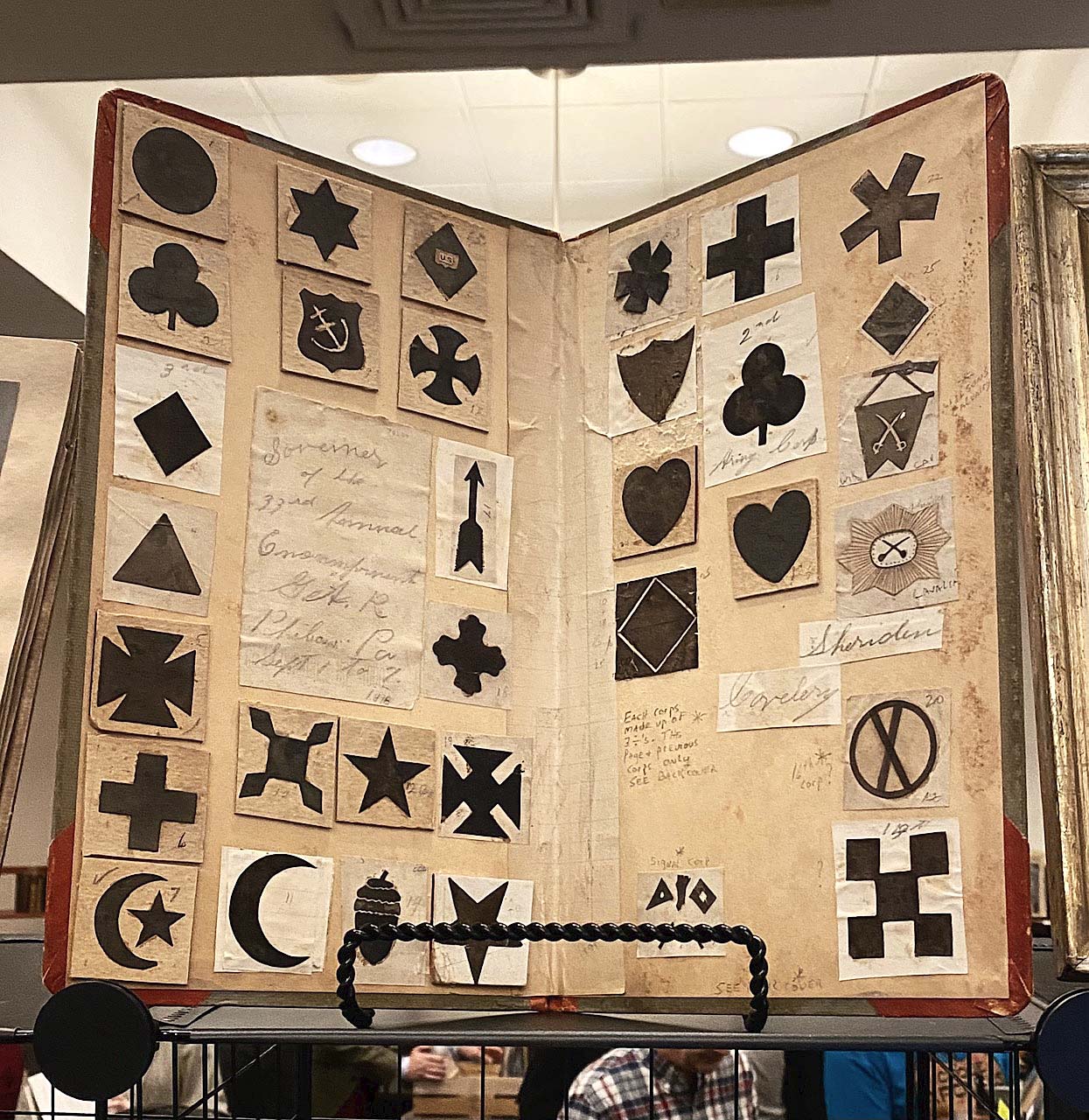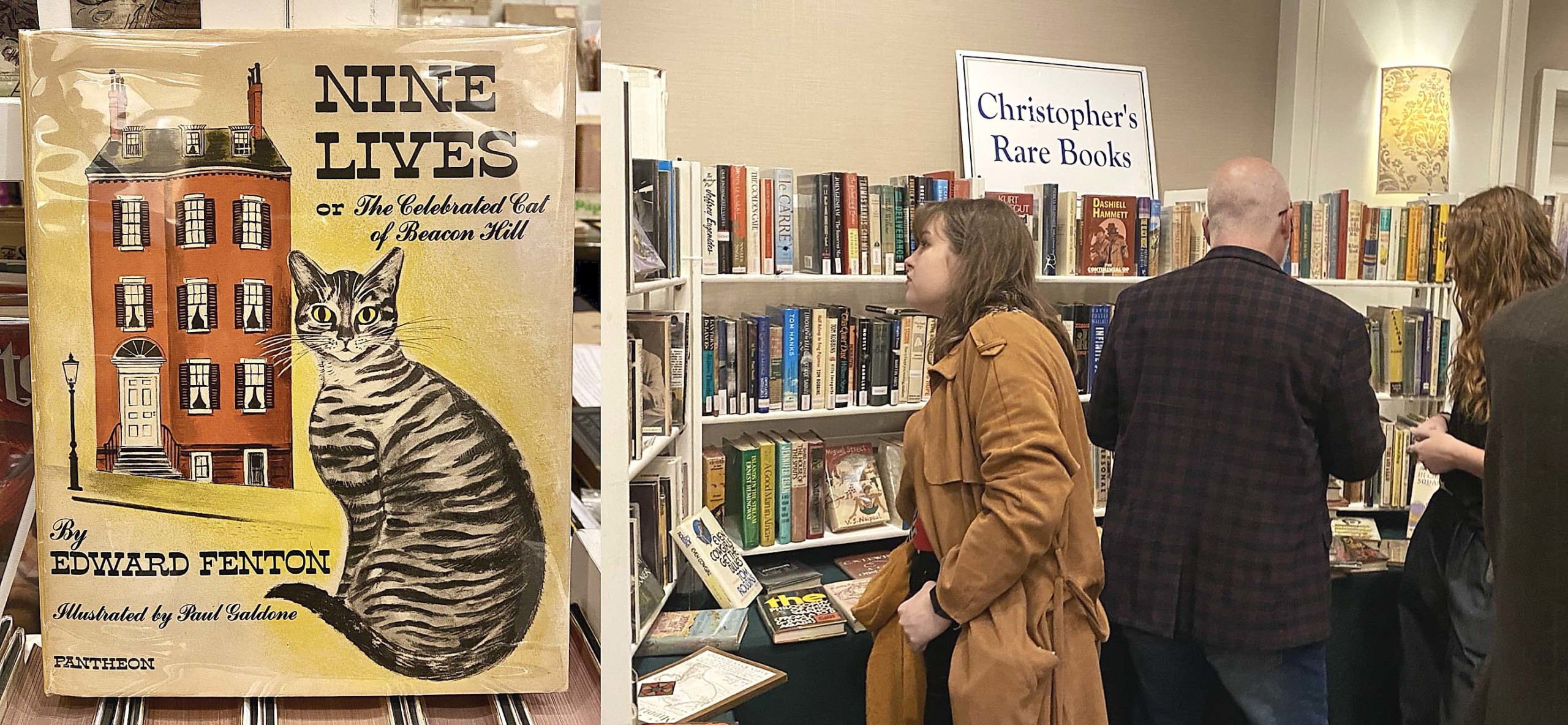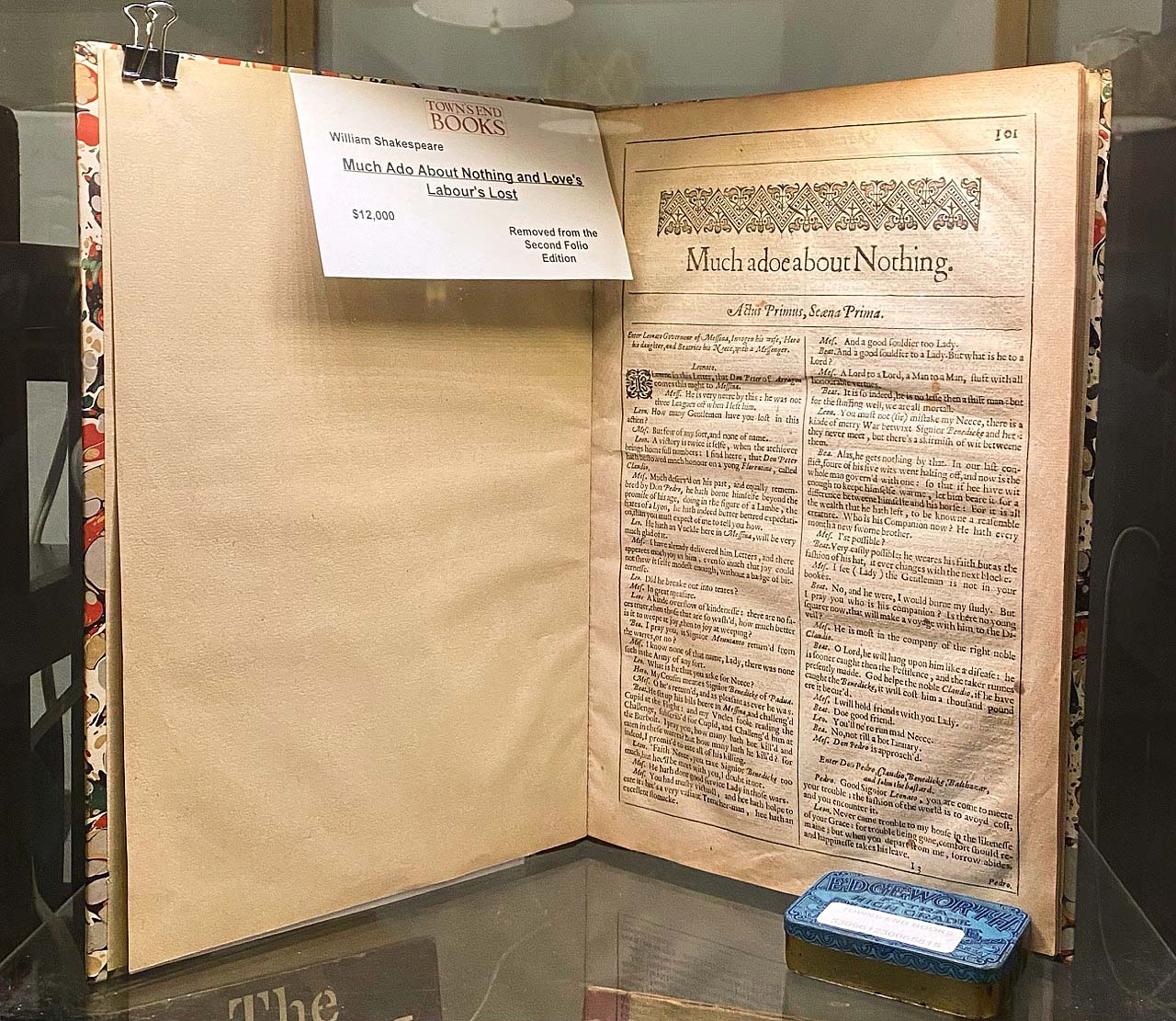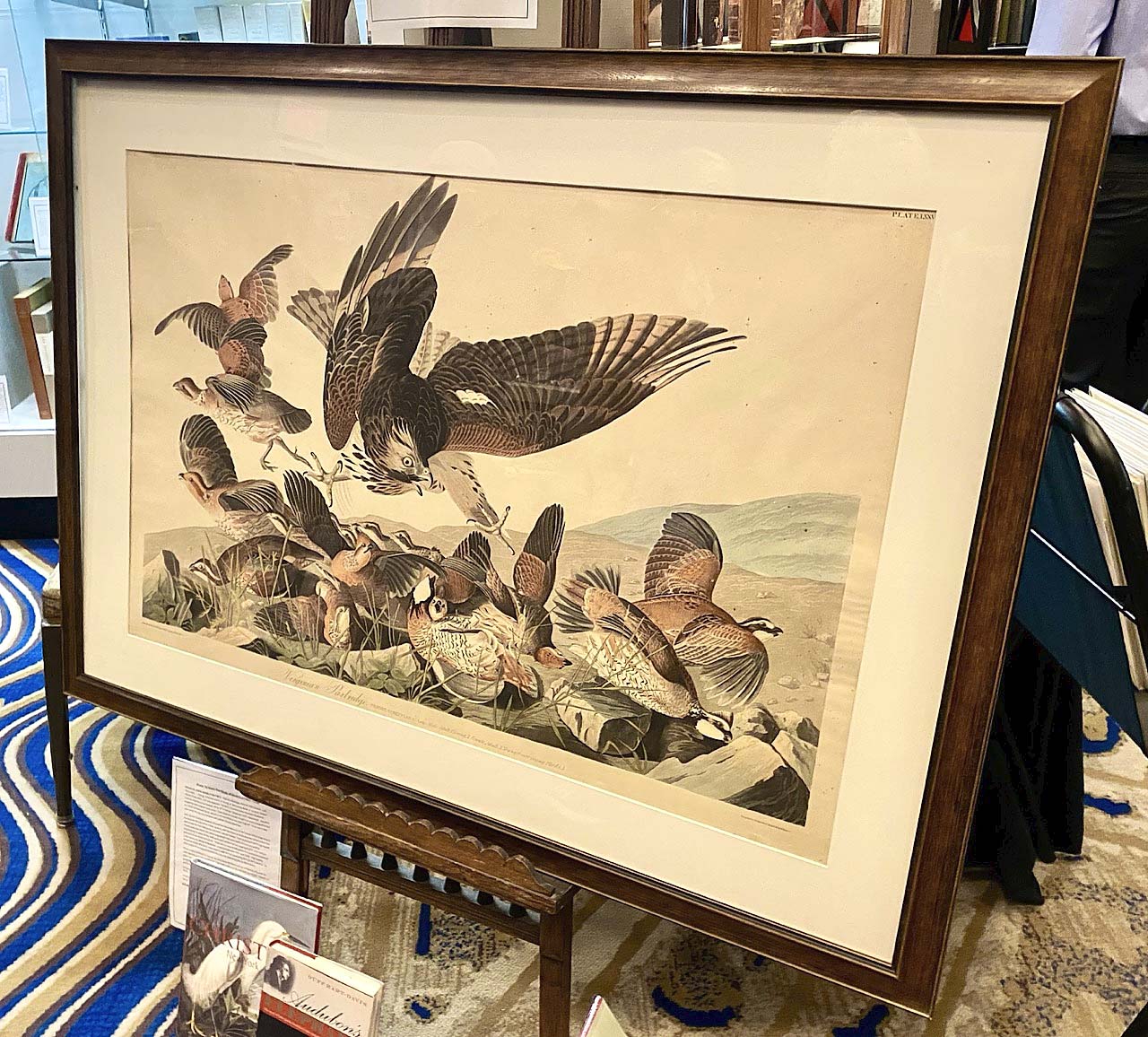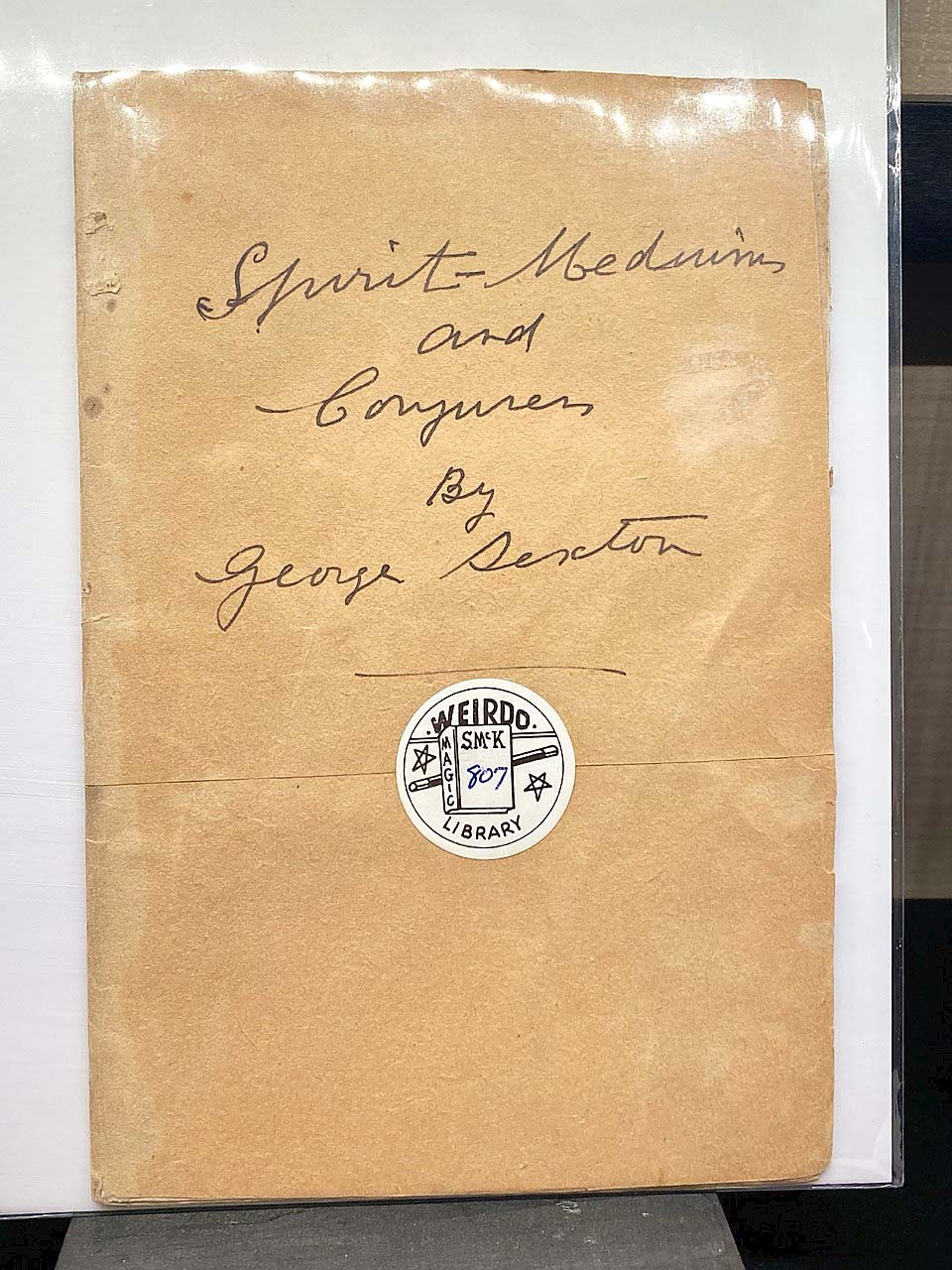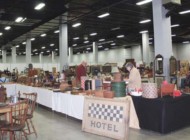
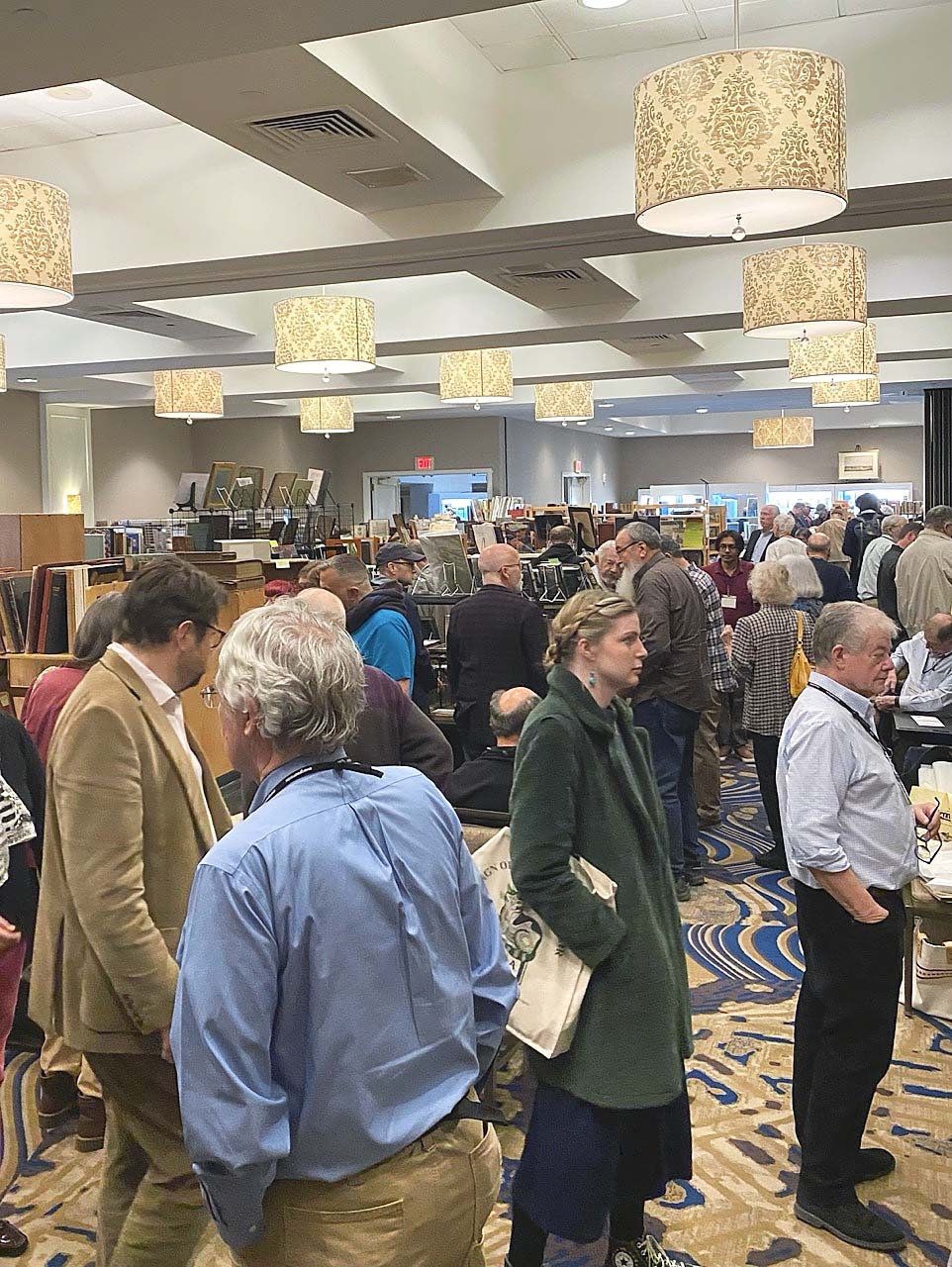
Attendance increased from last year’s fair, with hundreds of buyers shopping booths full of books, ephemera and other works on paper just in the first couple of hours.
Review & Onsite Photos by Z.G. Burnett
BOSTON — On November 8, the third annual Books in Boston (BIB) show opened at the Hilton Back Bay, presenting around 50 dealers of rare and antiquarian books, works on paper and ephemera. The self-titled “shadow show” to the Boston International Antiquarian Book Fair was no less bright and lively, and many of the larger show’s vendors were spotted shopping their colleagues’ collections as BIB opened a full four hours before its counterpart. Organized by Duane A. Stevens of Wiggins Fine Books (Shelburne Falls, Mass.) and Richard Mori Books (Nashua, N.H.), BIB’s participants offered a price range of goods to suit every shopper’s budget. Mori reported higher attendance from last year, including many more young buyers.
“There’s always a dynamic interaction between the shows as we’re both affiliated with the Antiquarian Booksellers’ Association of America (ABAA),” Stevens said. He also reported that some dealers had their best shows ever, including an Americana dealer who set a sale record for an undisclosed colonial-era print. Stevens shared that one of BIB’s points of pride is hosting young people from the ABAA Diversity Initiative as a way to “give back” and encourage young people to become antiquarian booksellers and collectors. Other advantages include touring local libraries and private collections. BIB also works with the Colorado Antiquarian Book Seminar, now in Minnesota, by offering one member of its Diverse Voices Fellowship half a booth at the fair, and a discounted rate on a full booth to another. This year, the beneficiaries were Peek-a-Book Rare Books & Ephemera (Lewiston, Maine) and Laureate Fine Books (Poultney, Vt.). Stevens added that part of the show’s proceeds go to the ABAA Benevolent Fund, as well.
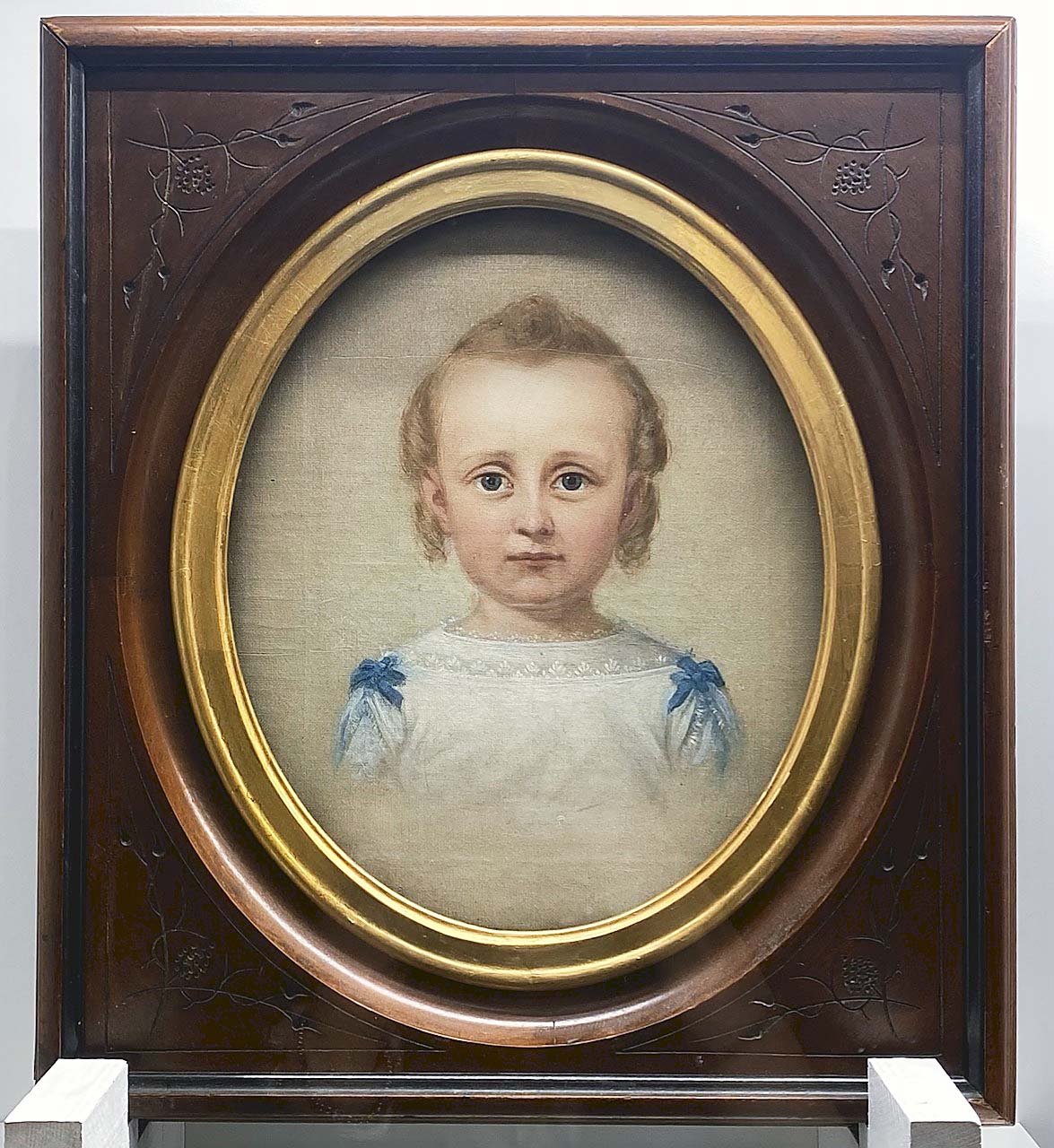
Discovered by independent researcher Thomas Hughes (Pennsylvania), this painting is believed to be a lost portrait of Edgar Allan Poe; it was presented with supporting artifacts and Hughes’ complete dossier of research.
The fair was headlined by an extraordinary discovery displayed in the galleries’ front lobby. Independent researcher Thomas Hughes of Pennsylvania is a former architect who specializes in authenticating unidentified works by major artists including William Merritt Chase and Mary Foote, among others. Here, he presented a collection of paintings and documents in a large glass case, all supporting the attribution of a portrait showing a well-attired young boy with blond curls and prominent eyes. Discovered at a Pennsylvania antiques market in 2023, Hughes contends that this is a lost childhood portrait of Edgar Allan Poe (1809-1849) painted by Charles Robert Leslie (1794-1859). Hughes compiled his two years of research in a dossier titled “Master Edgar Returns Home,” which included biographies of key figures in Poe’s childhood years, analyses between the boy and 12 verified images of Poe as an adult and letters referring to a portrait of Poe between the ages of 4 and 8 that was commissioned but assumed lost. Hughes’ fully-illustrated dossier is available for review.
For most, fairs like this are a treasure hunt. Ten Pound Island Book Company met this challenge literally with an archive of photos, charts and typescript documenting the 1904 discovery of the USS Philadelphia in Tripoli Harbor, Libya, compiled by American explorer, writer, artist and photographer Charles Wellington Furlong (1874-1967). While writing his 1909 book Gateway to the Sahara in Tripoli, Furlong searched for and discovered the wreck that had run aground a century earlier while evading local pirates. Commodore William Bainbridge was unable to free the vessel, but the pirates did. Too valuable to remain in enemy hands, Commodore Stephen Decatur, Jr, and 83 volunteers reboarded the Philadelphia and set a fire that burned for three days before she finally sunk into the harbor. Vice Admiral Horatio Nelson declared that the retaking was, “the most bold and daring act of the age.”
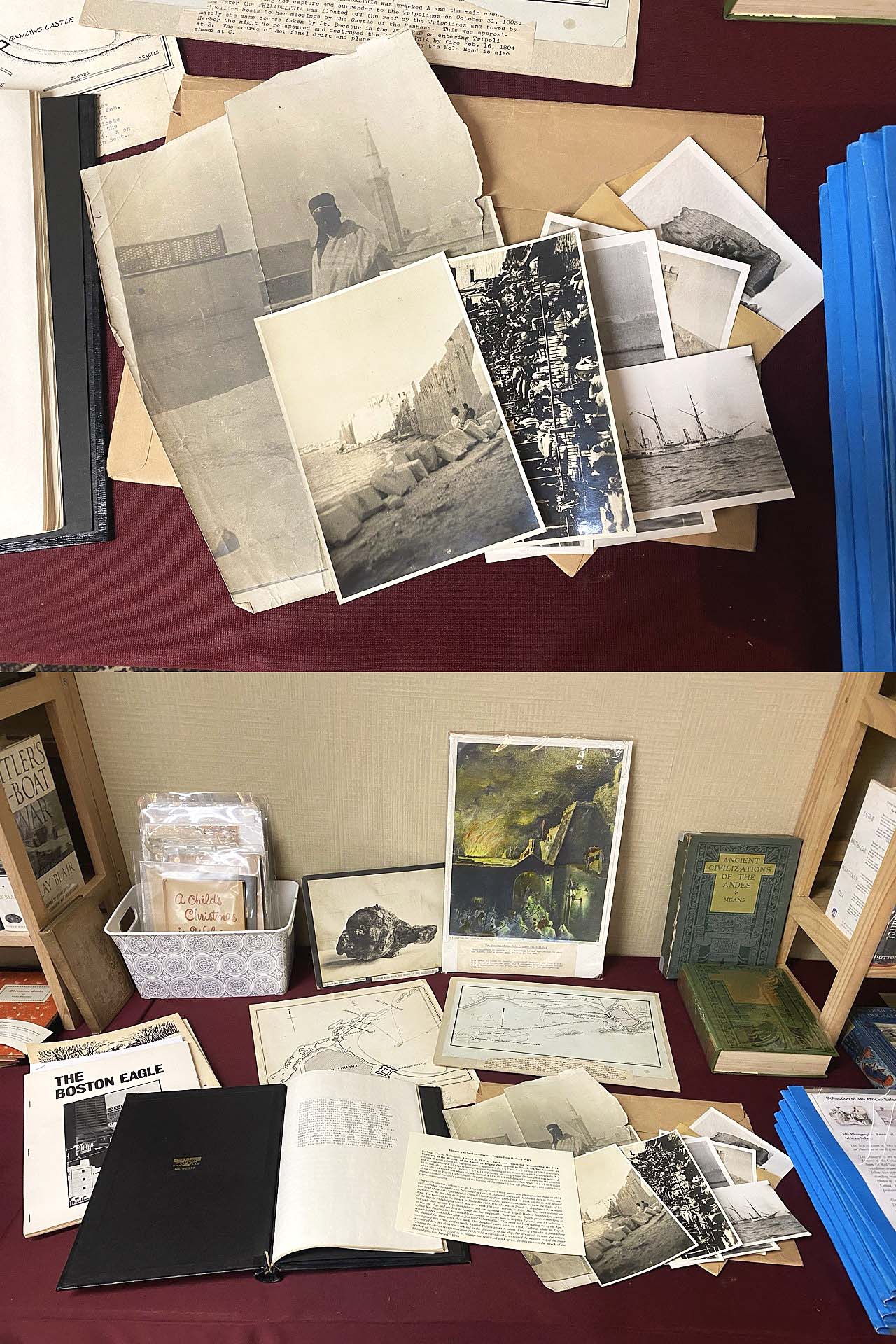
An archive from the papers of Charles Wellington Furlong, detailing his rediscovery of the American frigate Philadelphia after its capture, recapture and fiery end in the harbor of Tripoli, Libya. Ten Pound Island Book Company, Gloucester, Mass.
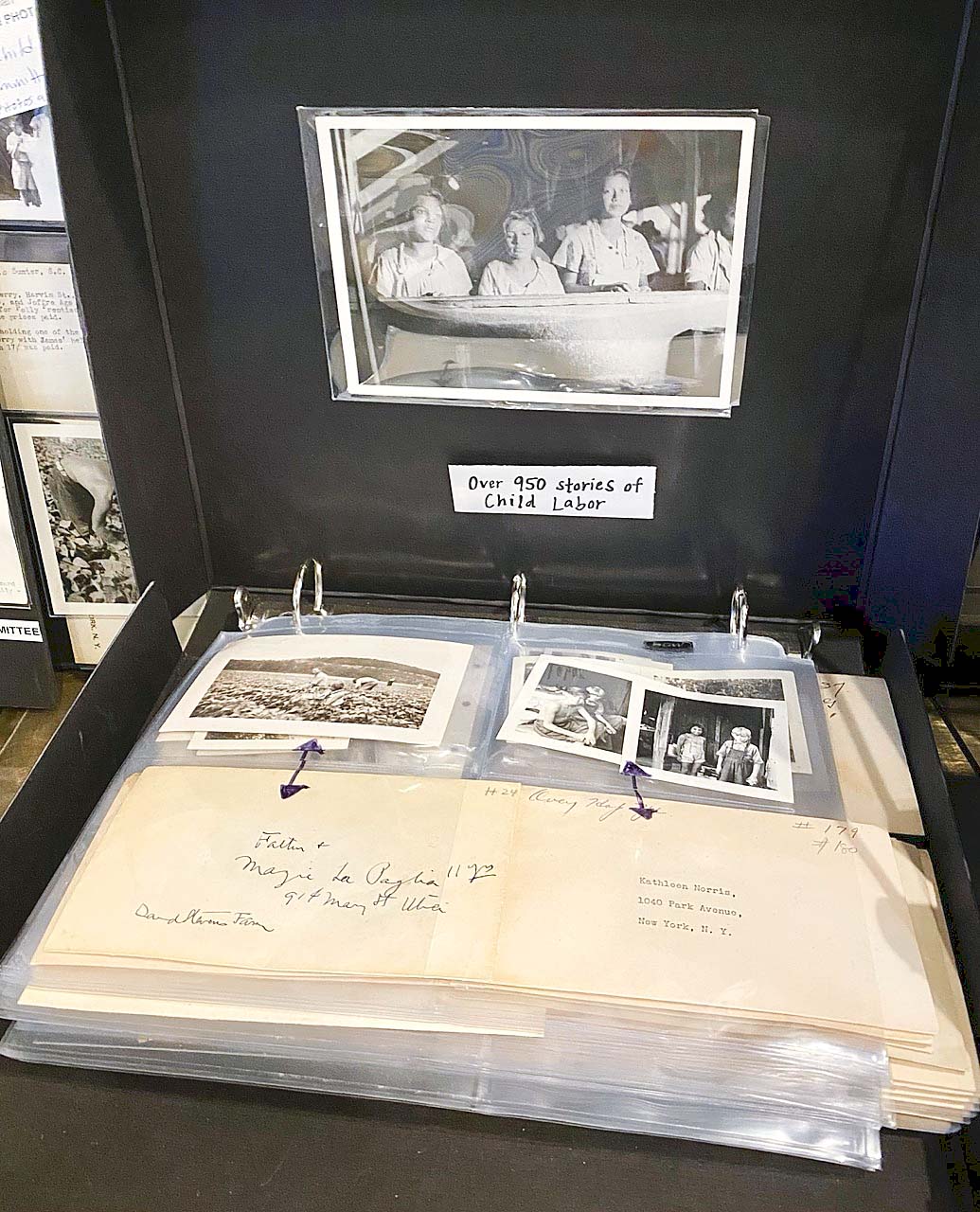
House of Mirth Photos brought a less adventurous but no less important collection of unpublished photographs from the National Child Labor Committee (NCLC), dating from 1931 to 1953. Founded in 1904, the NCLC used the rapidly advancing technology of photography to document and advocate against exploitative child labor in American industries. This archive represents a later, previously undocumented period of its investigations and extends the numeric sequence of NCLC photos in institutions such as the Library of Congress and the New York Public Library. Nearly 1,000 prints, negatives and caption cards of this newly surfaced material are entirely unstudied, having likely been recorded by a regional office, and are an important and unique research opportunity.
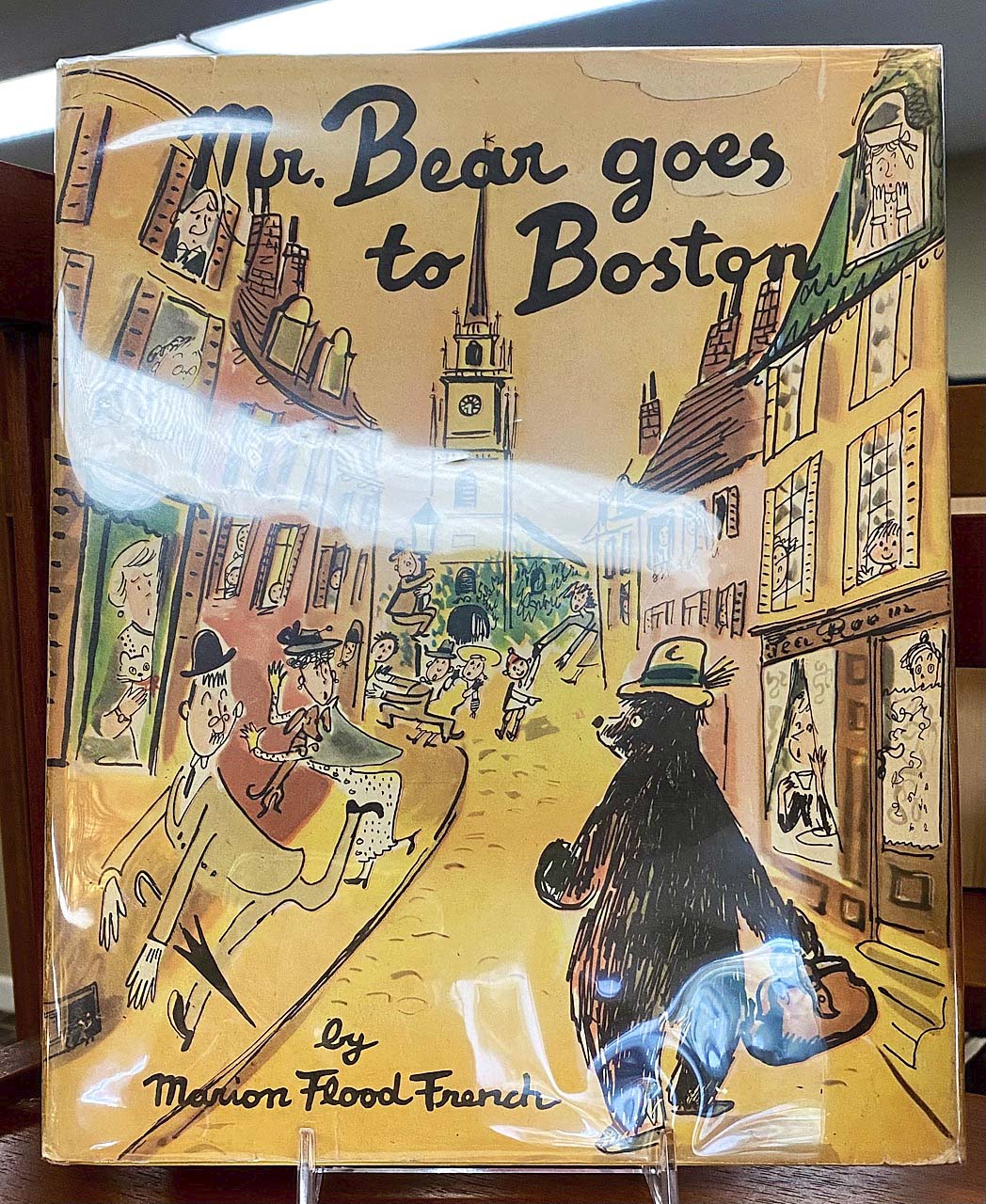
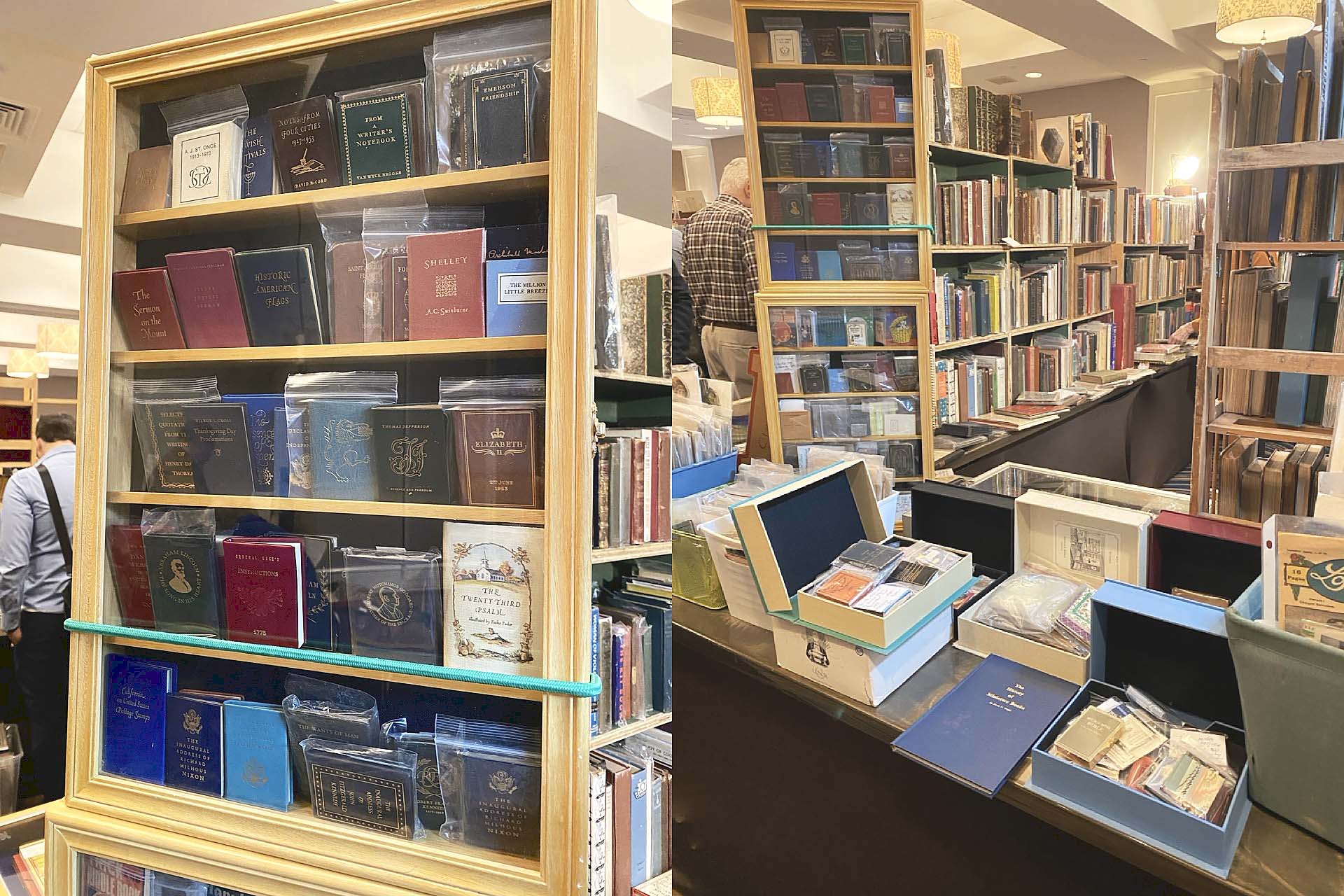
Miniature books captivate shoppers at any level of collecting, and Mori brought perhaps the largest selection of them to BIB. Many came from Mori’s existing stock, but a great number were from the collection of James “Jim” A. Visbeck, who died in January 2024 at age 79. Visbeck was an ABAA member and cofounder of Isaiah Thomas Books and Prints, which he managed for 55 years. Many were published by Achille St Onge of Worcester, Mass., where he first opened for business in 1969, at age 25. Visbeck was well-known and well-loved in the book community, and Mori shared that he was “honored” to show these miniature volumes.
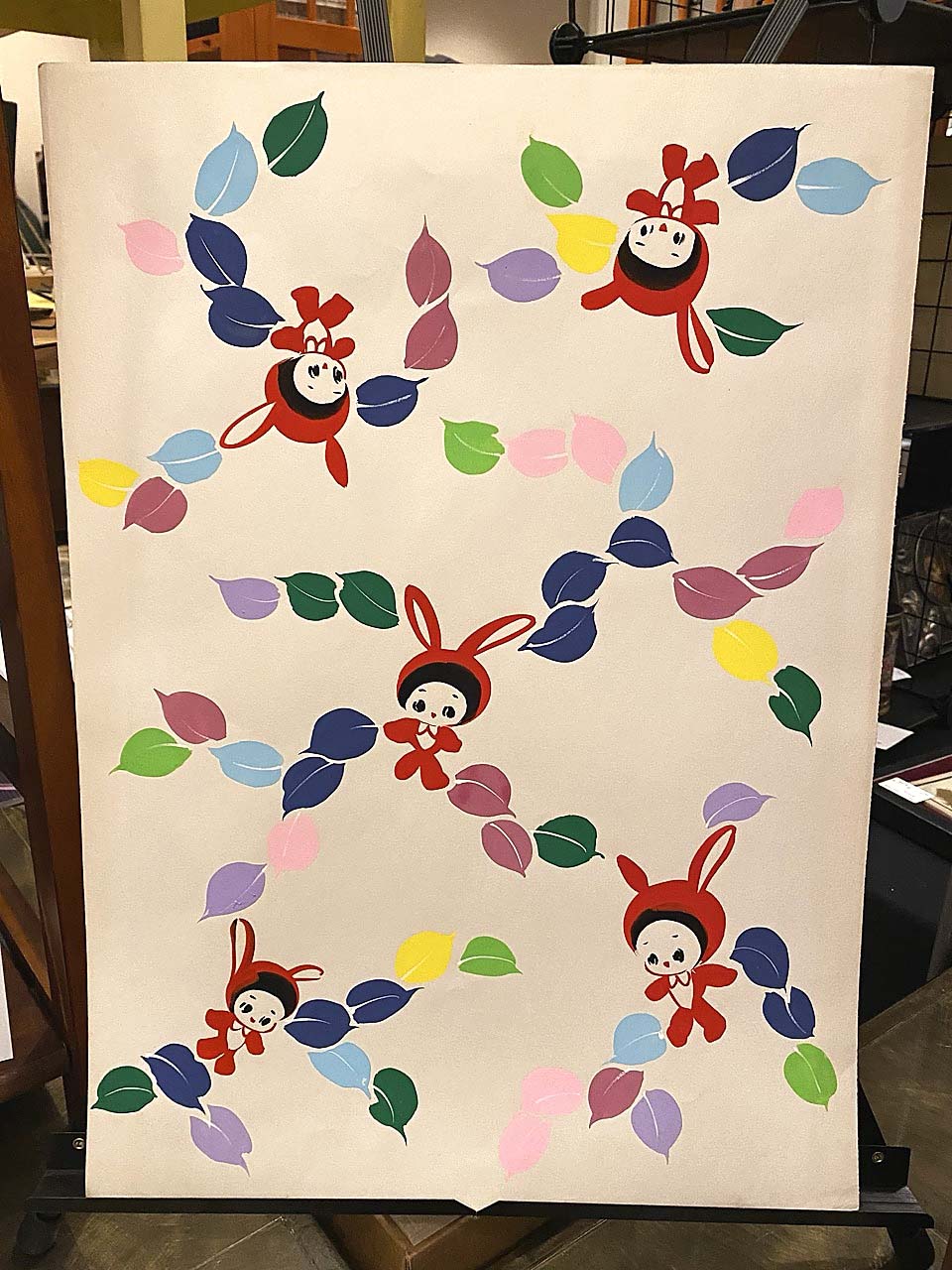
This “primordial Hello Kitty” textile design was likely made for lightweight kimono, or yukata, one of 19 hand-stenciled examples from Capitol Hill Books, Washington, DC.
Graphic arts were also found among the tomes. Capitol Hill Books showed 19 original hand-stenciled designs made in postwar Japan (circa 1940-60) by Suzuka, intended for yukata textiles. Yukata are more casual cotton kimono made for spring festivals and summer weather, often in colorful patterns. These designs were likely made for children to wear, showing baby animals, musical instruments and trolleys in color palettes that changed from decade to decade. One design features a small child in a red bunny costume, “[anticipating] both the manga and the Hello Kitty aesthetic that became a global phenomenon beginning in the 1970s and 1980s.”
Books in Boston occurs annually, but the 2026 date has not yet been announced. For information contact Richard Mori at 603-801-7176 and www.moribooks.com, or Duane A. Stephens at 413-320-3701 and www.wigginsbooks.com.