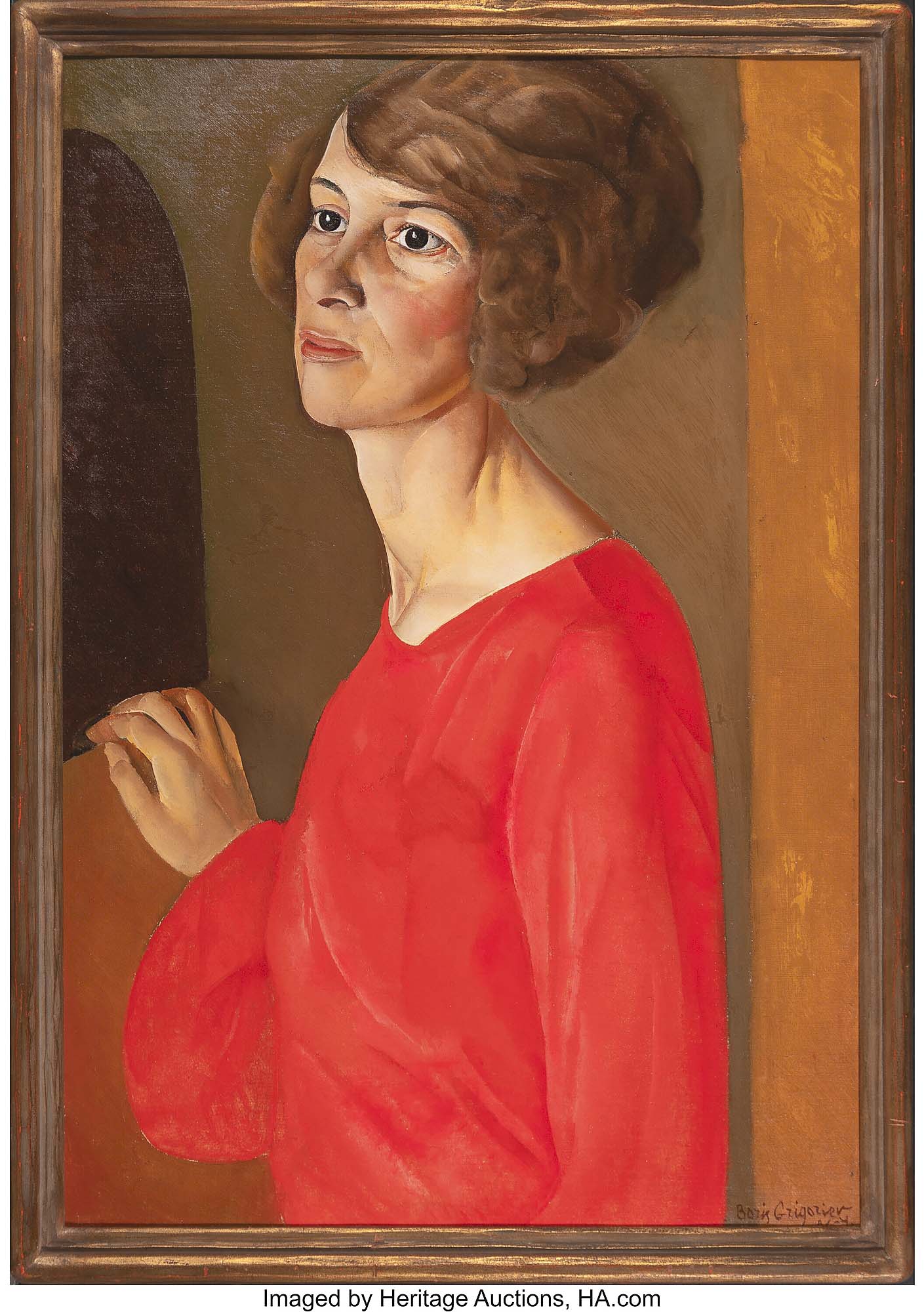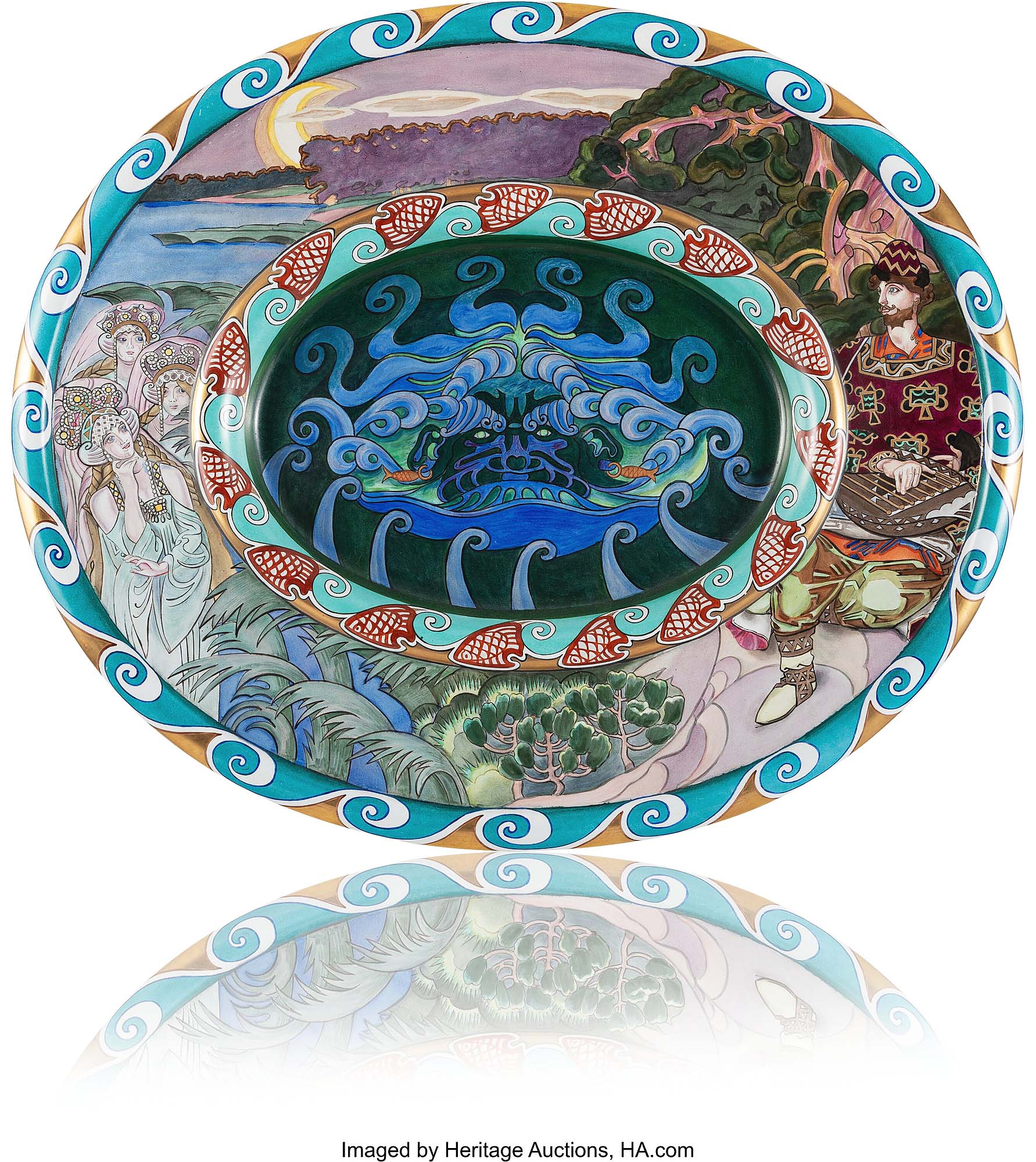
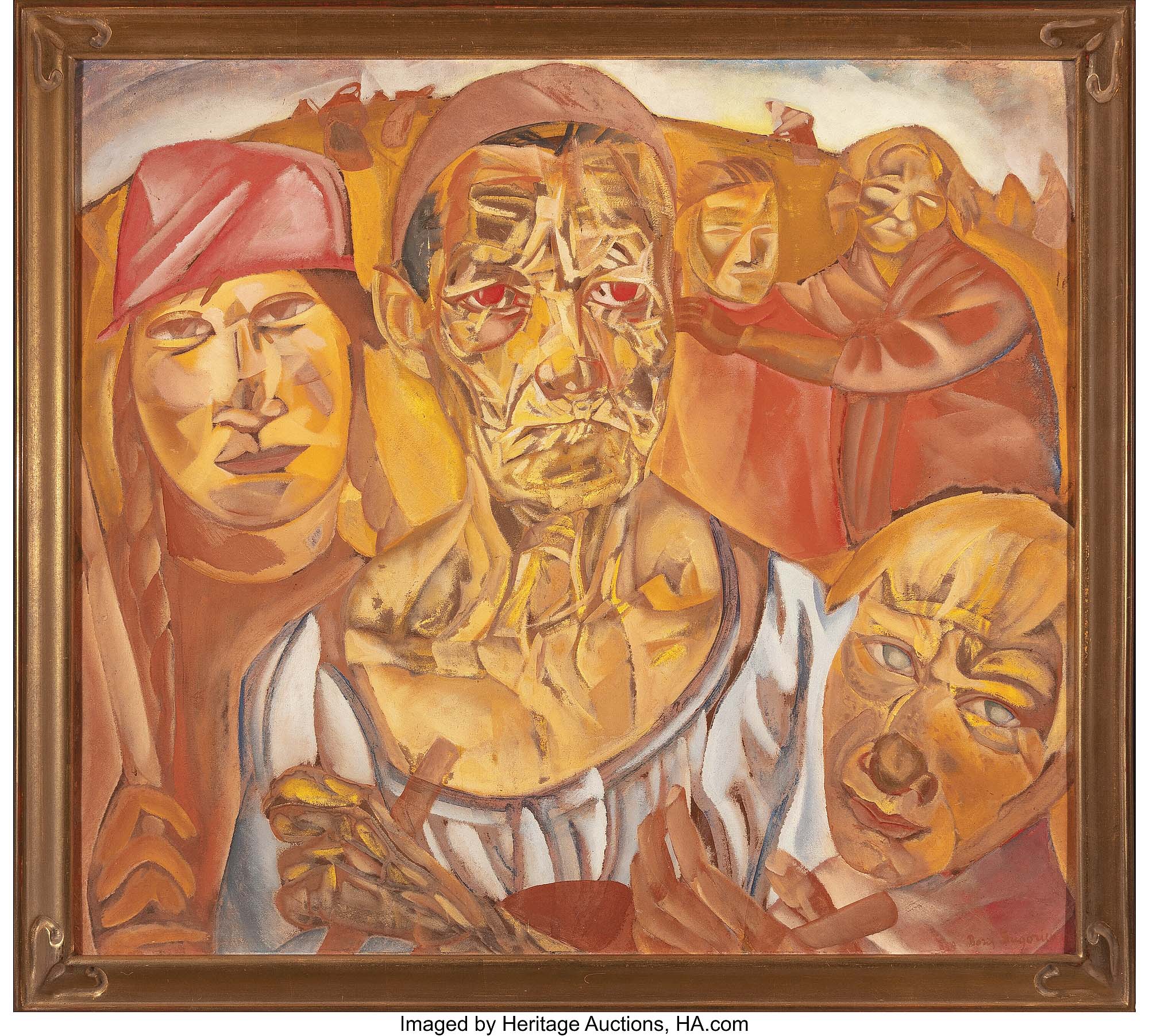
“Toilers of the Fields” by Boris Grigoriev, circa 1920, 27¾ by 31 inches in a 31¼-by-34½-inch frame, led the various owner’s sale at $550,000.
Review by Madelia Hickman Ring
DALLAS — More than 83 percent of the combined 355 lots Heritage Auctions offered in their two sales of Russian works of art — Imperial Porcelain & Russian Works of Art from the Collection of A La Vieille Russie on December 16, and Imperial Fabergé & Russian Works of Art on December 17. With the first sale making over $1.3 million and the second exceeding $2.7 million, a final tally of $4,071,042 was reported.
“We are very pleased that our Russian sales this week realized more than $4 million for our consignors,” said Nick Nicholson, director of Russian works of art at Heritage Auctions. “Together, these results reaffirm ever-expanding interest in the market for important Russian works of art across categories.”
Collection Of A La Vieille Russie
Founded in Kyiv in 1851, A La Vieille Russie (ALVR) was re-established in Paris around 1920, with the firm’s New York City location opening in 1941. The firm established an impeccable reputation for Russian antiques and jeweled works of art and continues to sell from a gallery on Fifth Avenue, as well as at premier international shows, including TEFAF Maastricht, The Winter Show and London’s Treasure House.
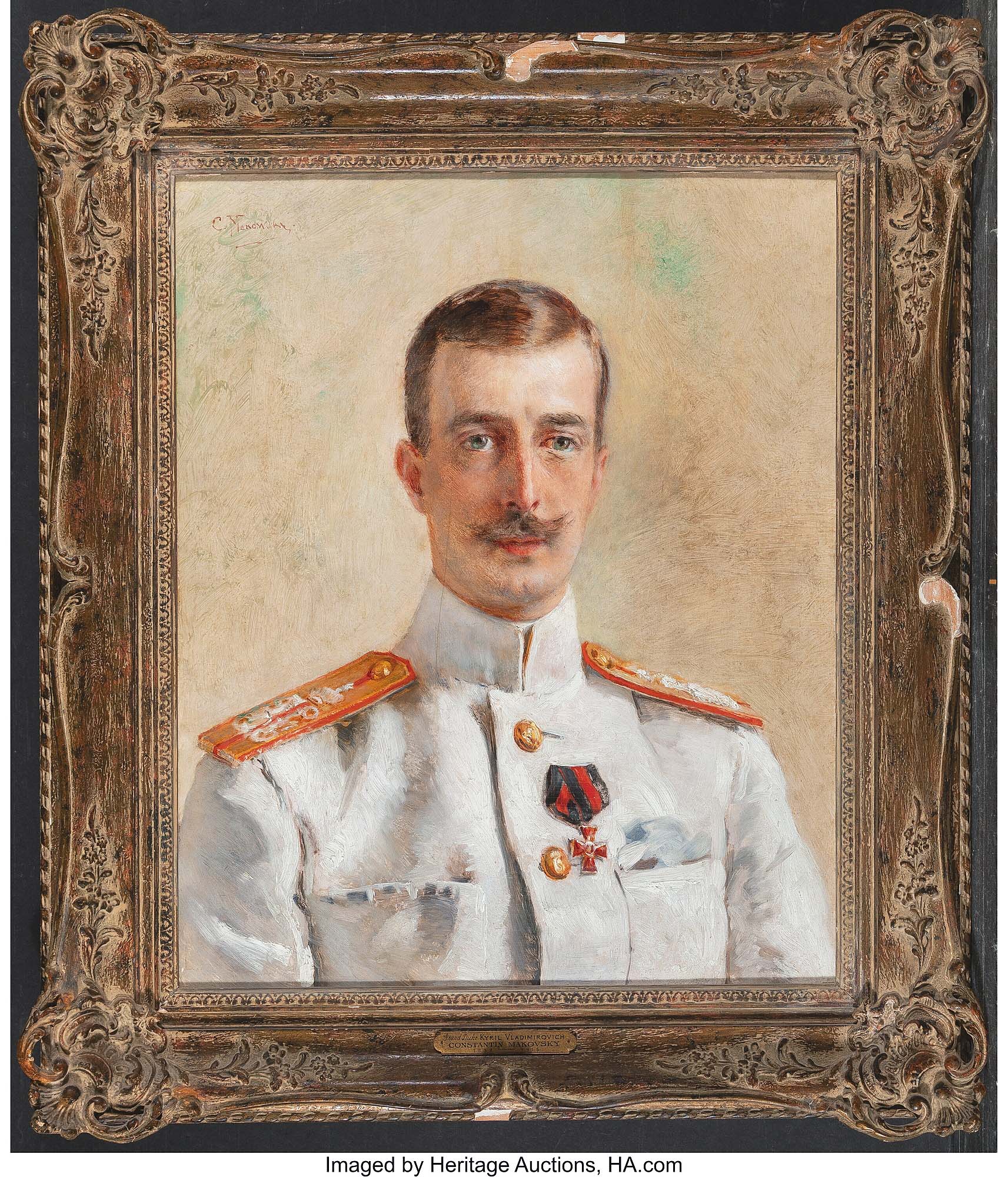
Konstantin Egorovich Makovsky’s portrait of HIH Grand Duke Kirill Vladimirovich of Russia, circa 1900, oil on panel, 24 by 19⅝ inches, capped the ALVR sale at $175,000.
At the top of the ALVR sale was a portrait of His Imperial Highness Grand Duke Kirill Vladimirovich by Konstantin Egorovich Makovsky (Russian/French, 1839-1915). Commissioned from the artist in Paris between 1900 and 1903, the oil on panel composition had a well-documented provenance to the Vladimir Palace and was illustrated in two books. It realized $175,000.
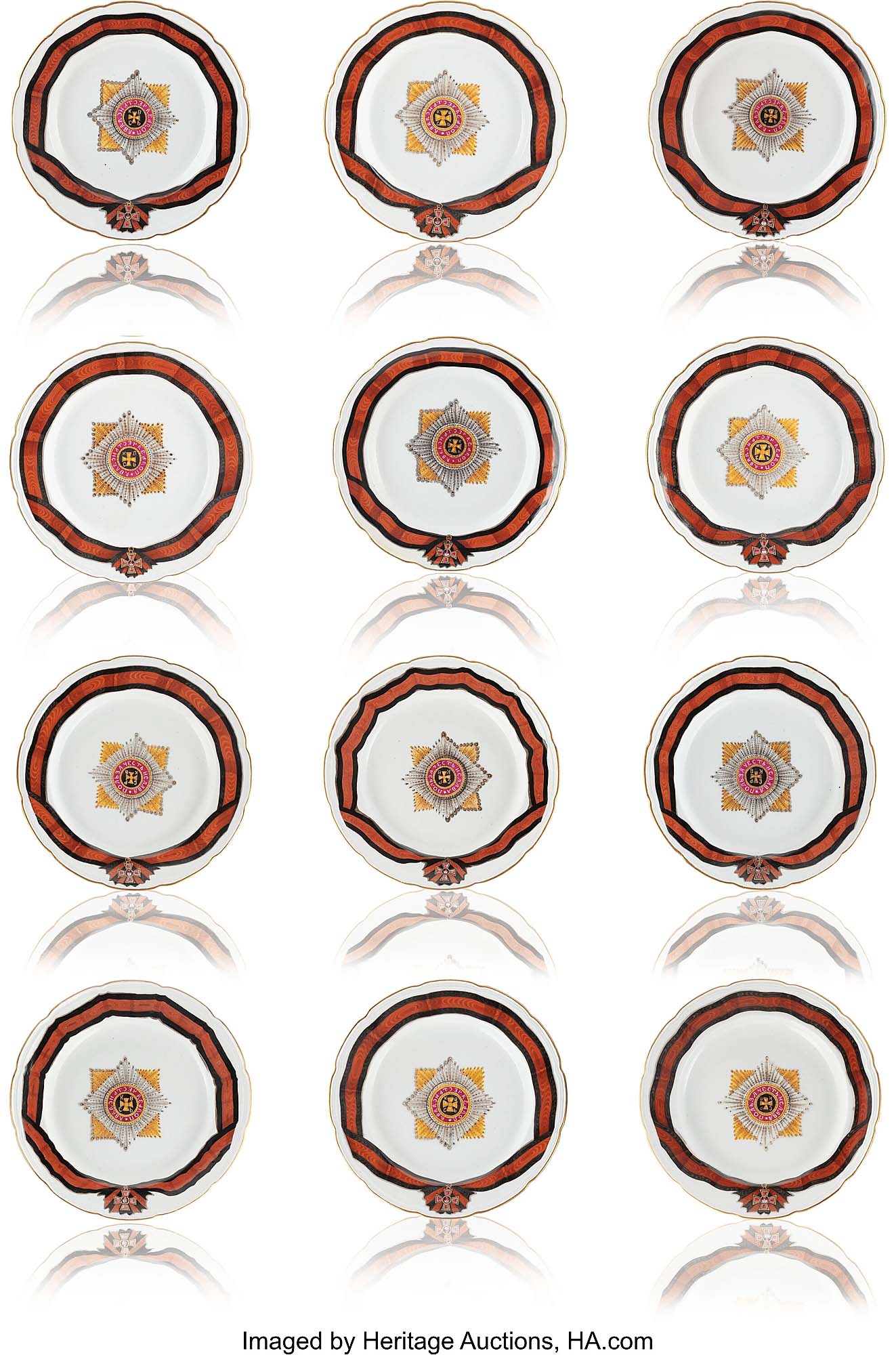
Russian porcelains were a strong subcategory in the ALVR sale, with a group of 12 dinner plates from the St Vladimir service that were made at the Gardner Porcelain Factory in Verbilki during the reign of Catherine II (1746-1798) bringing the second highest price of $118,750. The plates had been exhibited in the 1991 ALVR exhibition “An Imperial Fascination: Porcelain – Dining with the Czars – Peterhof.”
A number of Russian military-themed plates, made at St Petersburg’s Imperial Porcelain Factory during the reign of Nicholas I (1825-1855), which were included in the same exhibition, were sold individually and brought some of the sale’s highest prices. One depicting a mounted cuirassier of the Life-Guards Podolsk Regiment made $47,500, another showing a non-commissioned Officer of the Life-Guards Podolsk Cuirassier Regiment rode to $42,500 while one showing the Second Dragoon Division of the Third Reserve Cavalry Corps and another featuring the Fifth Horse Artillery Division of the Fifth Infantry Corps, a private of the Tenth Light Battery, a staff officer of the Ninth Light Battery and lower ranks of the Tenth Light Battery each gaveled down for $32,500.
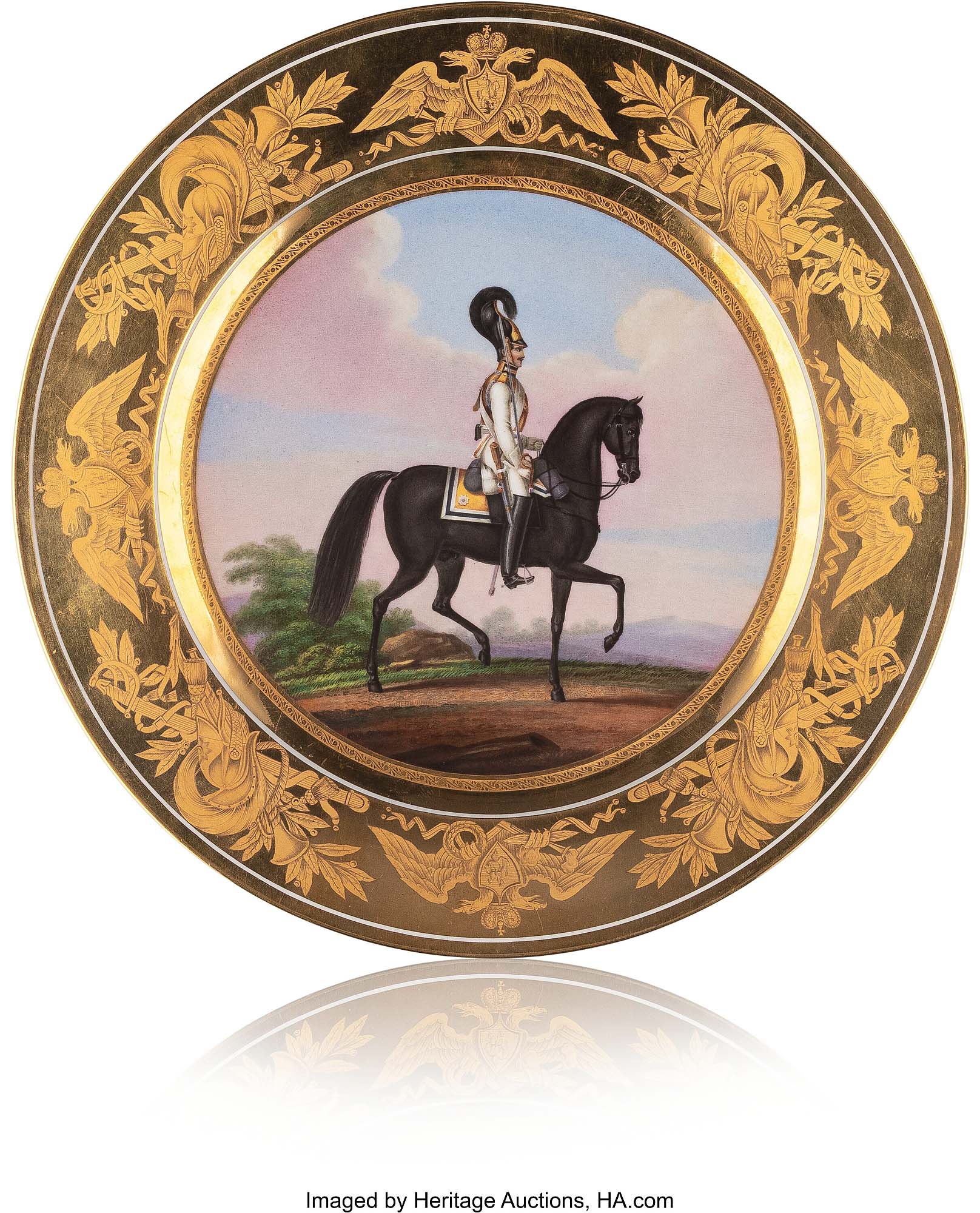
The highest price for a single Russian Imperial Porcelain plate, of several offered with military themes, was $47,500, for this 9½-inch-diameter plate with mounted cuirassier from the Life-Guards Podolsk Regiment that had been featured in ALVR’s exhibition, “An Imperial Fascination: Porcelain — Dining with the Czars — Peterhof.”
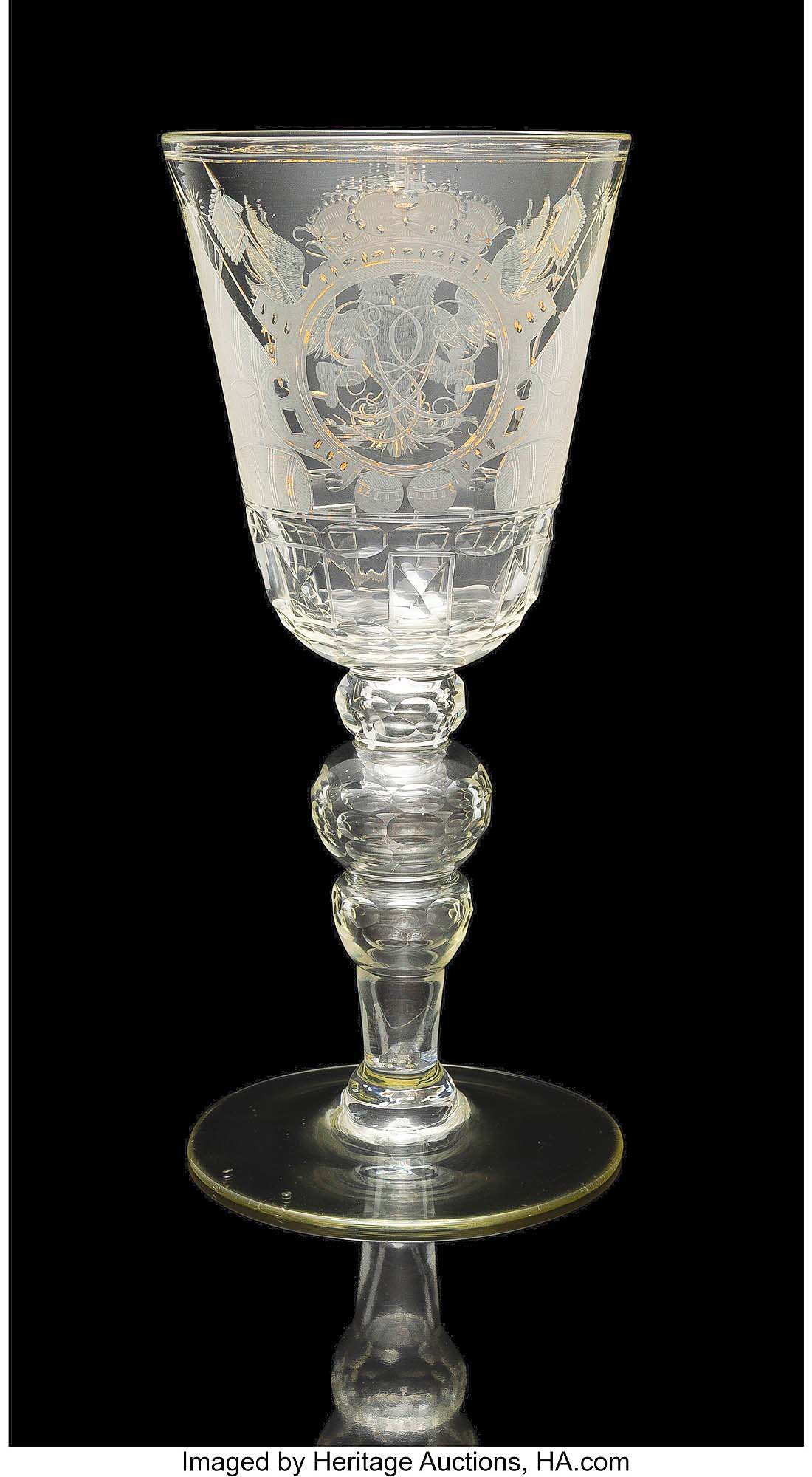
The glass category in the ALVR sale was small with just nine lots and was led at $30,000 by a large (13¾ inches tall) glass pokal made circa 1745 at the Imperial Glassworks in Petrovna during the reign of Elizabeth I (1742-1762). The catalog noted it came “from the apex of the production of the glassworks during the mid Eighteenth Century, when there were nine vessel cutters, all under the direction of Kuzma Zerchaninov.
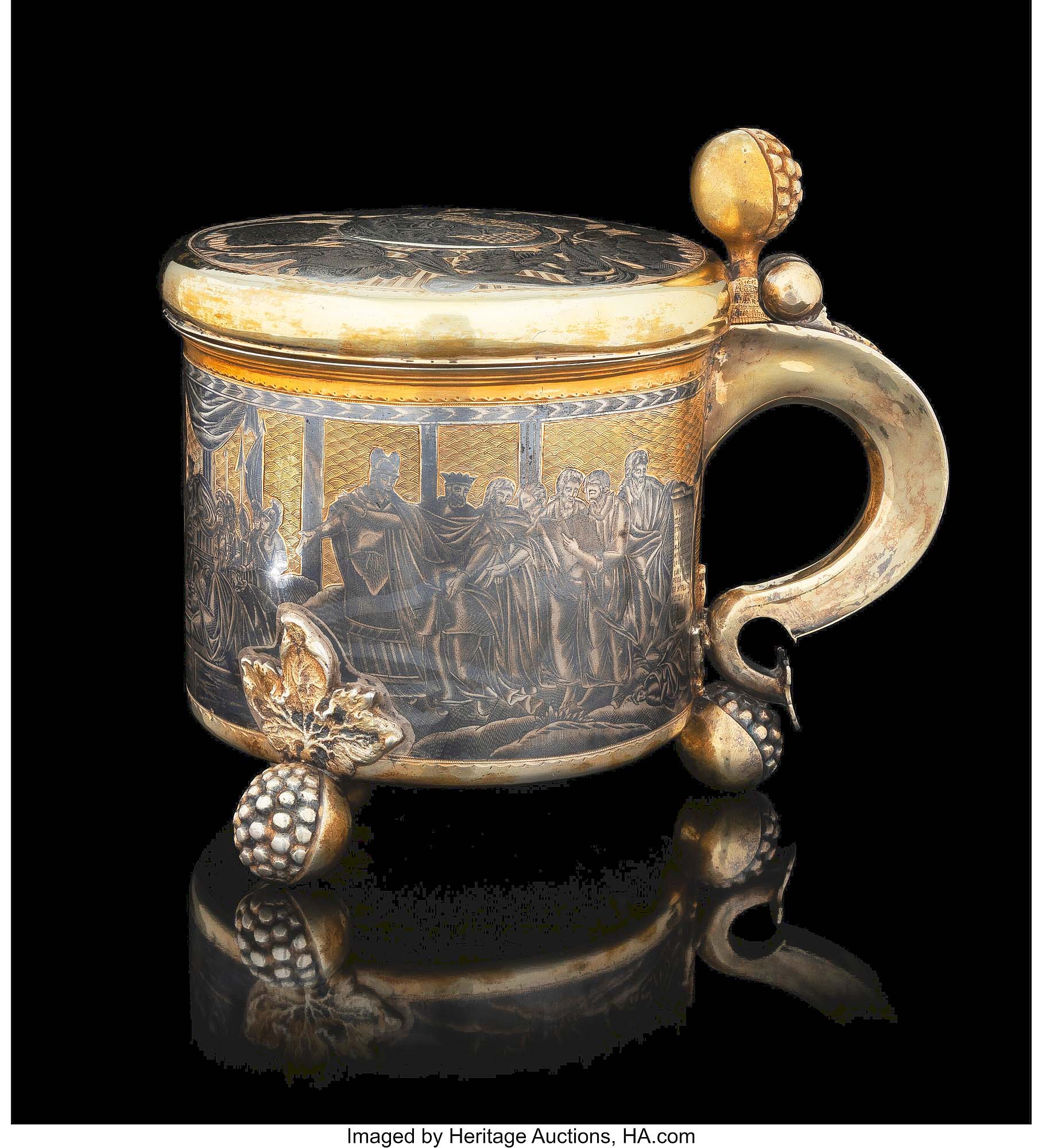
The ALVR sale was kicked off with more than two dozen lots of silver works. The group was topped off at $28,750 by a circa 1680 gilt silver niello hinged tankard that bore the mark of Henning Petri, of Nyköping; the niello work was catalogued as being done in Moscow in the late Seventeenth or early Eighteenth Century.
Imperial Fabergé & Russian Works Of Art
As it turned out, the ALVR collection proved to be a warm-up for the various-owners sale that followed on December 17, where three works by Boris Grigoriev (Russian, 1886-1939), offered as the first three lots of the day, achieved a combined $1,187,500 and nearly half of the sale’s $2.7 million total.
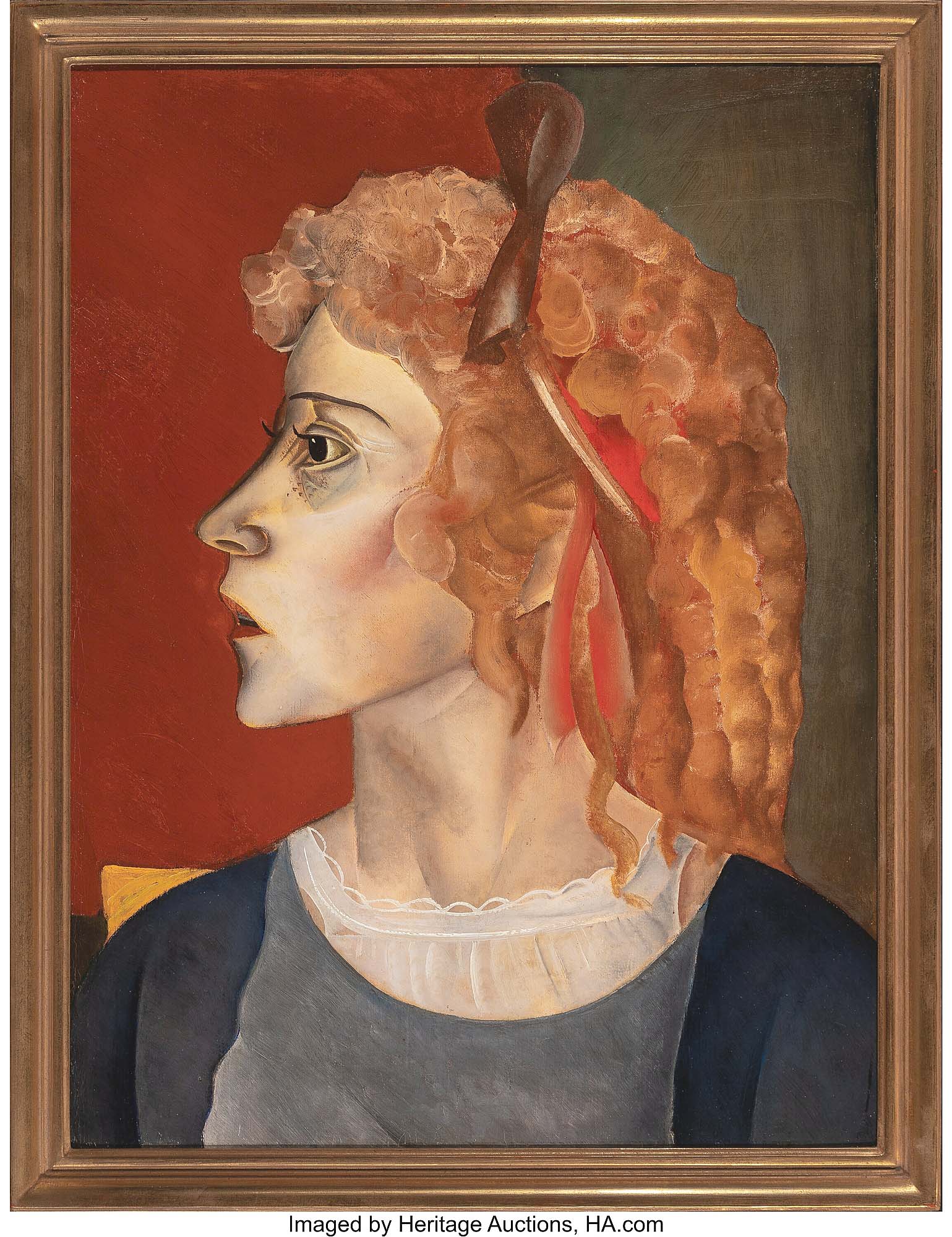
“Portrait of an Actress” by Boris Grigoriev, circa 1924, oil on canvas, 23½ by 18 inches and unsigned, had a well-documented provenance and exhibition history and sold for $450,000.
“The strong results for Grigoriev’s works demonstrated continued demand for his most ambitious and culturally resonant compositions,” Nicholson noted. “Beyond painting, the sale was anchored by exceptional works of Russian silver and enamel, reflecting sustained global interest in museum-quality objects with impeccable provenance.”
In first place, both in price and in order of the sale, was Grigoriev’s “Toilers of the Fields,” a boldly colored composition mounted on board from the artist’s “Raseya” series and had been acquired from Grigoriev around 1922; it finished at $550,000.
The same collection that offered “Toilers of the Fields” also consigned the second- and third-place finishers: “Portrait of an Actress” ($450,000) and “Portrait of Gladys Roosevelt Dick” ($187,500).
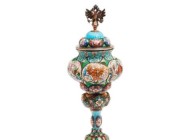
Russian cloisonné enameled gilt silver wares were an impressive section despite only 20 lots. Realizing a fourth-place finish and leading the category at $125,000 was a shaded cloisonné gilt silver tazza made in Moscow circa 1899-1908 that bore the partial mark of Feodor Rückert. It had been in three previous auctions: Christie’s, Geneva (1970s); Christie’s, New York (1998); and Lyon & Turnbull, London (2008).
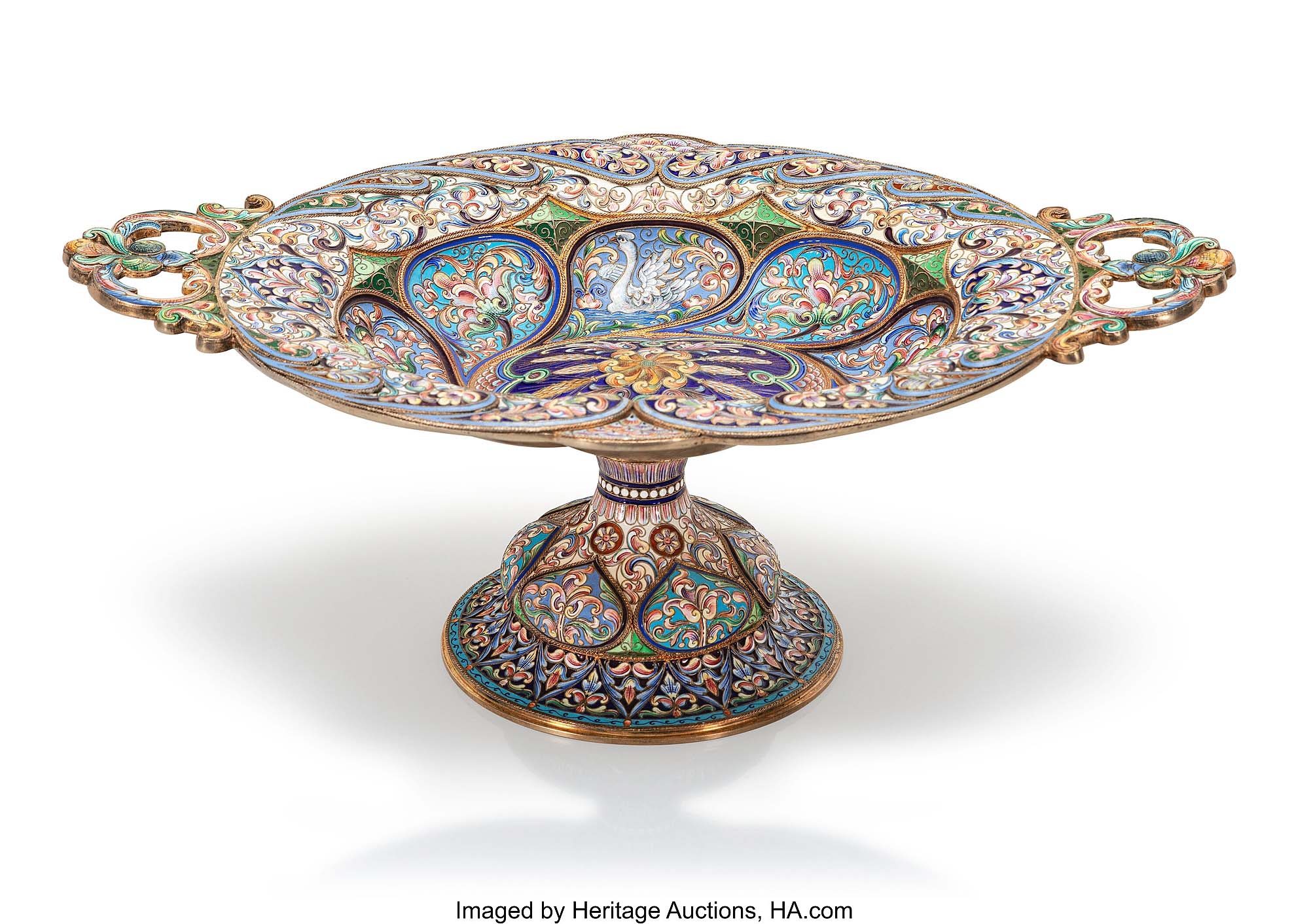
Described as exceptional, this Russian shaded cloisonné enameled gilt silver tazza made circa 1899-1908, was the highest-selling object in the various owners sale, finishing at $125,000.
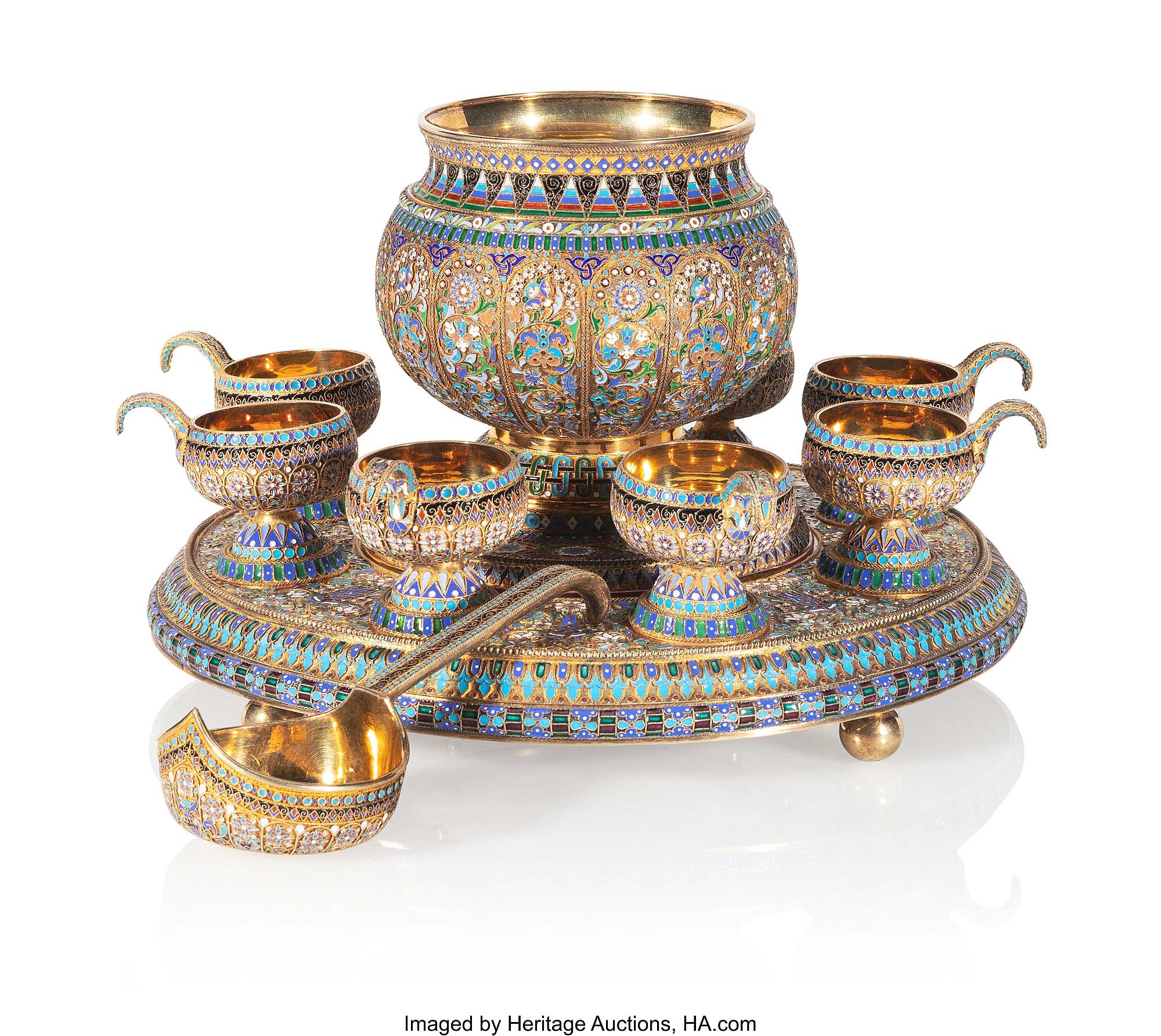
A cloisonné enamel gilt silver punch service that was made by Ovchinnikov in Moscow, circa 1885, had been presented by Emperor Alexander III as a gift to the Chilean admiral who assisted the Russian schooner Tunguss when it fell into distress off the coast of South America in 1881. Comprising a punch bowl, six bowls and a ladle, interest topped it off at $106,250.
Arguably the most recognizable name of any Russian craftsman is Peter Carl Fabergé (1846-1920), the goldsmith and jeweler best known for making eggs for the Imperial families; both the ALVR and various owners sales offered plenty of examples for Fabergé collectors to pursue. Capping more than five dozen Fabergé lots at $75,000 was a translucent gray-mauve guilloché enameled pearl-set gold and gilt silver-mounted desk clock made under workmaster Henrik Wigström. The catalog noted it to be “emblematic of Fabergé’s cool and restrained designs from the Wigström workshop.”
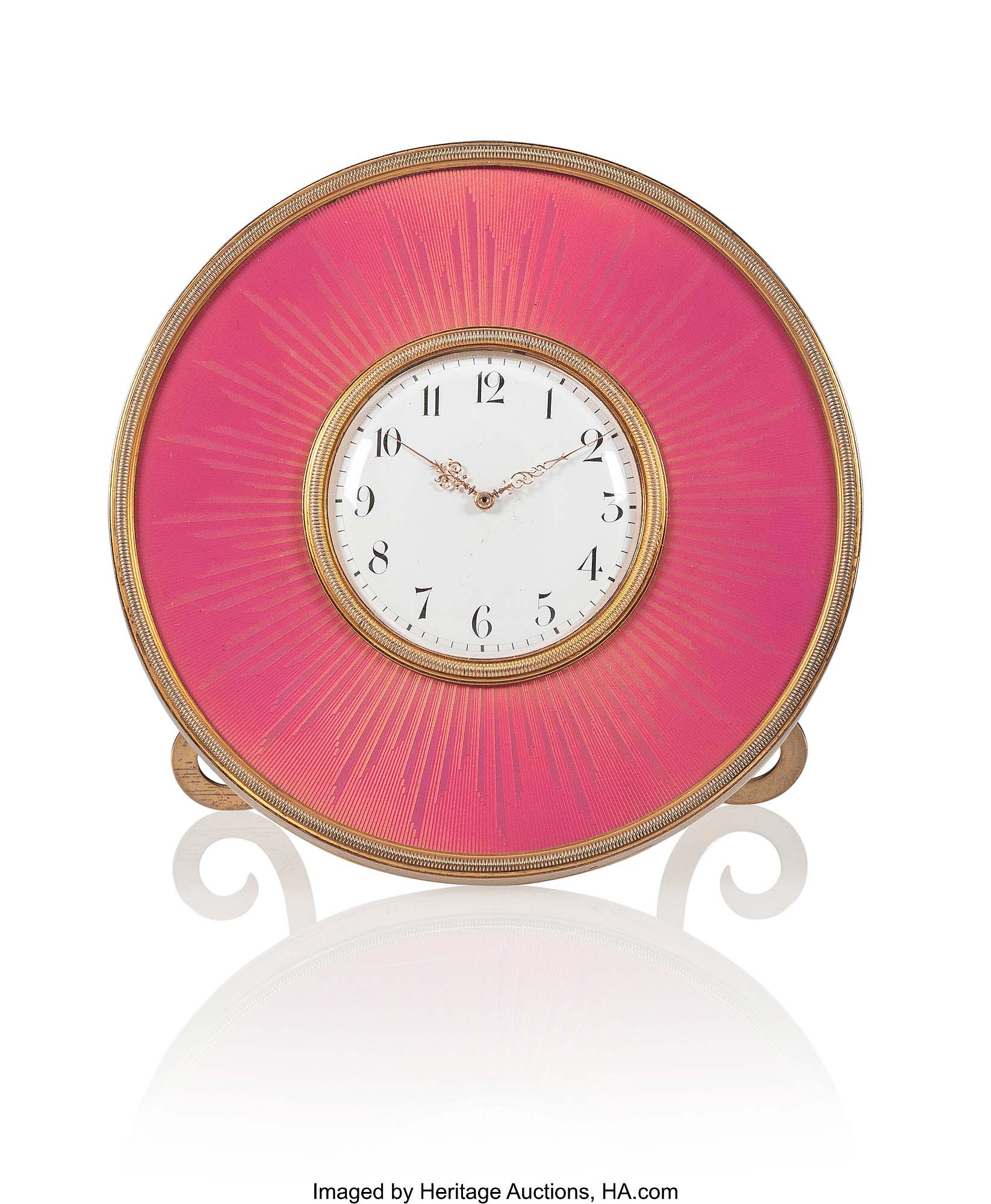
From the same shop and date but executed in a vibrant translucent pink guilloche enamel was a table clock with circular face that also timed out at $75,000.
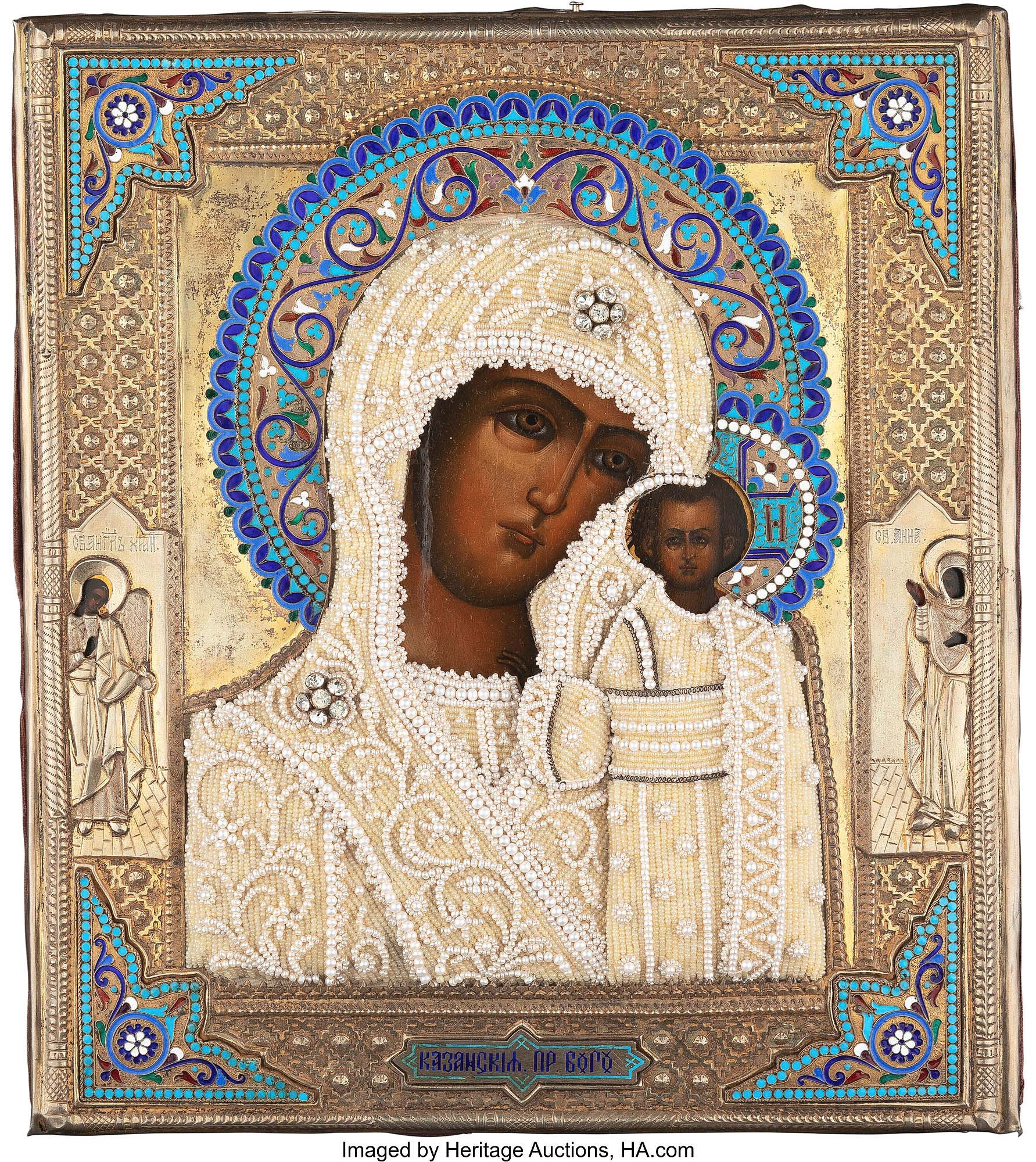
No sale of Russian works of art would be complete with an icon, and Heritage’s various owners sale offered a pair together that sold for $50,000. The pair, both of which were made by Peter Miliukov in Moscow in 1896, depicted the Kazanskaya Mother of God and St Nicholas the Miracleworker.
A date for Heritage Auctions’ next Russian Works of Art auction has not yet been announced.
Prices quoted include the buyer’s premium as reported by the auction house. For information, 214-528-3500 or www.ha.com.