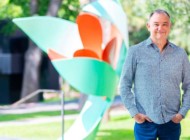

When Antiques and The Arts Weekly heard that Rebecca McNamara, previous associate curator of the Frances Young Tang Teaching Museum and Art Gallery at Skidmore College, was announced as the new chief curator at the Mattatuck Museum in Waterbury, Conn., we sat down with her to discuss her previous experience, her new role (beginning February 3), and what it means to take on this responsibility as the Mattatuck nears its 150th year in 2027.
Congratulations on your new role as chief curator at the Mattatuck Museum! What drew you to the role?
This role offers an incredibly exciting opportunity to work alongside museum director Bob Burns, deputy director Stephanie Harris and other senior staff to assist in leading the Mattatuck Museum as we approach the institution’s 150th anniversary.
The museum’s dual emphasis on both art and history is especially appealing to me. Although I have been fully immersed in the contemporary art world for nearly a decade, my graduate school work focused on scholarship of American design and material culture, and my tenure at the Indianapolis Museum of Art at Newfields involved researching American art, design and fashion, in both cases from the Nineteenth Century to the present. I look forward to rekindling these areas of interest, as well as continuing to work with contemporary artists at the Mattatuck.
As a mid-size museum based in proximity to but outside of major metropolises, the Mattatuck is ripe for curatorial and artistic experimentation. I hope to bring in contemporary artists from both within and outside the region whose work encourages curiosity about our world, stimulates conversation or simply inspires new thoughts or tranquility.
The scale and place of the museum also makes it possible to get to know visitors on an individual level, building meaningful relationships. Talking about art and collaborating with people who have vastly different life experience and disciplinary backgrounds from me has been a hugely rewarding part of my work at the Tang Museum at Skidmore College, where I have been a curator for more than nine years. In addition to finding new ways to collaborate with folks in the area, I look forward to supporting the Mattatuck’s existing community-centered programming, notably the Monteiro Family Community Gallery that platforms regional schools, community organizations and artist groups, as well as the annual “Mixmaster” juried members exhibition.
You’ve been with the Tang Museum at Skidmore College since 2016 in various capacities. What skills and experiences are you hoping to bring from your previous positions into this new one?
Community engagement and working across disciplines has been central to my work at the Tang. In organizing shows on contemporary art, I have brought in curatorial advisors, consultants, writers and other collaborators from fields as disparate as psychology, English, biology, neuroscience, environmental studies, art history, social work, theater, dance, computer science and many other disciplines. The energy and insight these interdisciplinary colleagues have brought to curatorial projects has been invaluable. We are all experts on our own ideas and frameworks, and an art history degree is never a requirement for reading an artwork. I am consistently amazed and impressed by their interpretations of art. I foresee many possibilities of bringing this practice of knowledge-sharing and working with people from both within and outside of the art world to the Mattatuck.
I know that championing emerging and under-represented artists is very important to you. How do you plan to highlight these artists in the Naugatuck Valley area when at the Mattatuck?
I strive to be activist-oriented in my curatorial practice, so it is always top of mind when planning exhibitions to ensure that artists whose identities are traditionally under-represented in museum spaces, whether because of race, age, gender, training or some other factor, have the platforms their work deserves. The museum’s collection currently includes some compelling work by emerging and under-represented artists, and I’m looking forward to finding the hidden treasures of the collection and making acquisition recommendations that both build on the museum’s existing strengths and further diversify it.
And there are so many incredible artists associated with Connecticut! I plan to visit many artist studios across the state to better understand the concerns these artists are addressing in their work today and, as someone with a strong interest in craft-based practices, I’m eager to find the artists who are innovating with processes and materials that have historically been under-valued in the global contemporary art world. I also want to give the deceased artists, especially those associated with Connecticut, who never received their full due in their lifetime a platform in both solo and group exhibitions, helping to bring those names to greater public recognition. So, to all the artists, art lovers and historians in the Naugatuck Valley, reach out with your recommendations! The list is forever ongoing.

Rebecca McNamara (left) with co-curator and Corinne Moss-Racusin, professor of psychology at Skidmore, during installation for “Family Forms,” Tang Museum, Skidmore College, 2025. Photo by Annelise Kelly.
The museum is approaching its 150th anniversary in 2027. Do you have any preliminary ideas about potential exhibitions or events?
One of the most exciting challenges that lies ahead is the reinstallation of the Mattatuck’s collection galleries in 2027. I will be diving head-first into studying the museum’s collections of art, archives and material culture, and learning as much as I can about Waterbury history upon my arrival. I intend to bring the Naugatuck Valley community into the planning process, so I’m very much looking forward to a community-driven research process that embraces multiple perspectives and ways of thinking. I look forward to learning the stories of American art and regional history held by the collection and finding creative, unexpected ways to energize the galleries, inspiring and challenging new and existing audiences alike.
Last (but not least!), what are you looking forward to the most as you step into this role in February?
I’m eager to meet the Mattatuck Museum community! I look forward to getting to know artists and art lovers throughout the Naugatuck Valley who are already staunch supporters of, or regular visitors to, the museum as well as those who have yet to engage. As I take on this role, and as we gear up for the museum’s 150th anniversary in 2027, I will be absorbing as much information as I can from the start. So, I hope to learn from community members directly and to organize dynamic exhibitions featuring new and familiar artists — to create shows and programs that encourage us to better understand the world through art and objects.
—Kiersten Busch