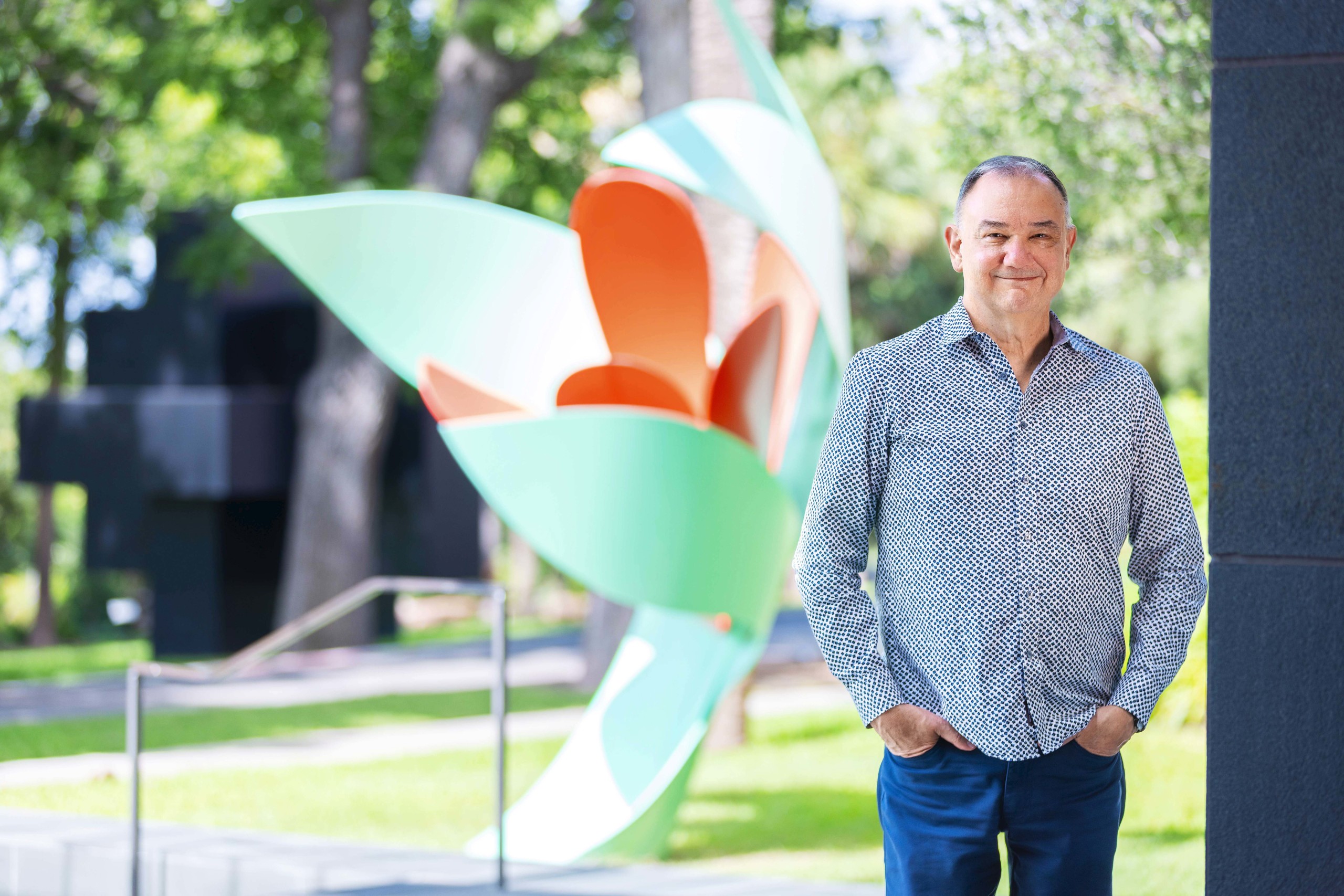
Photo by Jacklyn Velez.
On September 19, René Paul Barilleaux retired as the head of curatorial affairs at the McNay Art Museum. Curious about his 40 years of experience in the museum industry, Antiques and The Arts Weekly reached out to Barilleaux to speak with him about his previous role at the McNay, and his upcoming swan song exhibition, “untitled: 20 Years of Collecting Contemporary Art.”
What was the McNay like when you arrived, and what does it look like now, since you’ve retired?
My last day as head of curatorial affairs at the McNay was September 19. I had been at the Museum for just over 20 years. When I arrived in mid-2005, I entered a world that was ripe for expansion and development — in particular I mean in the area of contemporary art. My curatorial position at that time, that of head curator, was relatively new. My predecessor had made great progress in pushing the contemporary art program forward, so the basic groundwork was in place. When I left the McNay this past summer, I had directly brought over 200 contemporary artworks into the collection, along with shepherding other acquisitions by other curators. In addition, the exhibition program greatly expanded, beginning with the opening of the Stieren Center for Exhibitions in 2008. This addition to the existing McNay facility allowed for a more robust contemporary art exhibition program, as well as significant exhibitions exploring many facets of modern and contemporary art and design.
Could you share a few acquisitions that particularly stood out to you?
Yes, I acquired over 200 contemporary works during my 20-year tenure at the McNay, enhanced by many, many more acquisitions brought in by my fellow curators. The total number of acquisitions over this period is remarkable, due in large part to loyal patrons, insightful donors and generous artists. In thinking about key acquisitions, I like to point out my first and last: the first is an optical abstraction by Houston-based Susie Rosmarin and the last is a metal gunshot “painting” by Louisiana native Margaret Evangeline. Like many of the works acquired, these two have special resonance for me. Susie and I were in the MFA program at Pratt Institute at the same time, and Margaret is from the same region of South Louisiana that I’m from. Other works of personal note include a monumental “lozenge” painting by Larry Poons, one of only a small number that the artist made, from the 1960s; Sandy Skoglund’s “The Cocktail Party,” an installation of life-size party guests covered in cheesy snack food, one of only a few of Skoglund’s installations to be in a museum collection; Martine Gutierrez’s hypnotic video “Clubbing,” in which the artist dances all six parts; and a painting by Sean Scully, a gift from the artist to the McNay, delivered in person to the museum by Scully himself. With over 200 works to consider, there are of course so many more I could single out.
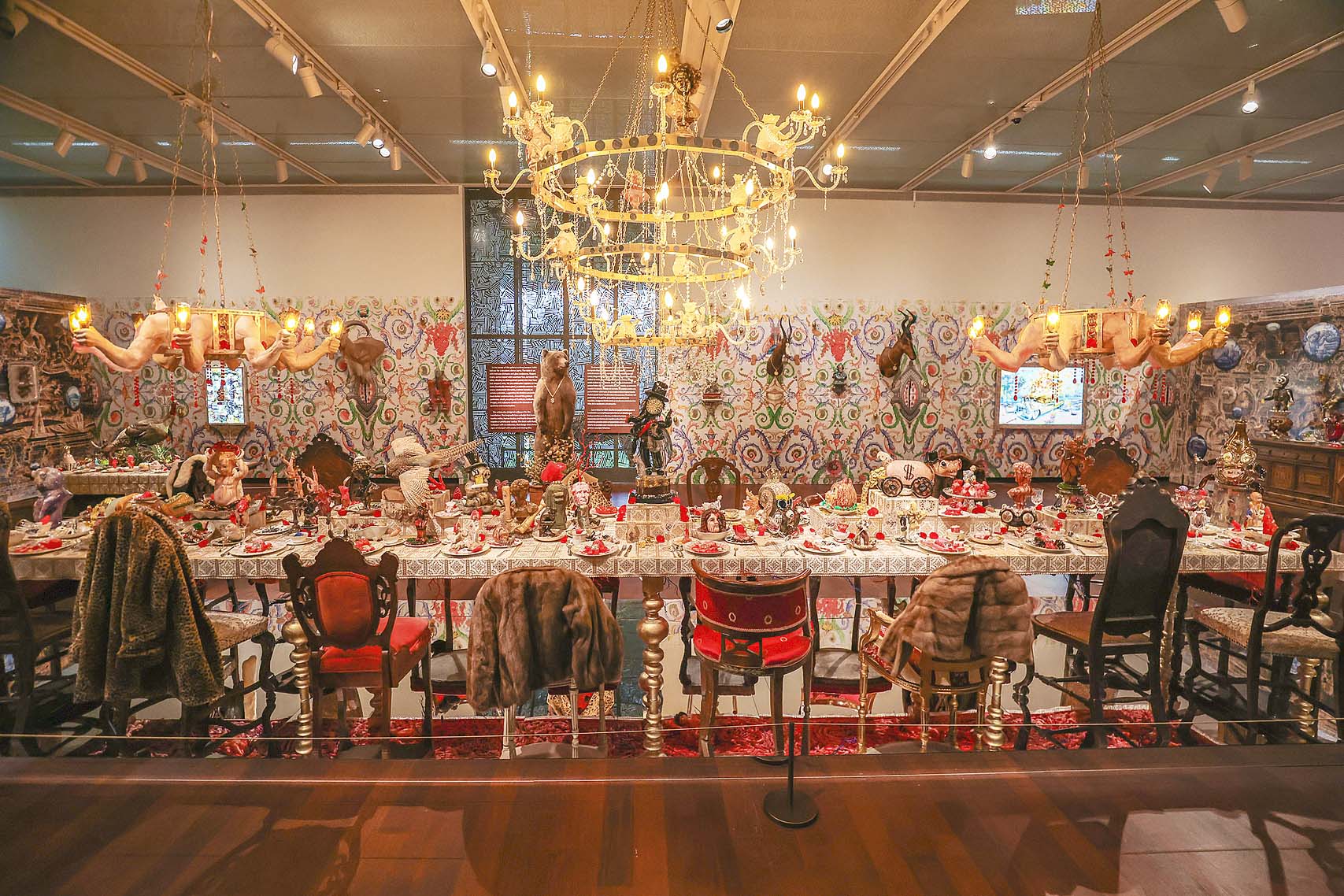
Installation view of “De la Torre Brothers: Upward Mobility” at the McNay Art Museum. Photo by Paul Feuerbacher.
As a curator, you were particularly interested in artists outside of the mainstream and mid- to late-career artists. What do you believe is so important about highlighting these artists?
I remain interested in the work of less established, lesser-known and older artists, particularly those whose careers may have been less than highly profiled, or whose art is out of step with contemporary art world fashion. With the increase in longevity all around, it’s interesting and satisfying to see the work of “forgotten” artists brought back into the mainstream discussion, especially when the artist is still living and can experience acclaim once again. And when I say “forgotten,” I mean artists whose work does not fit in the current scene, regardless of their age or the kind of work they make. Coming to mind immediately, in terms of artists with whom I’ve worked, are Mary Lovelace O’Neal, now in her mid-80s; Michael Tracy, who died in 2024 at the age of 80; and the De la Torre brothers, who are in their 60s but deserve much wider recognition for their ground-breaking work.
Your swan song at the McNay, “20 Years of Collecting Contemporary Art,” will open on March 27. What was it like to put this exhibition together?
When I began to think about an exhibition surveying 20 years of collecting with over 200 works to consider, my first thoughts focused on what story the exhibition is going to tell and how that story will be told. Needless to say, I was confronted by works investigating nearly every concept and theme you can think of, made in any number of ways and out of a huge range of materials, and occupying different amounts of space. I decided to go “old school” and organize the art according to the enduring elements of artmaking such as line, color and texture. Working with my McNay curatorial colleagues, we identified the seven principles of art and one principle of design. Then I was able to begin grouping works together using these principles as the guiding structure. Granted, it’s a rather subjective plan, but it does allow for unexpected groupings and lively interactions between artworks. Also, we decided to use the single word “untitled” as the “super title,” making the full exhibition title “untitled: 20 Years of Collecting Contemporary Art.”
Now, the most important question! What will retirement look like for you?
I retired from my full-time curatorial and leadership position at the McNay, but I haven’t retired from the art world! In addition to the McNay collection survey that I’m organizing for spring 2026, I’m also lead curator on another McNay exhibition focusing on the stage and movie designs of Tony Walton. This exhibition is drawn from the McNay’s amazing collection of theatre arts material and will premiere several recently acquired treasures. Beyond that, in terms of exhibitions, I am working with the Museum of Contemporary Religious Art at St Louis University on a project. While exhibitions and museum acquisitions have been my main focus for over 40 years working in museums, I’m also putting some energy into advising collectors and placing artworks. I recently was approached by an artist seeking career counseling, so I’m developing that service as well. To answer your question, retirement is looking like a combination of familiar territory coupled with new opportunities, with the ultimate goal of putting artists and artworks front and center, regardless of how that is accomplished. Thanks for asking!
—Kiersten Busch